TRIXI GRONAU Manufactory · Knowledge
Letterpress from our Hamburg Print Studio
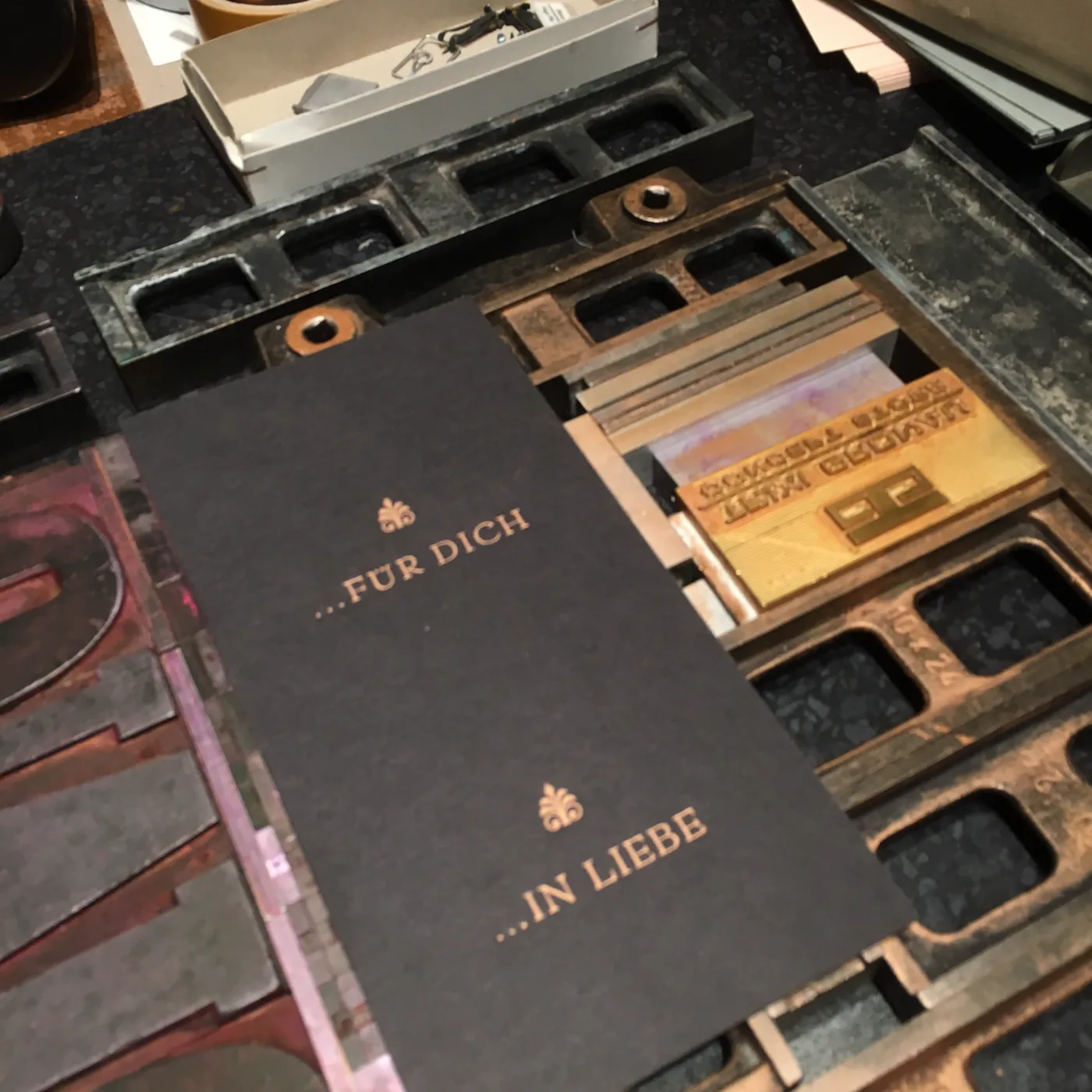
What is letterpress printing?
Letterpress is a relief printing process. The printing elements are raised. Ink is applied to movable type or printing plates and transferred to the paper under pressure. In traditional letterpress printing, individual metal letters can be composed by hand. Printing plates can be used for motifs, logos or complete lines of text.
At TRIXI GRONAU, letterpress is part of our own studio practice. We work with composed type, printing plates, ink and a Boston platen press.
How do we create a letterpress print at TRIXI GRONAU?
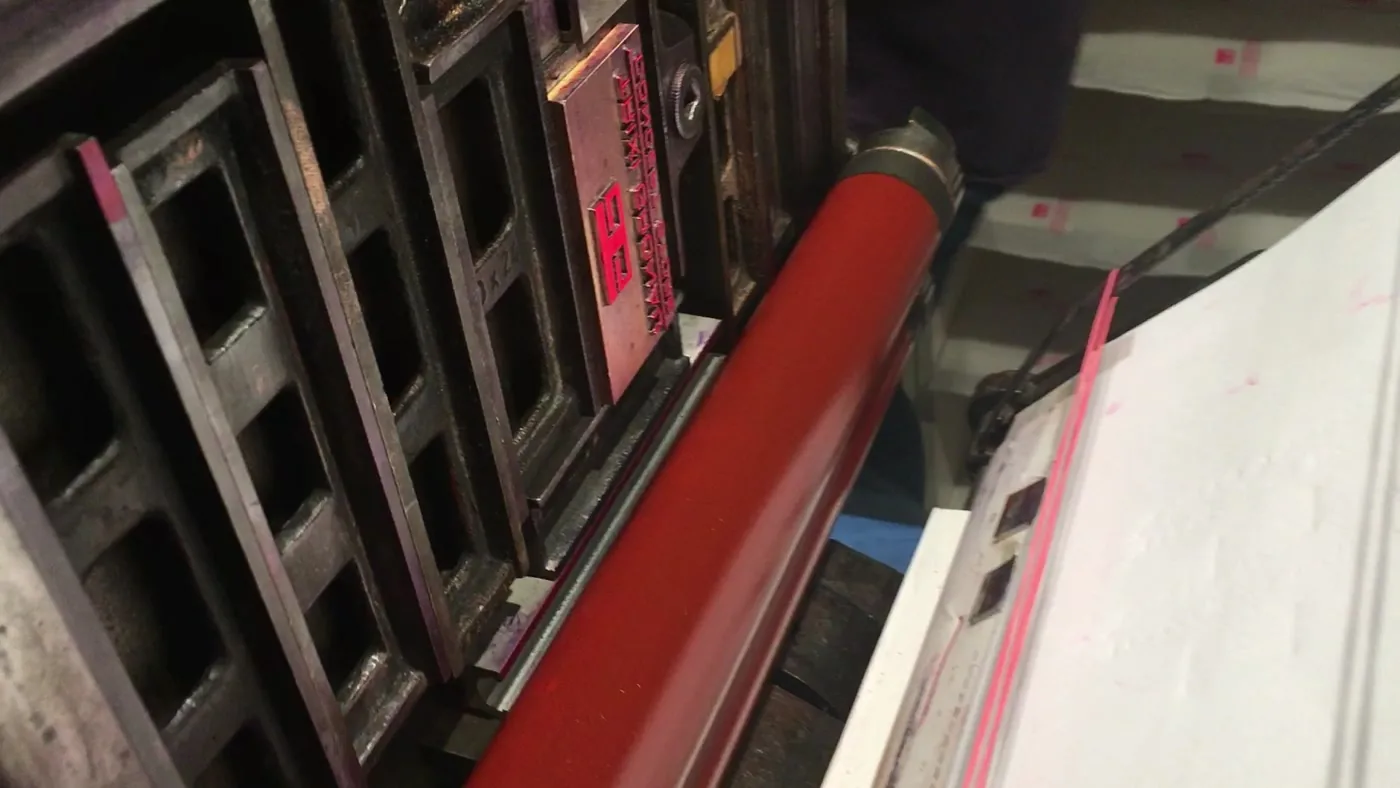
The process begins with the design. Depending on the motif, we work with individual pieces of type or with a printing plate. Our studio material documents hand composed lead type as well as brass printing plates.
The printing elements are set up in the press. The rollers distribute ink across the raised surfaces. The paper is positioned and pressed against the inked printing form in the Boston platen press. This transfers the ink and the printed image to the paper.
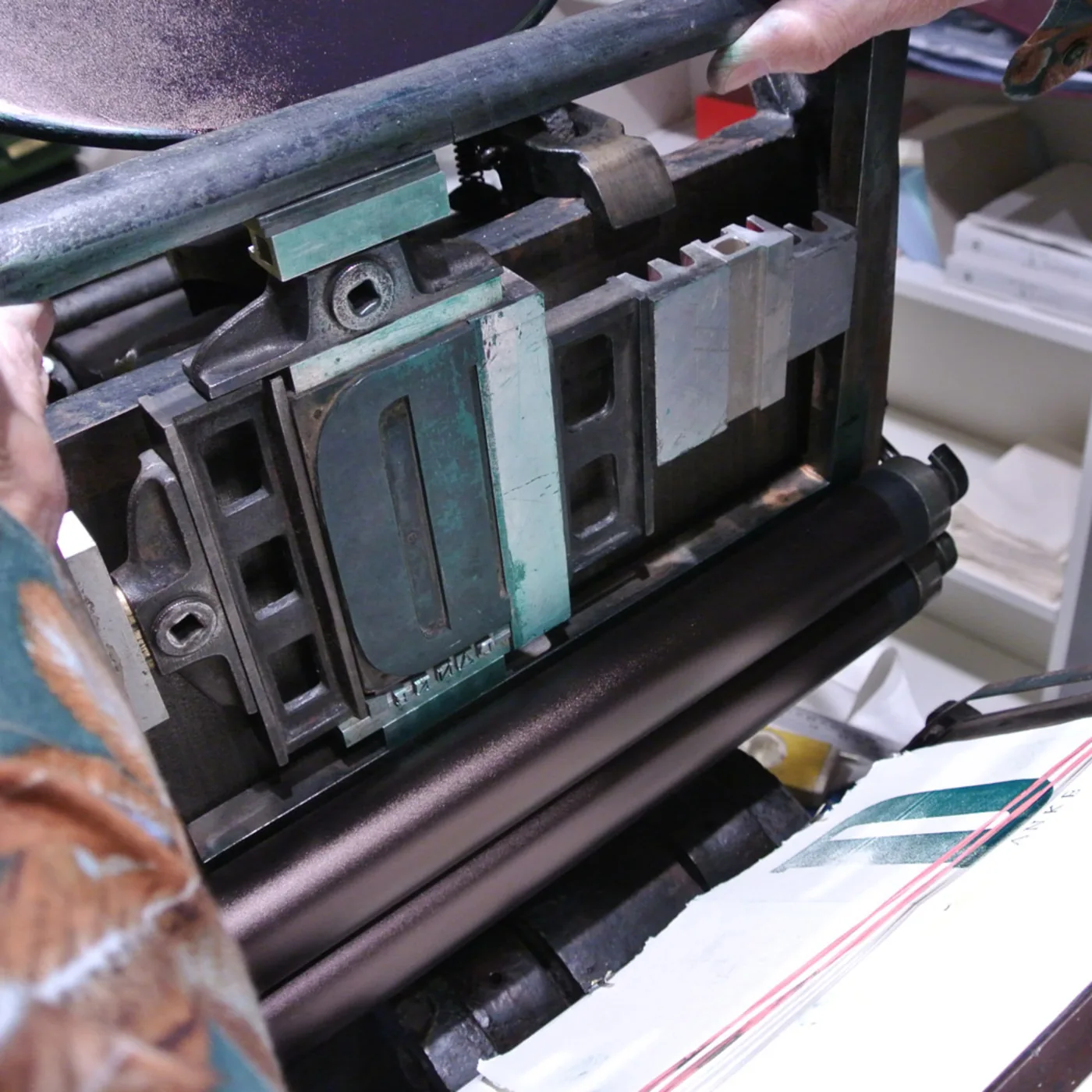
Which press do we use?
In our studio we work with a Boston platen press for traditional craft letterpress printing.
What are movable type and printing plates?
Movable type consists of individual raised characters that can be assembled into words and lines in traditional letterpress printing. Our studio material documents lead type composed by hand.
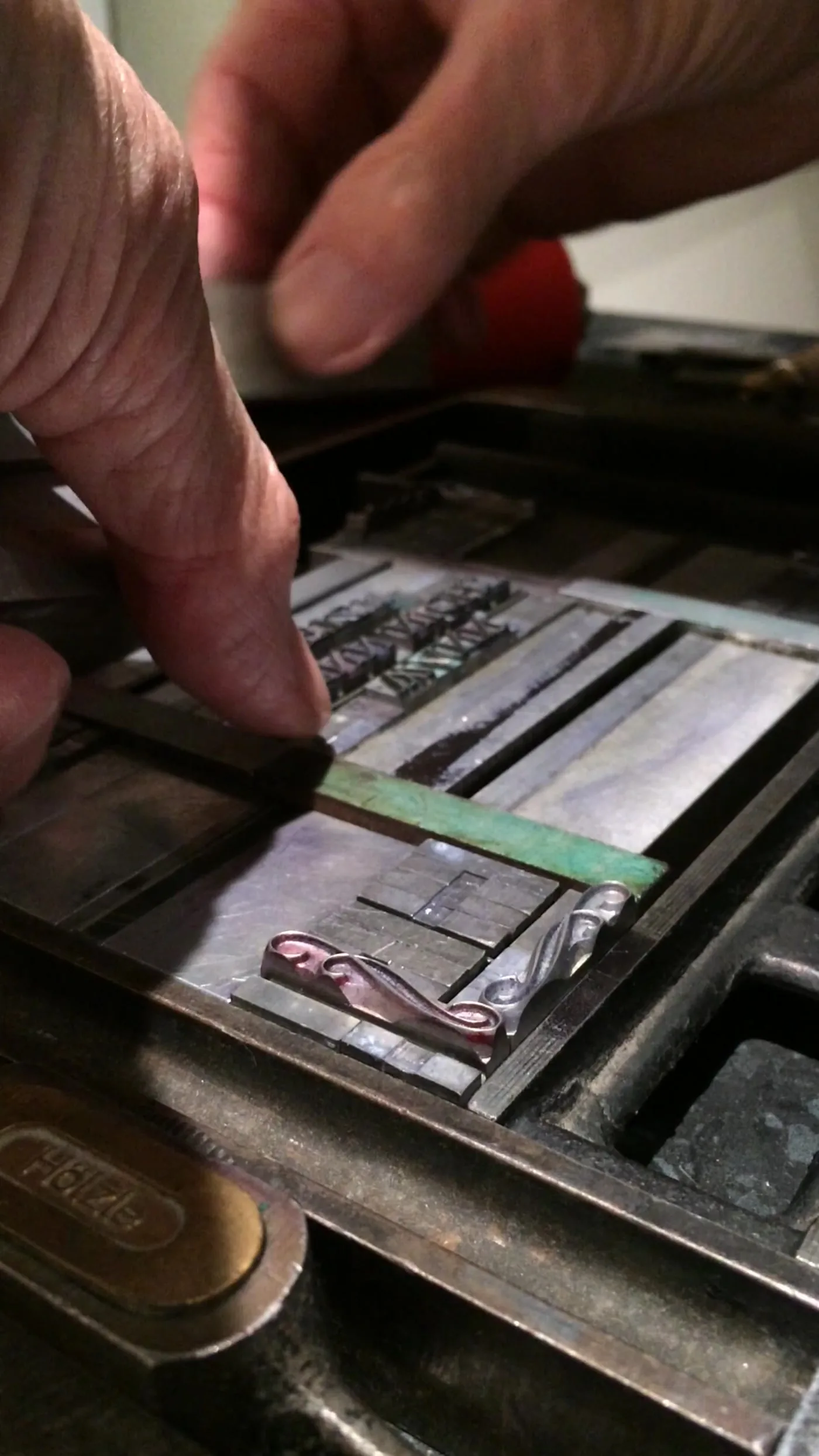
Printing plates are printing forms used for motifs, logos or complete lines of text. Our studio collection includes brass printing plates. They allow a complete motif to be set up as one printing form.
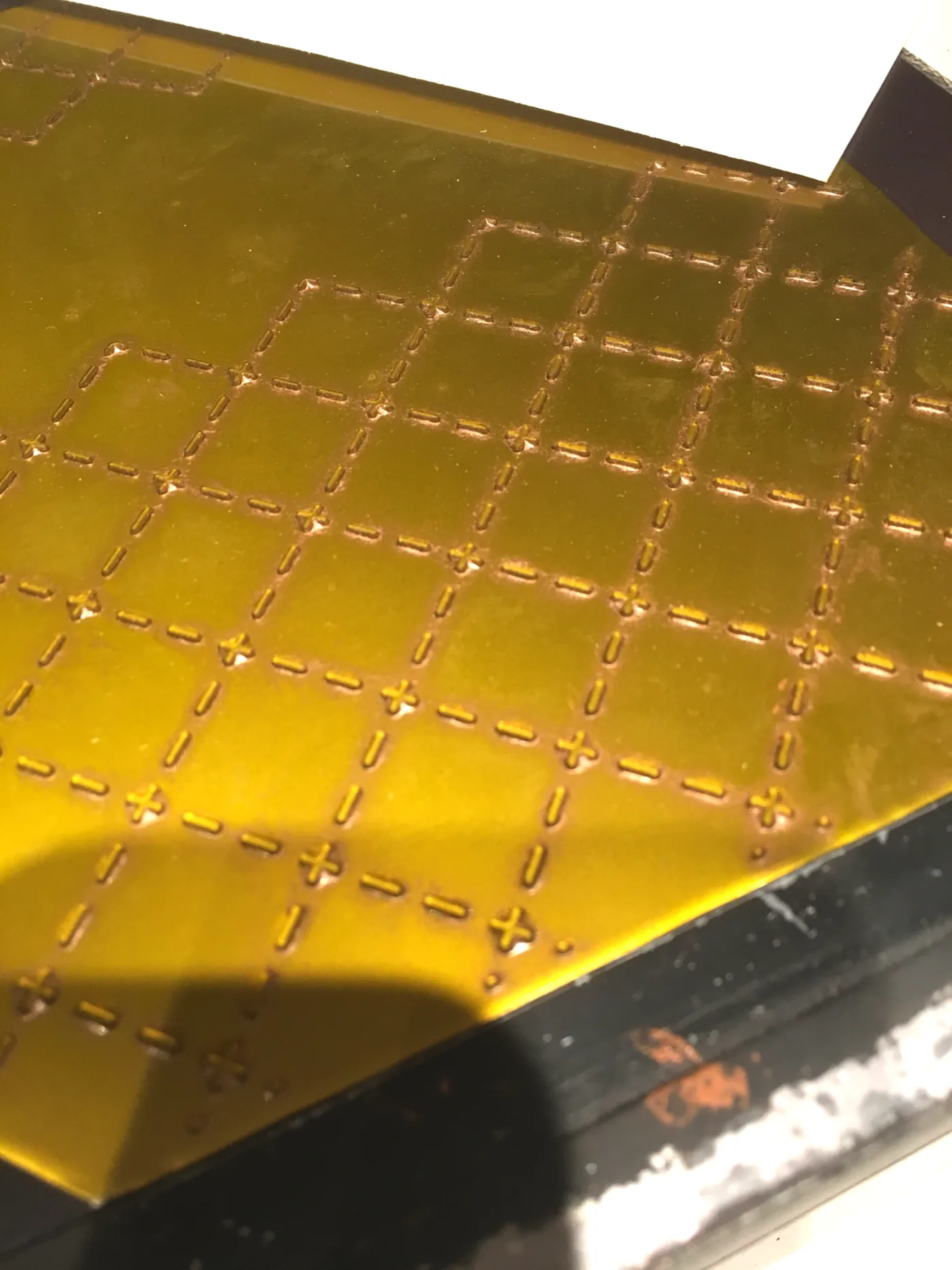
Why is the choice of paper important?
Paper has a strong influence on the result of letterpress printing. Its surface, volume and firmness affect the appearance of the ink and printed image. Historically, printers often aimed for very little visible impression so that the type remained clean and protected. In contemporary letterpress, a light or clearly tactile impression can deliberately become part of the design. The depth depends on the paper, printing form, motif and intended effect.
What is the difference between letterpress and embossing?
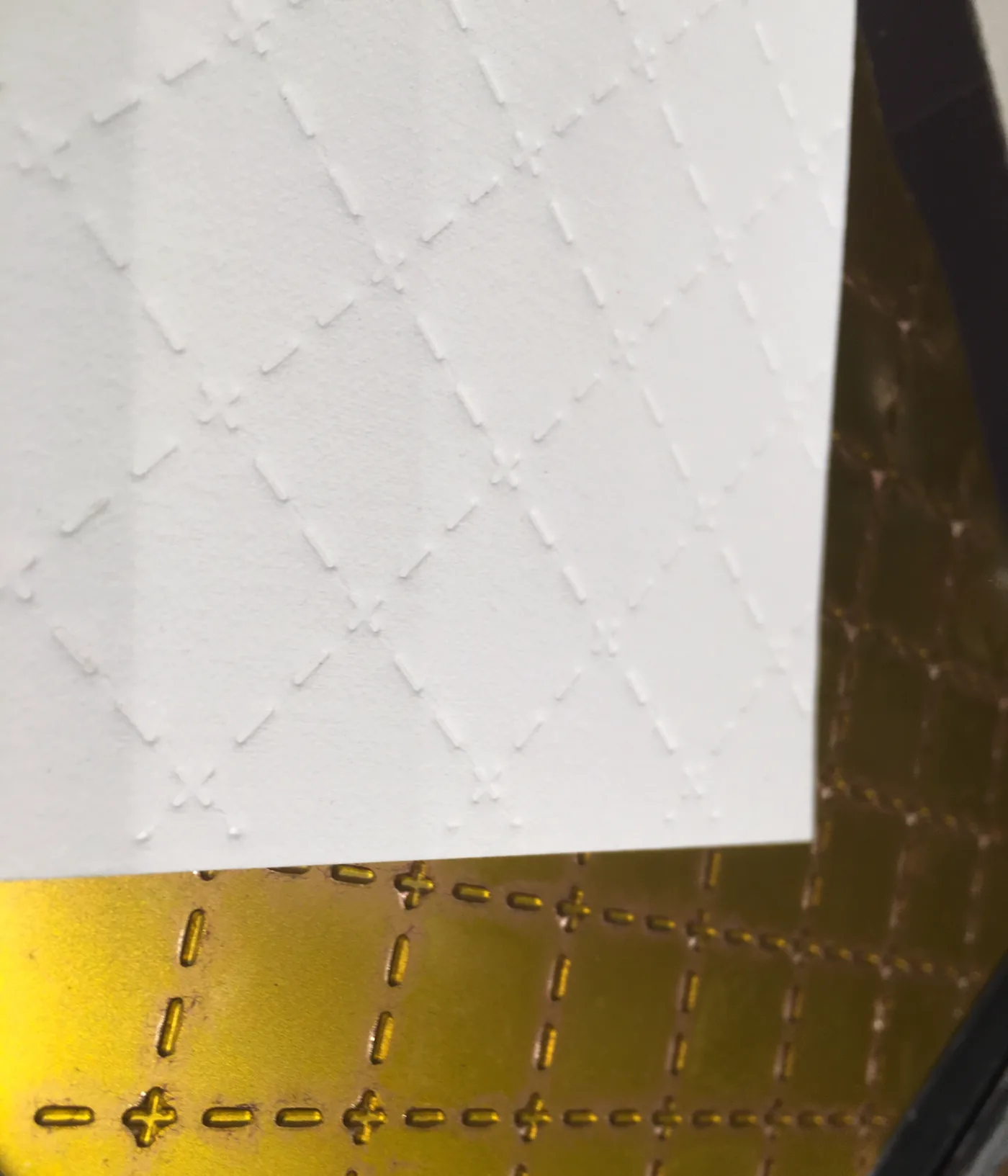
Letterpress transfers printing ink from a raised printing form onto the material. Blind embossing works without printing ink and changes the surface through pressure. Hot foil stamping additionally transfers a foil. The results can share a handcrafted appearance, but the techniques are different.
What is the difference between letterpress and digital printing?
Letterpress uses a physical printing form. Type or printing plates are set up, inked and pressed against the paper. Digital printing creates the printed image directly from digital data without a traditional printing form. The appropriate technique depends on the design, material, quantity and desired effect.
What do we use letterpress for?
Letterpress is particularly suited to stationery where typography, paper and the printed image are intended to work together. Our studio archive includes cards and other paper projects. Depending on the design, individual lettering, names, logos or motifs can be produced.
Why do we use letterpress in our own studio?
Letterpress brings typography, material and machinery together in a very direct way. The printing form is set up, the ink is carried by rollers and each sheet passes through the press. For us, the process is not merely a historical technique but an active part of our craft practice.
Frequently asked questions
How does letterpress printing work?
The raised parts of a printing form are inked and transferred under pressure onto paper or another suitable material.
What does letterpress mean?
Letterpress refers to printing from a raised printing form. Today the term is particularly associated with craft printing using movable type or printing plates, where paper, ink and the physical impression are deliberately considered as part of the design.
Which machine does TRIXI GRONAU use for letterpress?
We work with a Boston platen press.
Does TRIXI GRONAU still compose individual letters by hand?
Yes. Our studio material documents lead type composed by hand. Depending on the project, we also work with printing plates.
Is letterpress the same as embossing?
No. Letterpress generally transfers ink from a raised printing form. Embossing changes the surface through pressure and may be produced without ink or with foil.