TRIXI GRONAU Manufactory · Knowledge
Hot Foil Stamping from our Hamburg Atelier
What is hot foil stamping?
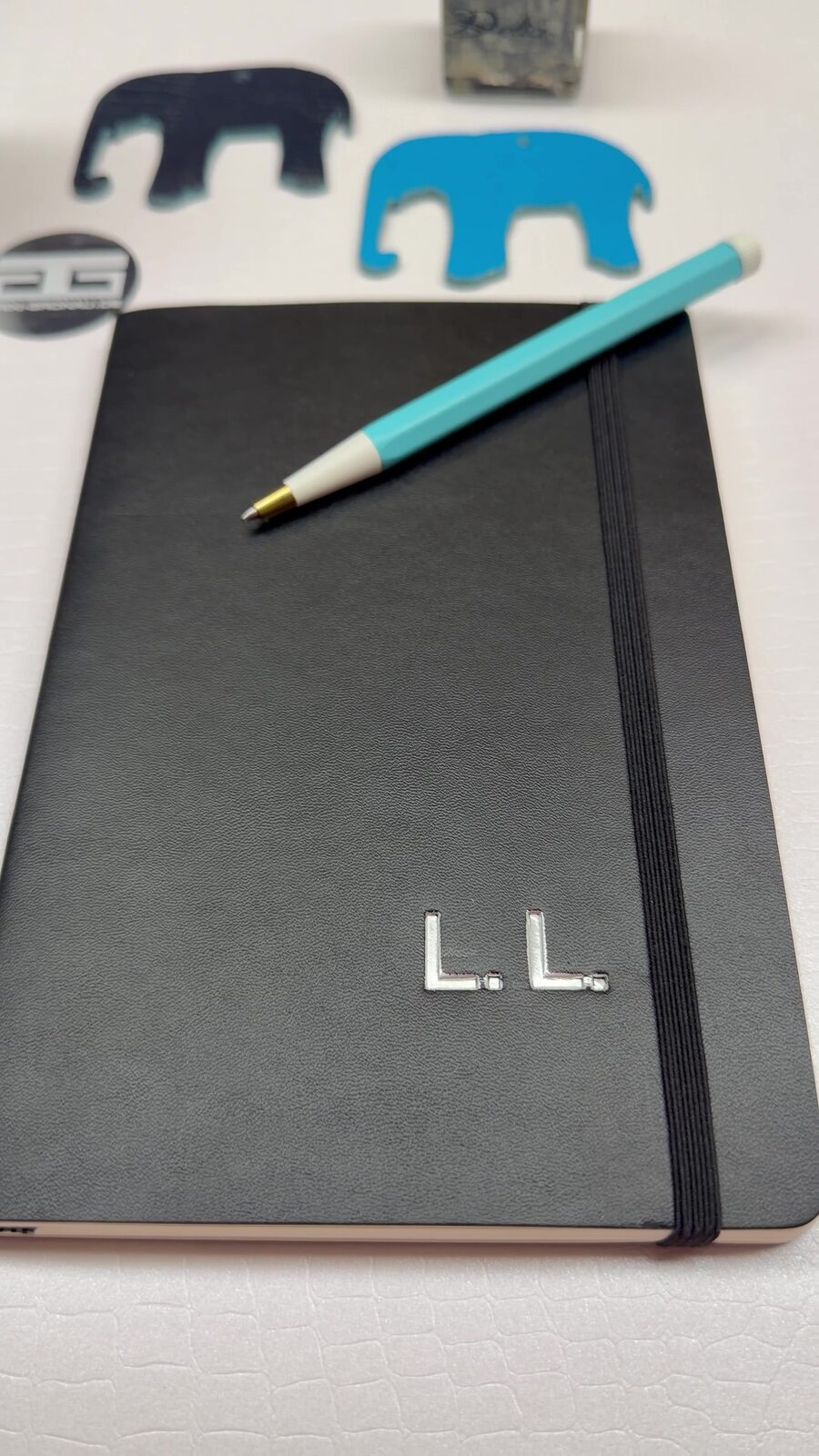
Hot foil stamping is a finishing process in which a stamping foil is transferred to a material using heat and pressure. Unlike conventional printing with liquid ink, the colour effect is created by a thin transfer layer carried on the foil. Depending on the foil, the result can be metallic, matt, coloured, white, black or especially bright.
The motif is transferred to the workpiece with a heated die or with individual stamping letters. Heat, pressure, contact time, foil and material have to work together. On paper, board, book covers, leather and other suitable surfaces, hot foil stamping can clearly accentuate lettering, initials, logos and graphic motifs.
How is the foil transferred?
The stamping foil lies between the tool and the workpiece. Under heat and pressure, the intended transfer layer releases from its carrier and bonds to the material only where the heated tool makes contact. After stamping, the foil is lifted away and the motif remains on the surface.
A clean result depends on more than temperature. Pressure, contact time, the structure of the surface and the type of foil all influence the outcome. For this reason, we make a test impression in the TRIXI GRONAU atelier before the final work. Only after this test do we define the settings for the actual piece.
Which tools and machines do we use?
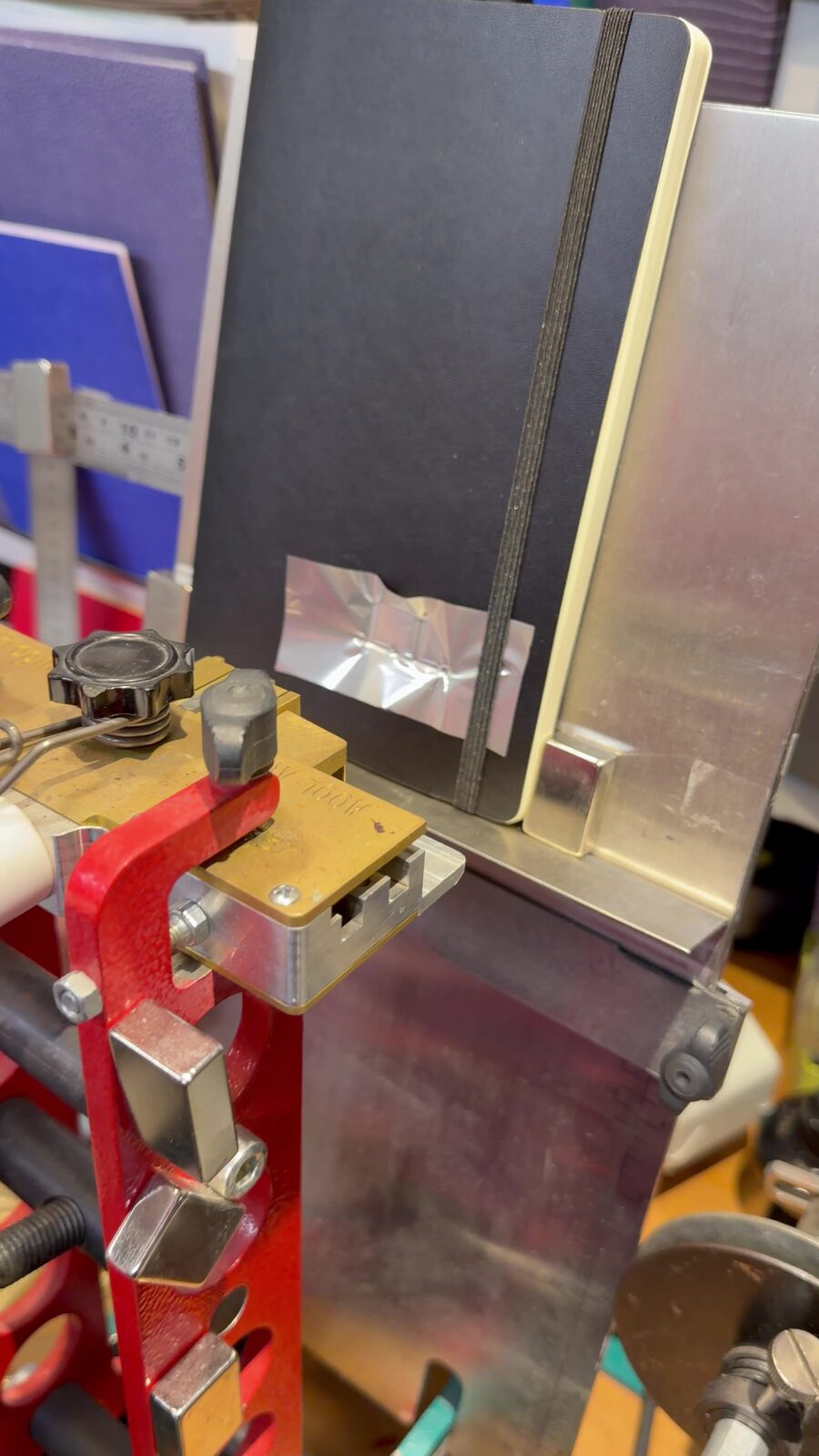
In our atelier we work, among other equipment, with a Baier stamping press and a Schmedt Prägnant. With its foil feed, the Baier press is particularly useful for repeated impressions and small production runs. The Schmedt Prägnant is used for fine individual work and personalisation.
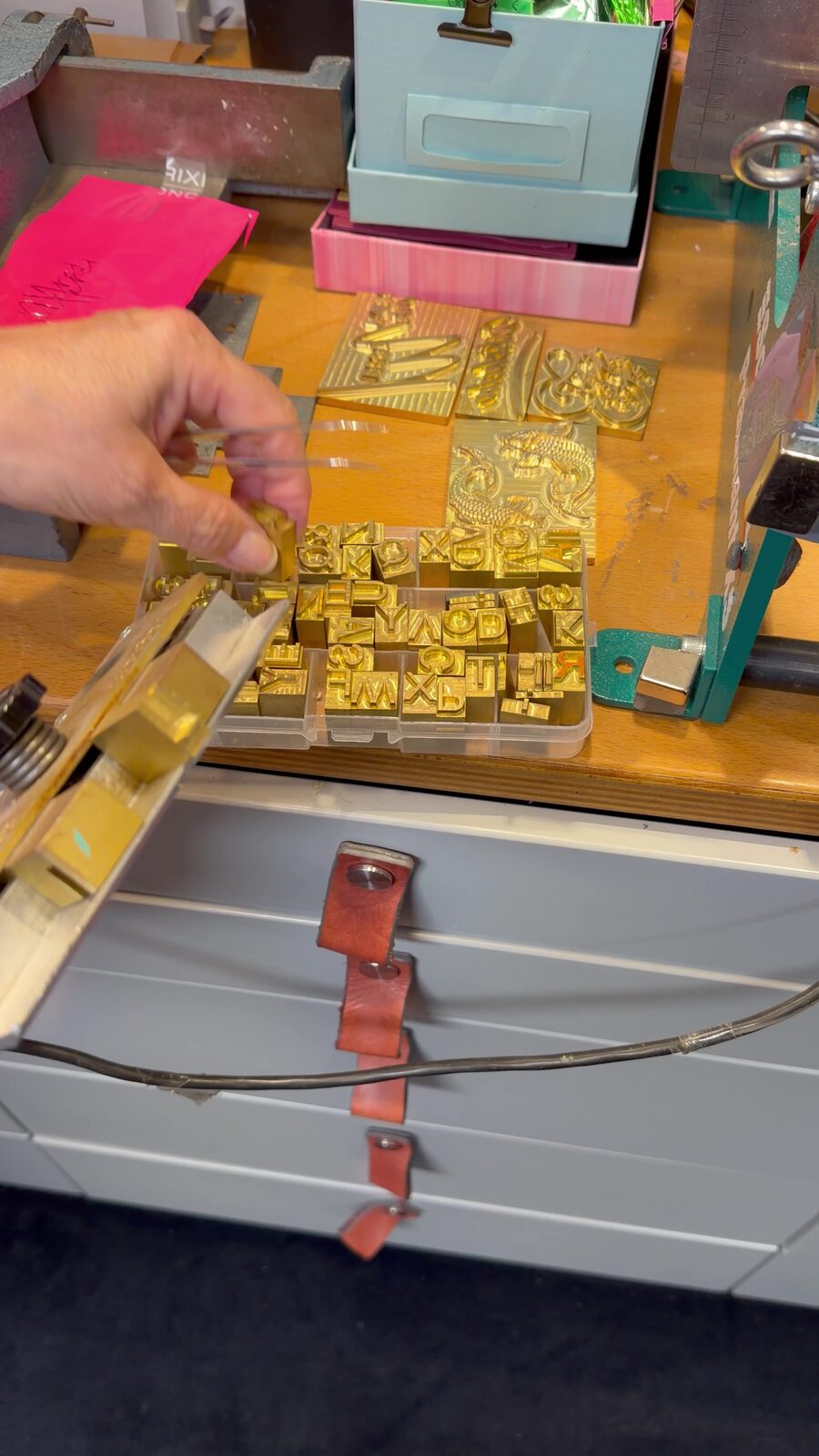
Our stamping tools are mainly brass dies and individual stamping letters. We also have type made of lead in the atelier. A dedicated die is made for a logo, a fixed motif or a recurring design. Names and initials can often be composed from individual letters instead.
What is a die in hot foil stamping?
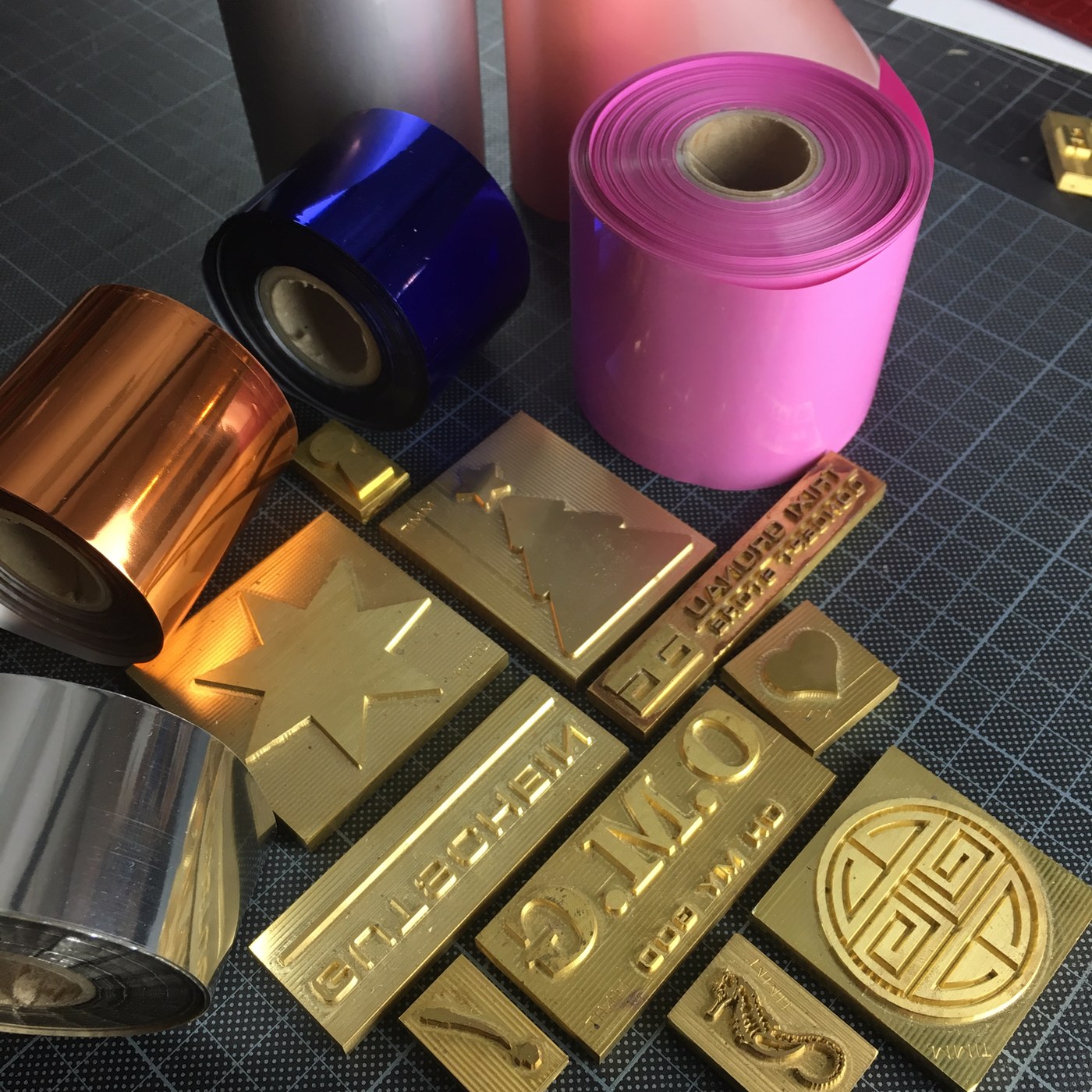
A die is the raised printing form that carries the motif. Lettering, logos and graphic elements are prepared so that the heated die transfers the foil only to the intended areas of the material. With an individual motif, the work therefore starts before the actual stamping process, with the design and the production of the appropriate tool.
The first impression with a newly made motif is always a special moment for us. Only when the foil is lifted away do we see whether material, foil, tool and settings together create the effect that was intended in the design.
Which materials can be hot foil stamped?
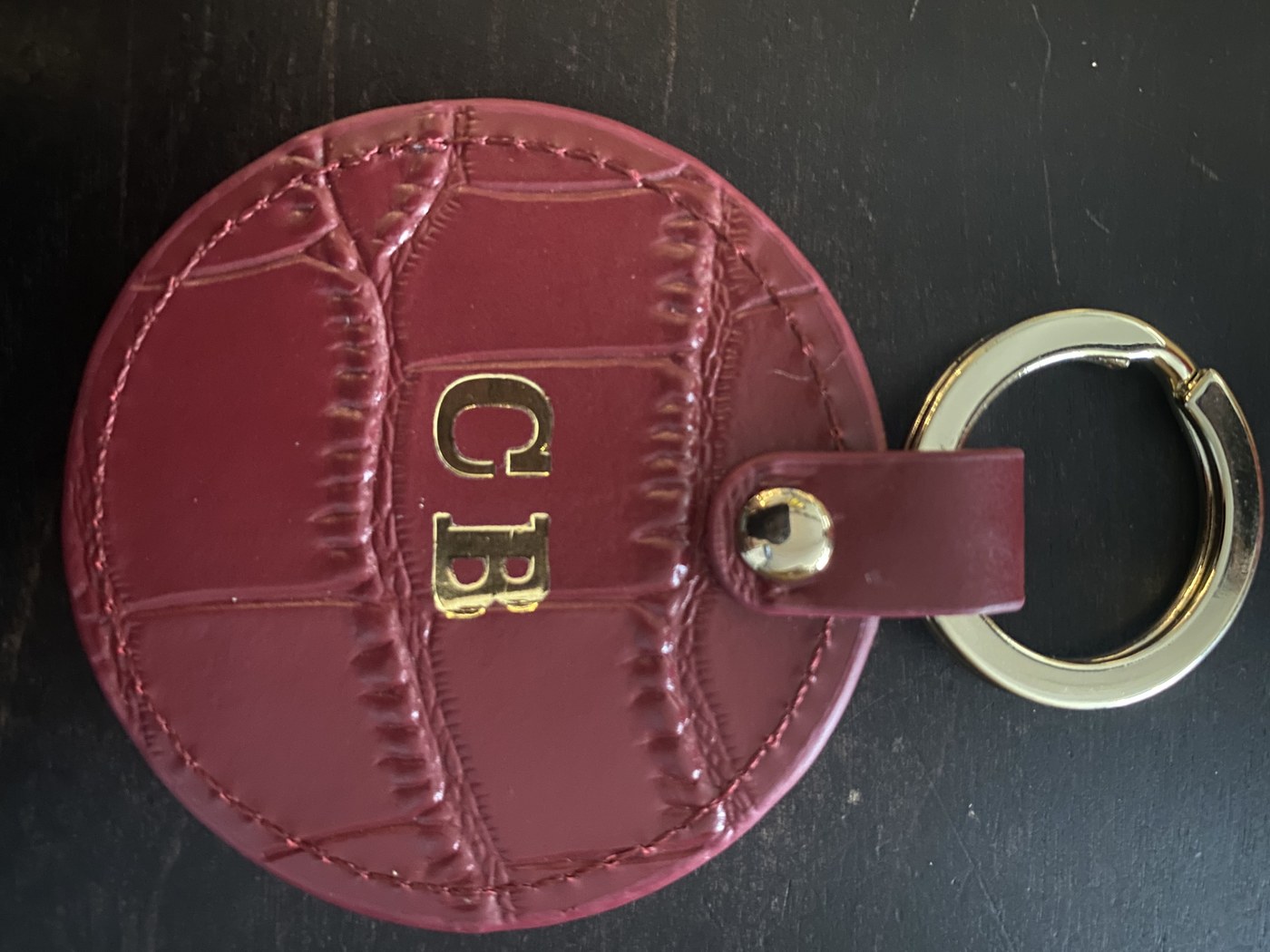
At TRIXI GRONAU we hot foil stamp paper, board, book covers and leather, among other materials. Typical work includes notebooks, guest books, photo albums, key rings, cases, folders, gift boxes, cards and small corporate editions.
Not every material reacts in the same way. A smooth surface behaves differently from strongly textured paper or soft leather. Textured papers in particular can be demanding because the foil does not always adhere evenly to every raised and recessed part of the surface. The suitability of a material and foil combination therefore cannot be judged by appearance alone.
Which foil colours are available?
Hot foil stamping is not limited to gold and silver. In our atelier we use, among others, gold, silver, copper, rose gold, blue, Bordeaux, white, black and neon colours. There are also foils with special surfaces and effects.
When we have creative freedom, we choose the foil so that it suits the material, the product and the client. For corporate commissions, the foil colour can also reflect an existing brand colour. The decisive step is always a test on the actual material, because the same foil can look very different on different surfaces.
How is personalisation created?
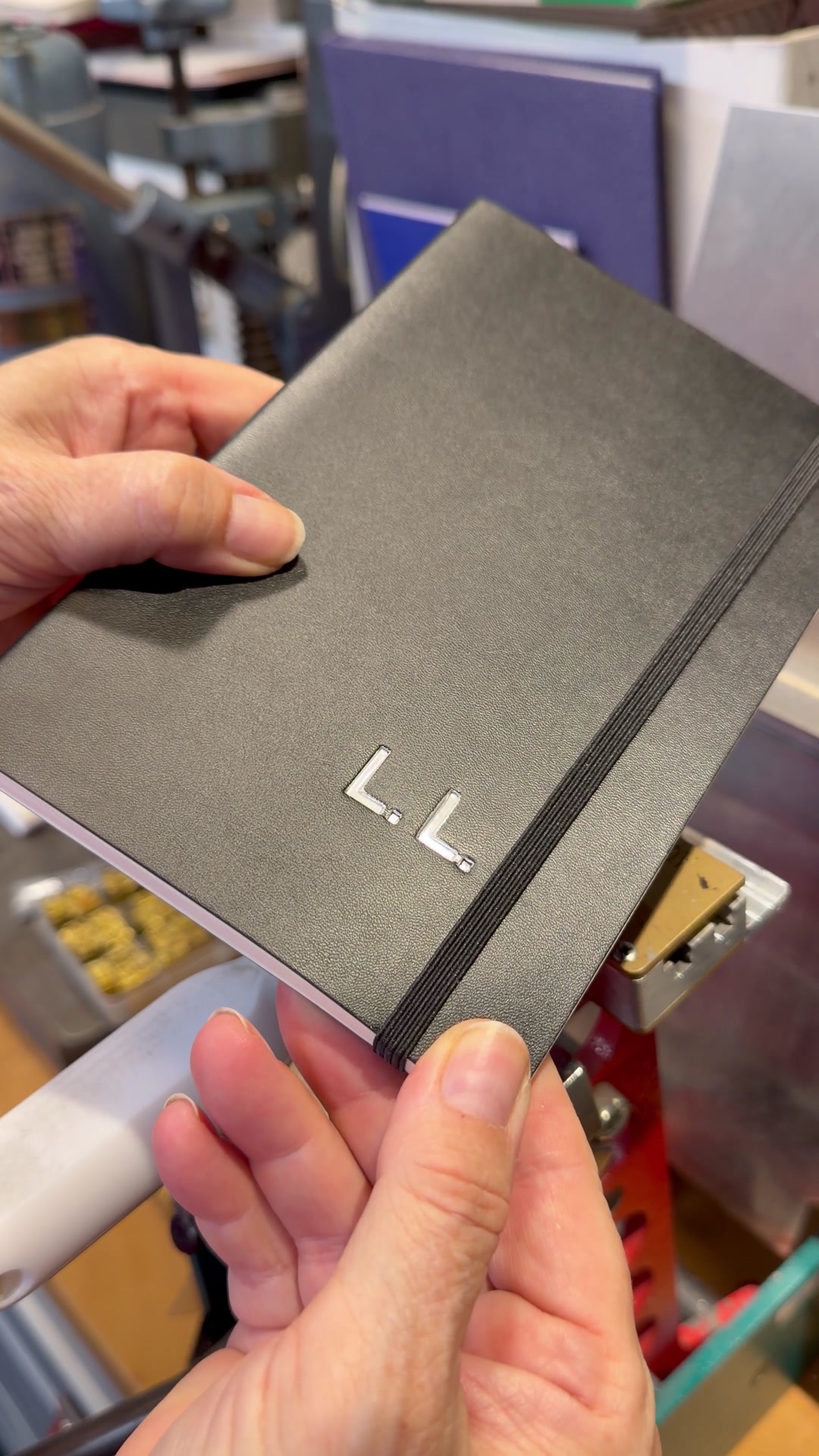
Names, initials and short lines of text can be composed from individual stamping letters and then transferred with foil. This makes it possible to personalise notebooks, photo albums, leather goods or gifts without producing a separate die for every name.
For logos, longer pieces of lettering and more complex motifs, a dedicated die is generally used. This also allows recurring corporate editions and individually developed motifs to be reproduced precisely.
How do you recognise good hot foil stamping?
A successful impression is clear, clean and complete. The foil should sit evenly on the stamped material, the contours should be well defined, and unwanted foil outside the motif should not be visible.
A typical fault occurs when the foil does not release completely from its carrier. The motif then appears only partially or may not be visible at all. The reason can lie in the interaction between foil type, material, temperature, pressure or contact time. This is why a test impression is part of our normal working process.
How does hot foil stamping differ from blind embossing?
With hot foil stamping, a visible foil layer is transferred to the material. Blind embossing works without foil and without printing ink. Its effect is created solely by shaping the surface. Both processes use pressure and a stamping tool, but their visual effect is very different.
Blind embossing has its own glossary page because material choice, embossing depth and visual effect require a different focus.
How does hot foil stamping differ from thermography?
With thermography, ink is printed first. Thermographic powder is applied to the still wet ink and then melted with heat to create a raised ink layer. In hot foil stamping, by contrast, a foil is transferred directly to the material with a heated tool.
Both processes can accentuate lettering and motifs, but technically they work in completely different ways. Hot foil stamping is particularly interesting when a metallic, coloured or special foil surface is desired.
How does hot foil stamping differ from conventional digital printing?
In conventional digital printing, the motif is produced directly from digital data with toner or ink and without a stamping die. Hot foil stamping requires a tool, heat, pressure and a suitable stamping foil. This creates a different surface effect and, on many materials, a slight tactile impression as well.
Hot foil stamping at TRIXI GRONAU
Stamping has been part of our work for many years. The craft was passed down within the family. Corinna's mother, a trained bookbinder, taught her hot foil stamping. Corinna then developed her own working methods further through practical experience. Materials, tools and foils react differently again and again, so experience grows not only from rules but from many real impressions and careful observation of the result.
Our work ranges from personalised one off pieces to corporate editions. One documented example is a holographic notebook bearing the wording “Right here, Right now, Right tomorrow”, produced for Dentsu. The books were created as gifts for employees of Louis Vuitton.
We also particularly enjoy working with different book cover materials and leather surfaces. This is where the importance of a test becomes especially clear. A foil that works very well on paper does not automatically produce the same result on leather or on a coated surface.
Questions about hot foil stamping
Can every foil be used on every material?
No. The foil type and the material have to suit each other. We therefore test the desired combination before the final stamping.
Does every motif need its own die?
No. Names and initials can often be composed from individual stamping letters. For logos, fixed lettering and more complex motifs, a dedicated die is generally made.
Can colours other than gold be stamped?
Yes. In addition to gold and silver, many colours and finishes are available, including copper, rose gold, blue, Bordeaux, white, black and neon colours.
Why is a test impression important?
Because material, foil, temperature, pressure and contact time together determine the result. A test shows whether the foil transfers cleanly and which setting is appropriate for the specific workpiece.
Is hot foil stamping the same as blind embossing?
No. Hot foil stamping transfers a visible foil. Blind embossing creates its effect without foil, solely by shaping the material.
Which products can be personalised?
Depending on their material and form, examples include notebooks, guest books, photo albums, leather goods, key rings, cases, folders, cards and gift boxes.