TRIXI GRONAU Manufactory · Knowledge
Die Cutting
When an idea turns into a shape of its own
Die cutting is one of the jobs where you can watch an idea become something you can hold.
In our manufactory we cut leather, covering materials, fur, board and cardboard. Depending on the material and the design, this gives us single motifs, tags, small leather parts or precisely fitting shapes for a particular use.
The moment I like best comes when the cutting die is lifted after the cut and the finished piece appears underneath.
Sometimes I know quite exactly how it will look. And sometimes that first glance is the surprise.
What does die cutting mean?
In die cutting, a material is cut along a precisely defined outline with a cutting die.
The die carries the cutting rule of the later motif. Under pressure it is driven through the material and separates the shape cleanly.
That can be a simple geometric part. It can just as easily be a motif developed specially for us that did not exist before.
For me that is exactly where the appeal lies.
I can draw a shape, have the die made and then cut it again and again from completely different materials.
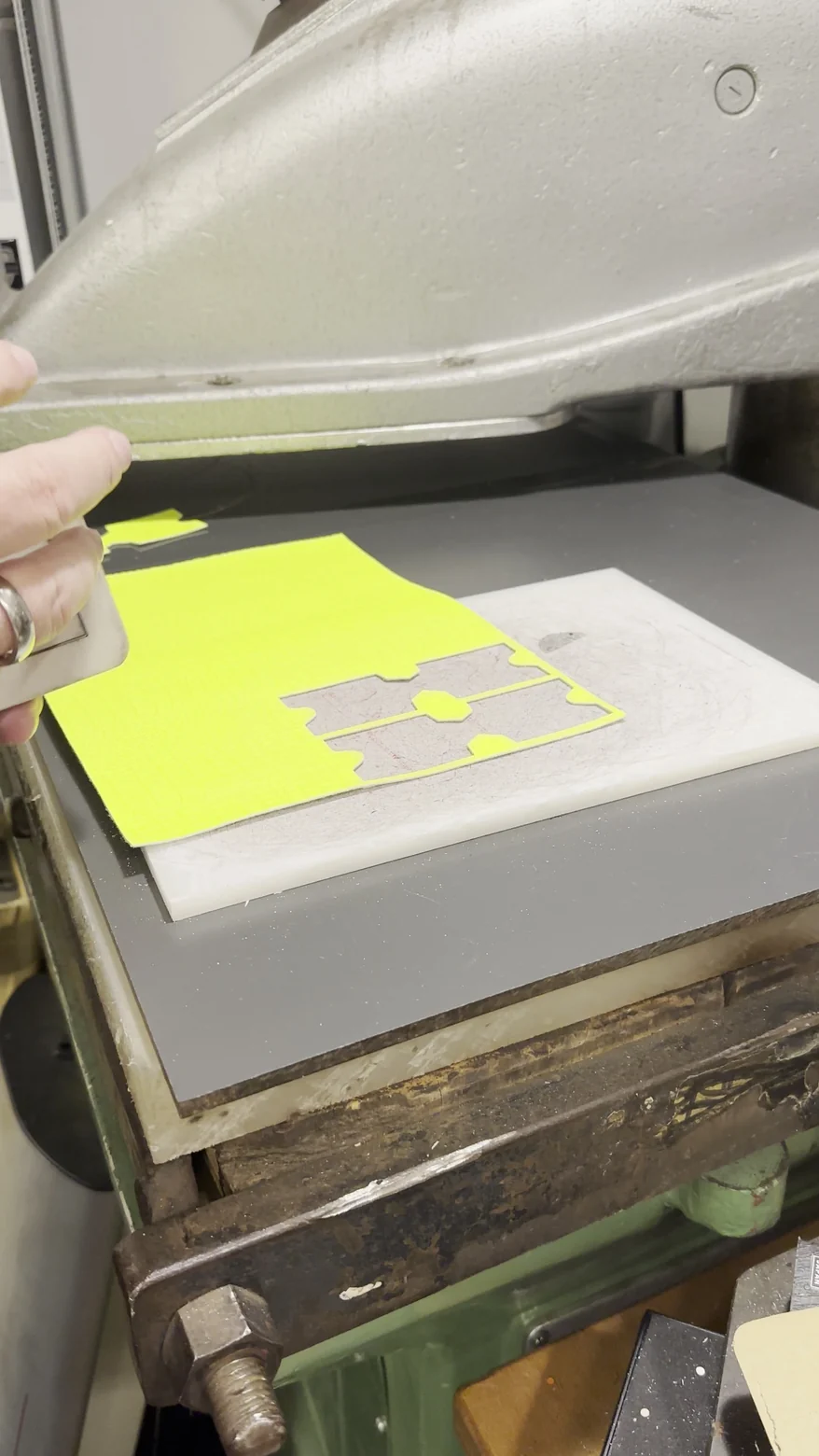
From a drawing to a cutting die of our own
Many of our cutting dies are made for one particular design.
I work out a motif and have a matching cutting die made for it.
Our fir tree tags are a good example. The outline of the tree was not picked from an existing range. For shapes like this we have the cutting die made to our own drawing.
A drawing can become a motif that can then be reproduced again and again.
That is what I like about this process.
An idea does not stay on paper. It takes on a real shape.
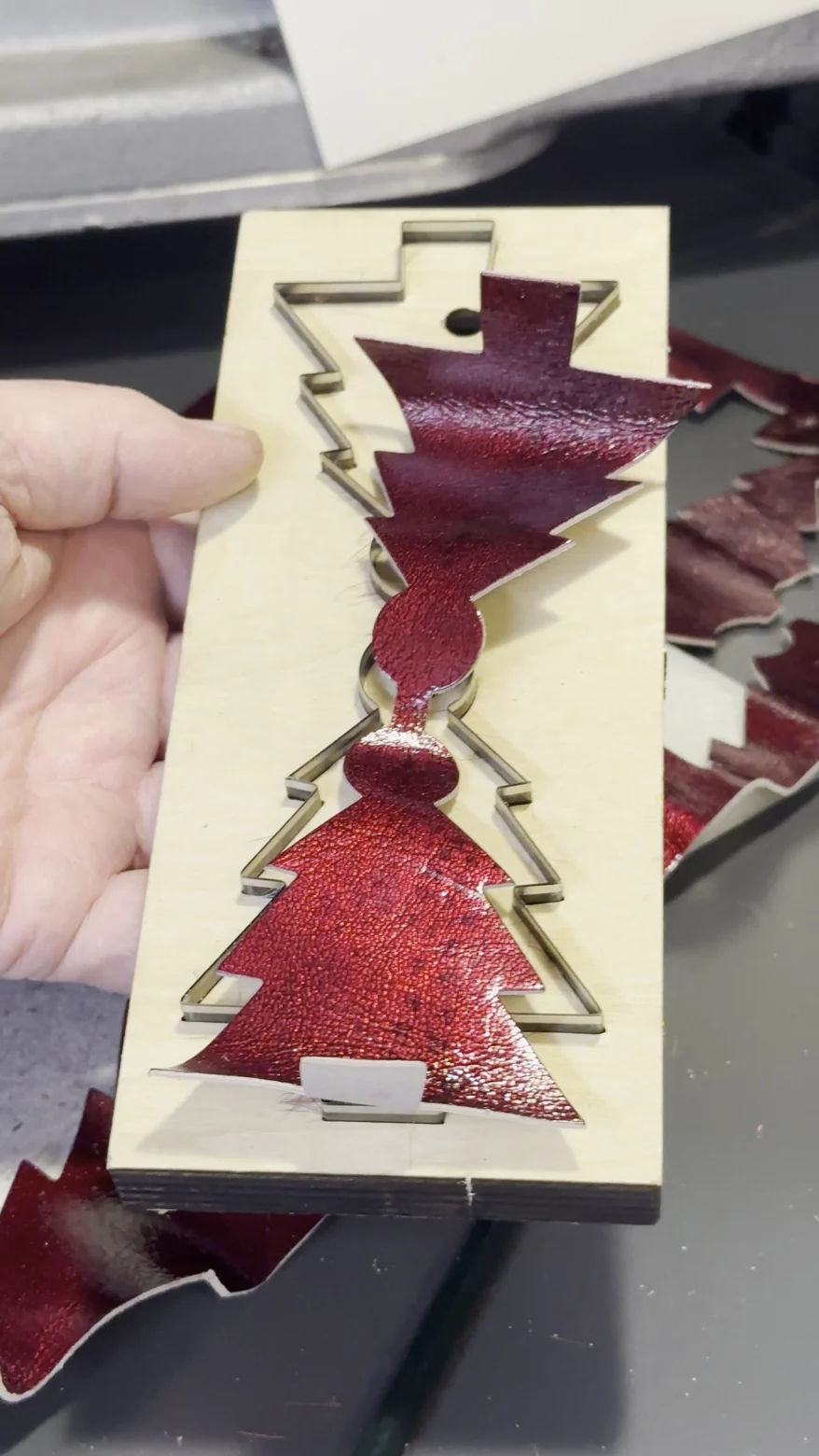
Not only paper
Most people think of paper first when they hear die cutting.
In our manufactory we use it on very different materials.
We cut leather, covering materials, fur, board and cardboard, among other things.
Every material behaves differently.
A firm leather has to be handled differently from thin paper. Board reacts differently from a soft covering material. Thickness and surface matter as well.
With leather it can be necessary to thin the material in certain places beforehand. We have a leather paring machine in the workshop for that.
A heavier leather can be prepared for further work that way.
The moment after the cut
I particularly like the moment right after the cut.
The cutting die is lifted and the cut part is taken out of the material.
Only then can you really see whether the shape works the way I pictured it.
With strong colours or unusual surfaces a motif often changes once more when it is released from the large sheet.
A surface suddenly becomes a single object.
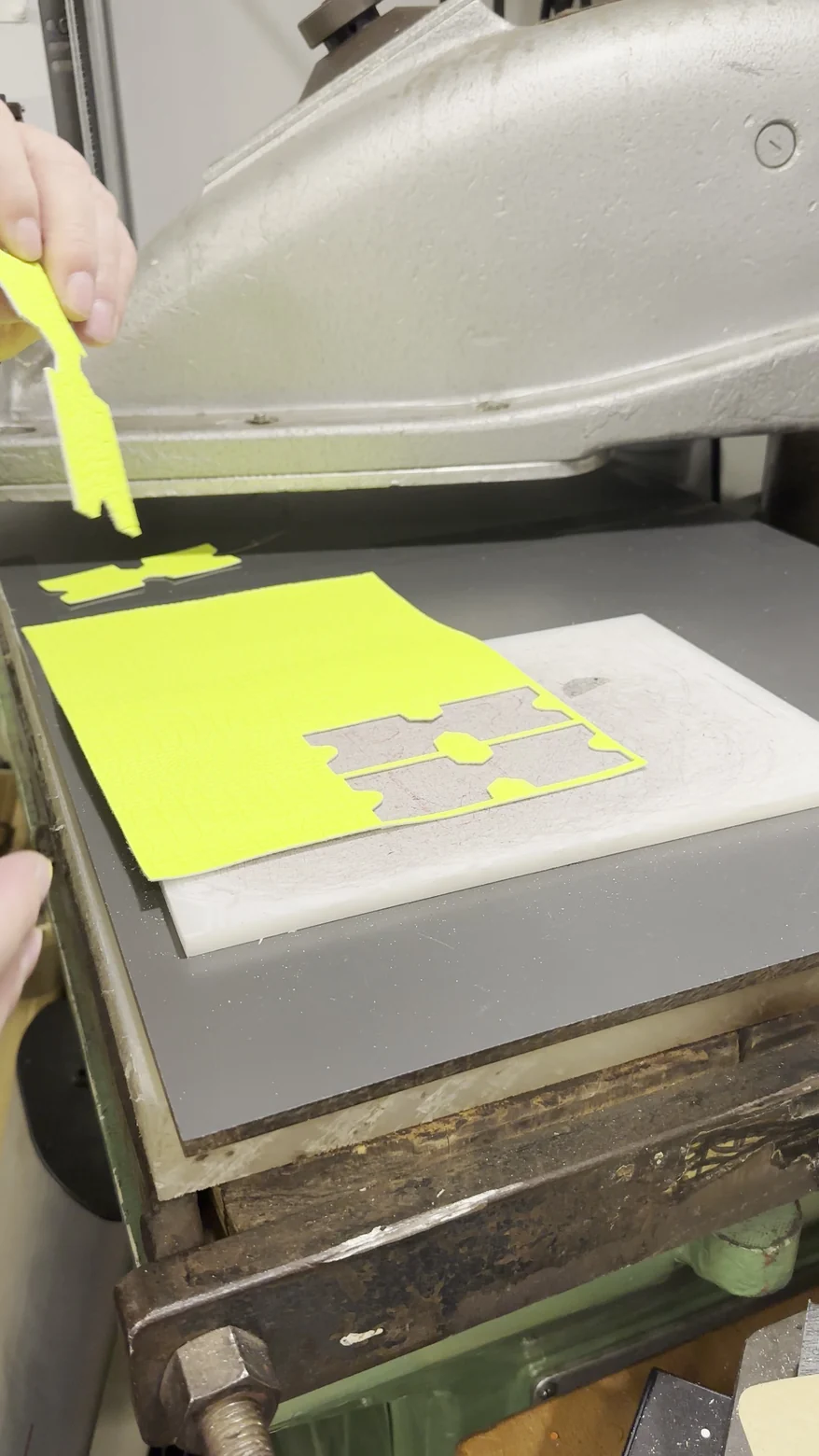
When a material gives a motif a different character
One and the same shape can look completely different.
I enjoy that most with motifs we cut from various materials or colours.
With gift papers I always find it interesting how a pattern looks once only a small section of it is left.
On the full sheet you read a pattern differently.
As a cut out star, tag or other motif it suddenly has a completely new effect.
Leather changes a motif a great deal too. Colour, surface, embossing and thickness all decide whether something looks calm, playful or very present.
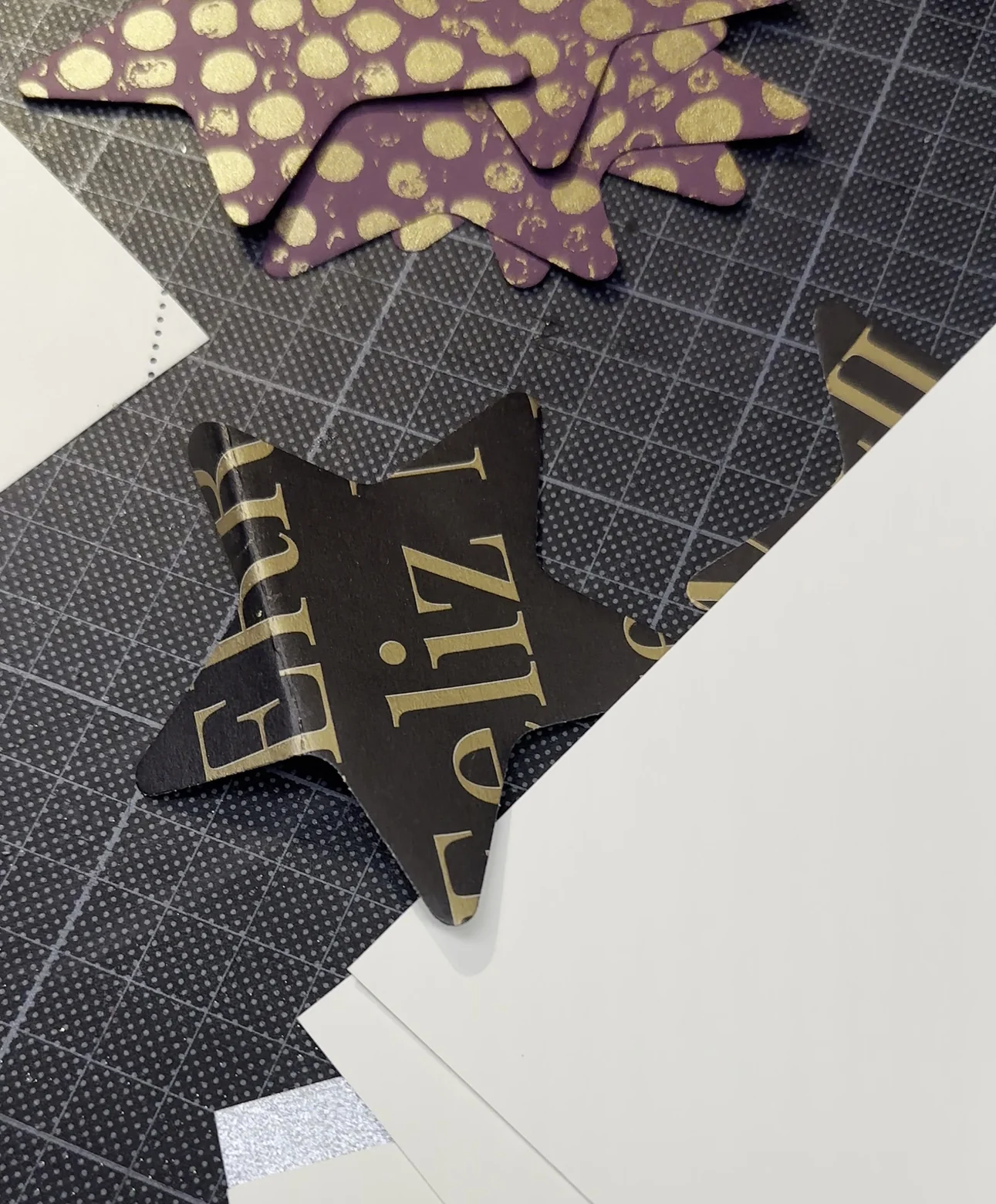
A clean cut edge decides it
I judge a good die cut by the edge first.
The cut has to be clean and exact.
The material must not fray and the outline must not become uneven.
With small motifs any inaccuracy shows immediately.
With thin paper the difficulty sometimes lies less in the cut itself than in what follows. Very fine paper can tear as it is taken out of the die.
So experience counts here as well.
Not every material can be treated the same way, even when the cutting die is identical.
Motifs that belong to our products
Many shapes of our own have come about over the years.
Some were developed for a single commission, others have become a fixed part of our work.
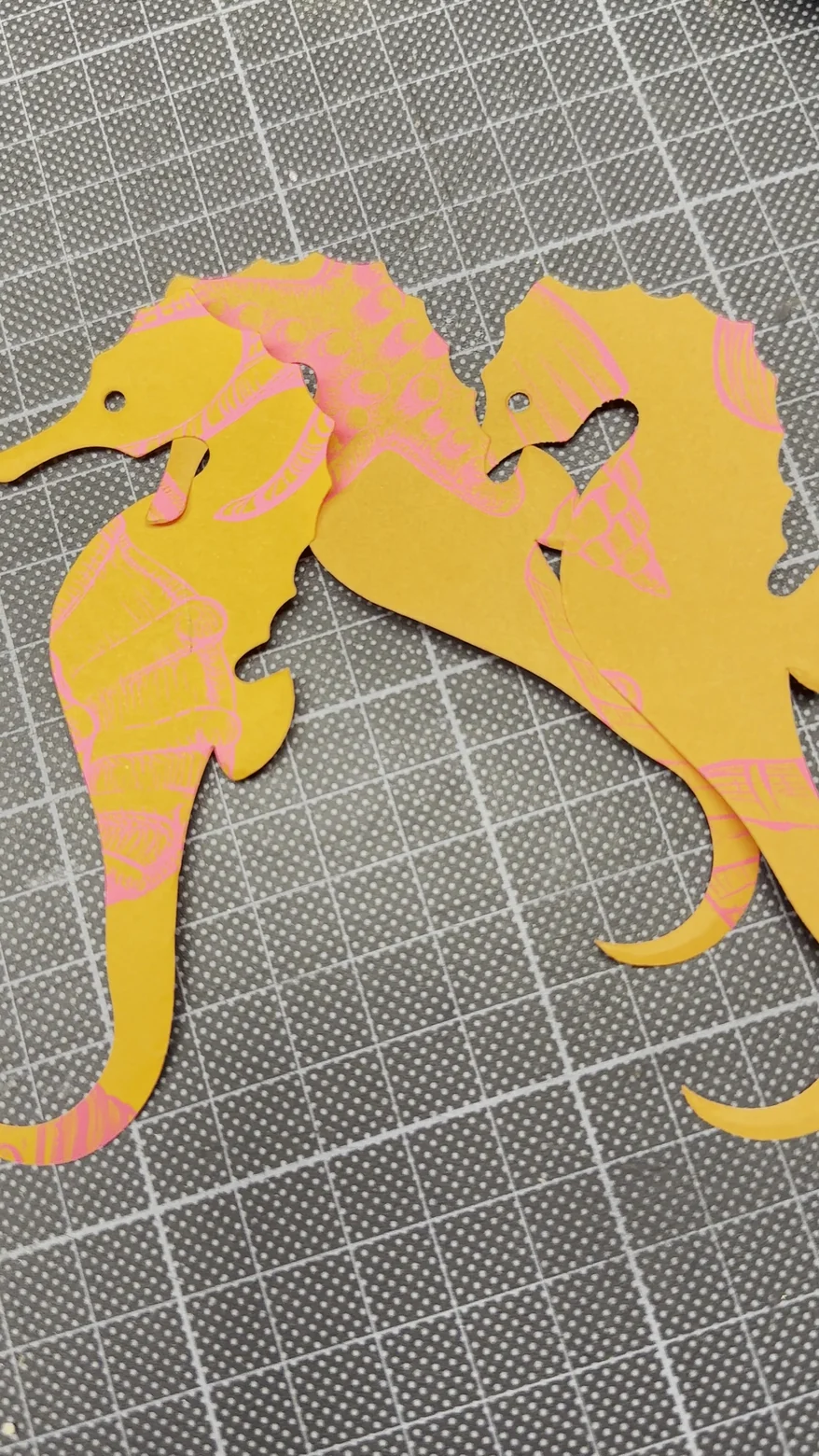
The small leather seahorses are a good example.
I am less interested in having as many different motifs as possible. What matters more to me is that the shape suits the product and our design.
A cutting die is therefore more to me than a tool.
It belongs to the design.
From the cut part to the finished product
Die cutting often does not finish a product.
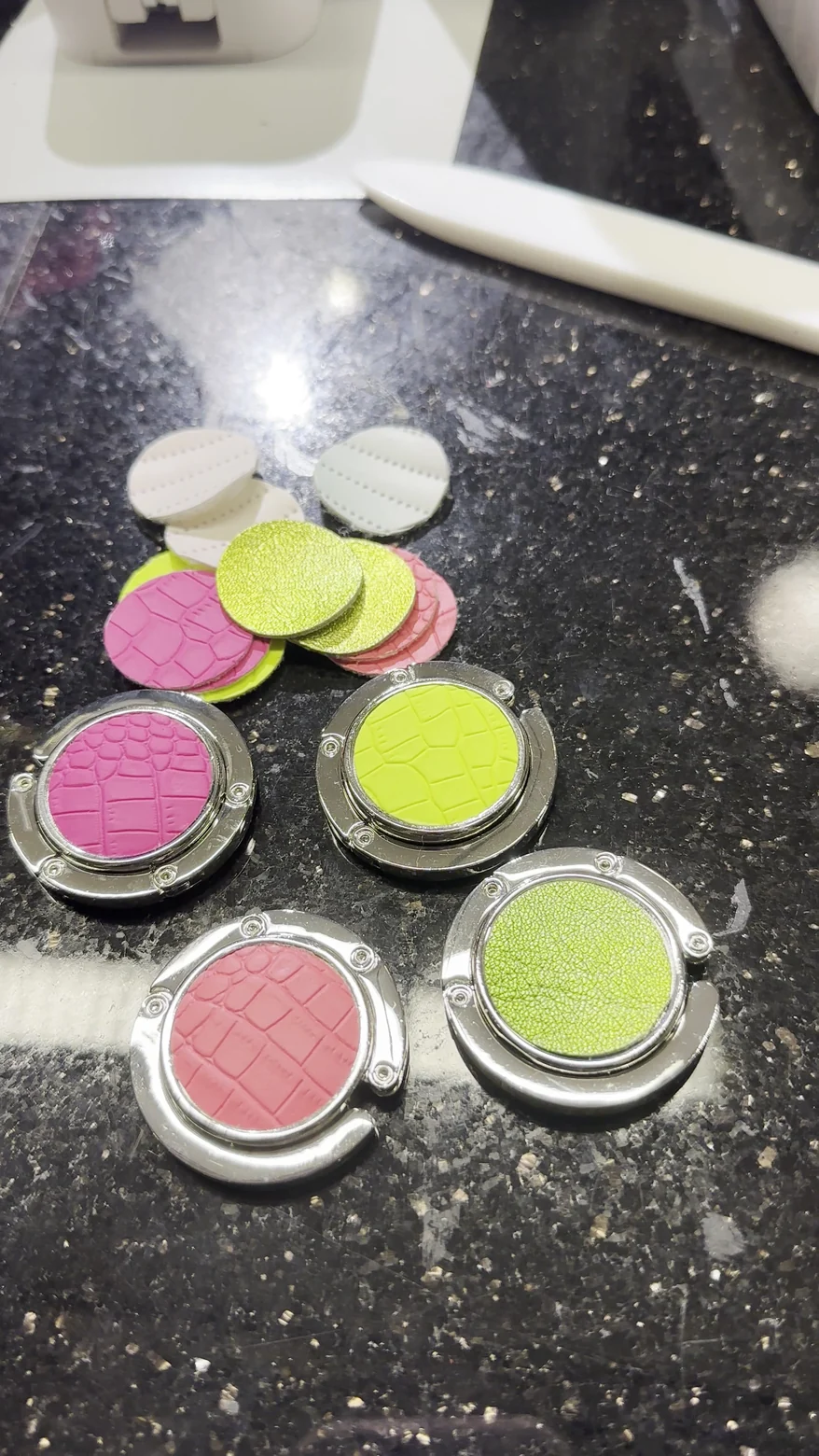
The cut part can then be embossed, glued, assembled or combined with other materials.
With our Taschenbuttler bag hooks, for example, the cut leather parts become part of a finished accessory.
This is where the different crafts in our manufactory come together.
Die cutting, hot foil stamping, sometimes blind embossing, leather work and the final assembly all belong to one process.
In the end what counts is the finished piece.
What is left over tells a story too
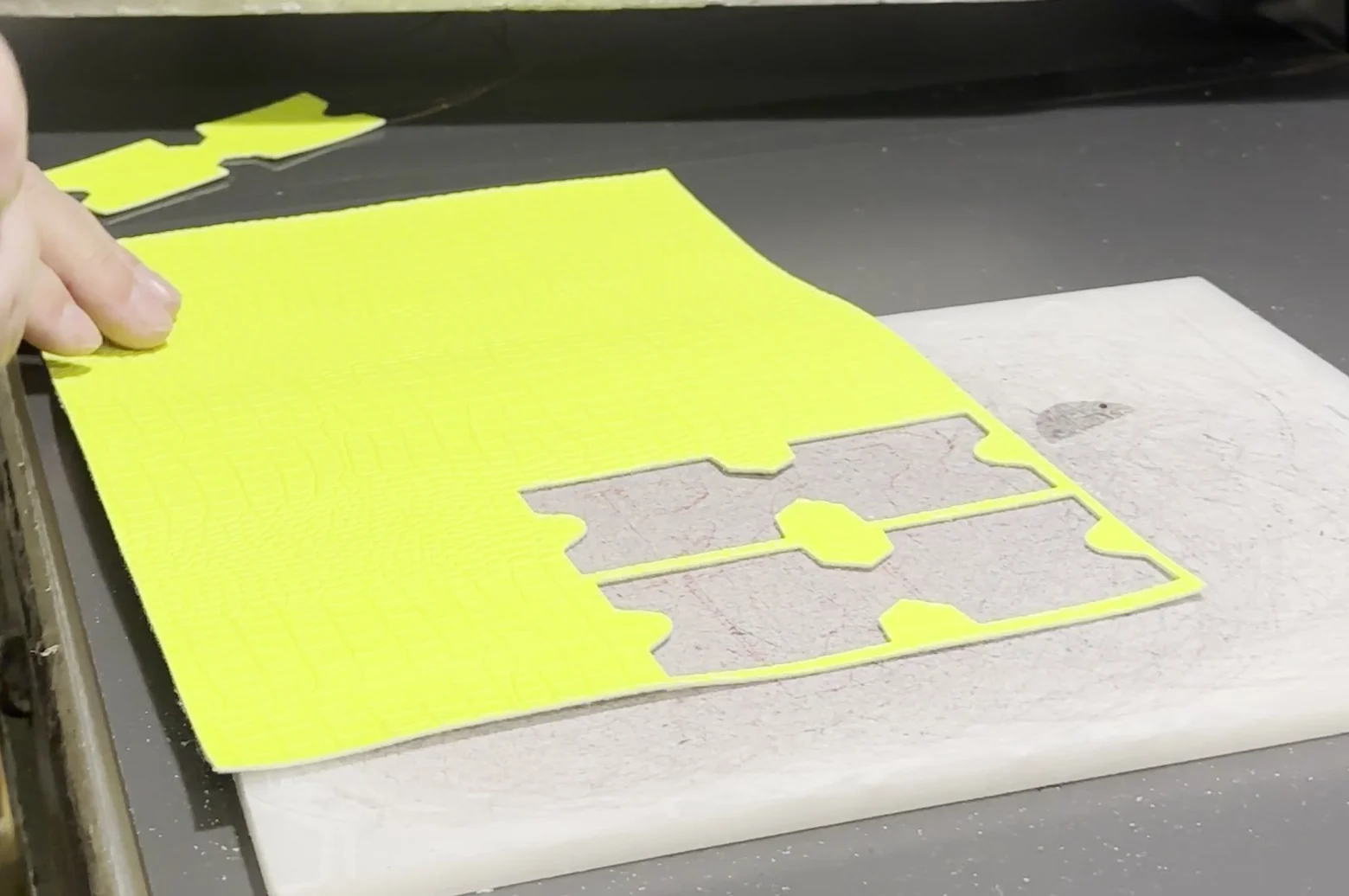
After cutting, the negative shape stays behind in the material.
Strictly speaking it is only the waste.
I often find these cutting skeletons very beautiful all the same.
You can see straight away how the individual shapes were arranged on the sheet and how one surface became many separate parts.
With strong colours it sometimes looks almost like a graphic in its own right.
For me die cutting is design
I do not see die cutting simply as a way of cutting a material out.
What interests me is the step before that.
Which shape should it be?
Which material suits it?
How large should the motif be?
How does a particular surface change the effect?
And is an idea worth having a cutting die of its own made for it?
Those decisions are what make the work interesting for me.
When I have a shape in mind I do not necessarily want to fall back on what is already available.
Then a new one is made.
Nobody else has it quite like that.