
- You do not have any products in your shopping cart yet.
PRINTING STUDIO › BOOKBINDING & FINISHING
BOOKBINDING & FINISHING
From the printed sheet to the finished object
Cutting, creasing, folding, binding, covering, die cutting. Whatever is printed here leaves the studio as a finished piece.
Our roots in bookbinding
Printing and bookbinding have been part of our family history since 1963.
Elsbeth Gronau, Corinna’s mother, was a trained bookbinder; her father was a printer. Both crafts stood side by side in the same workshop from the start, and they were thought about together. Today that is carried on in the third generation.
A good deal of it was not learned from books but passed on at the bench: how a book block is hung in straight, how much glue a cover will take, why the grain direction of the paper decides what the finished book will be like.
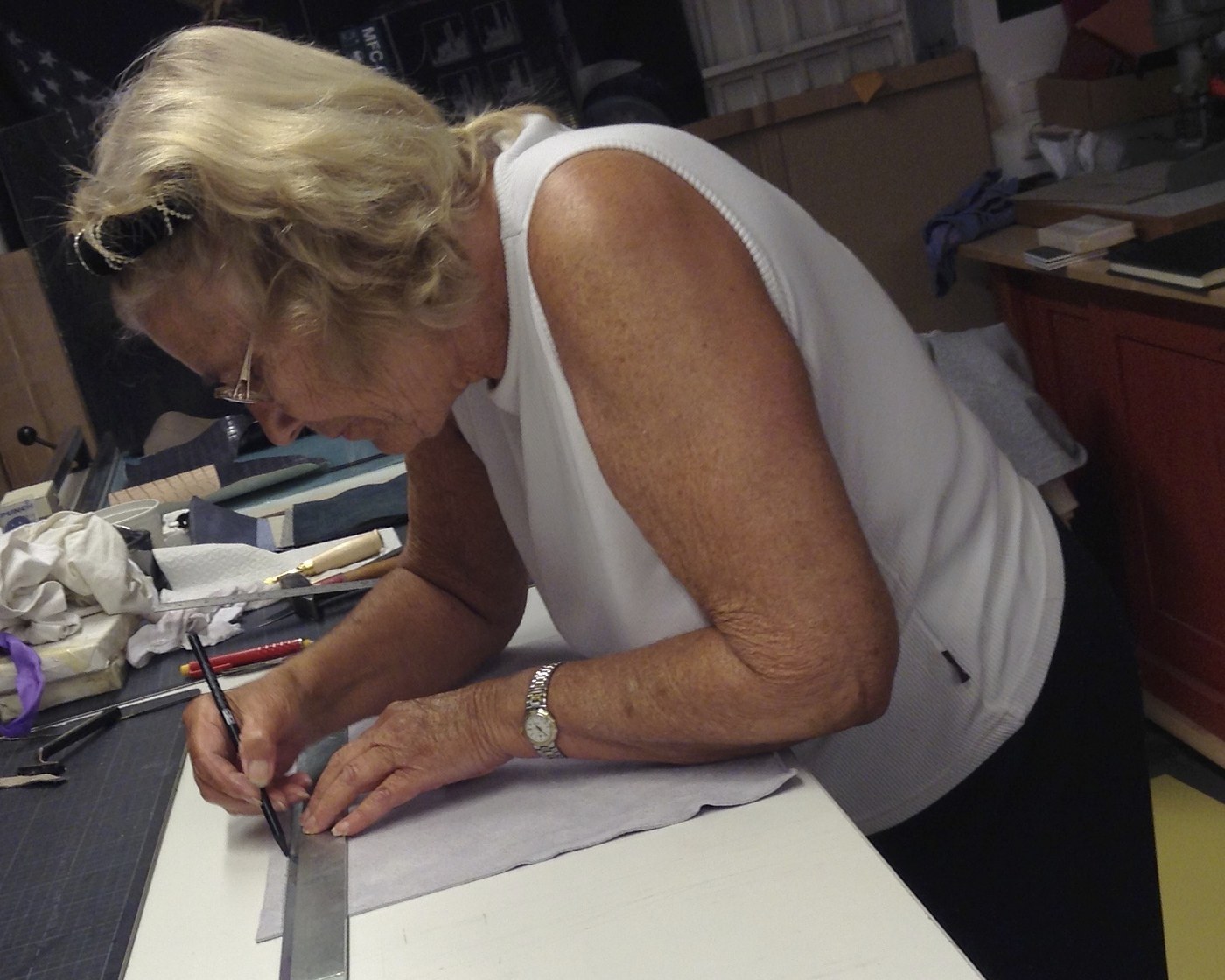
Elsbeth Gronau at the bookbinding bench in the studio. As a trained bookbinder she passed her knowledge of the craft on within the family.
A craft that stayed in the house
Some of the tools have stayed the same. Book press, bone folder, glue brush, and alongside them the machines for cutting, creasing and corners. What has changed are the jobs: today they are mostly one-off pieces and small runs rather than long print runs.
From the sheet to the finished object
Once printed, a sheet is only half done.
A sheet off the press is not yet a book or a card. It has to be brought to size, creased, folded, bound and trimmed cleanly. We do these steps in the house, at the bench and at the machines, guided by hand.

1 CUTTING
Paper, board and covering material are brought to size. The grain direction is taken into account as we go; it decides how the finished piece will lie later on.
2 CREASING AND SCORING
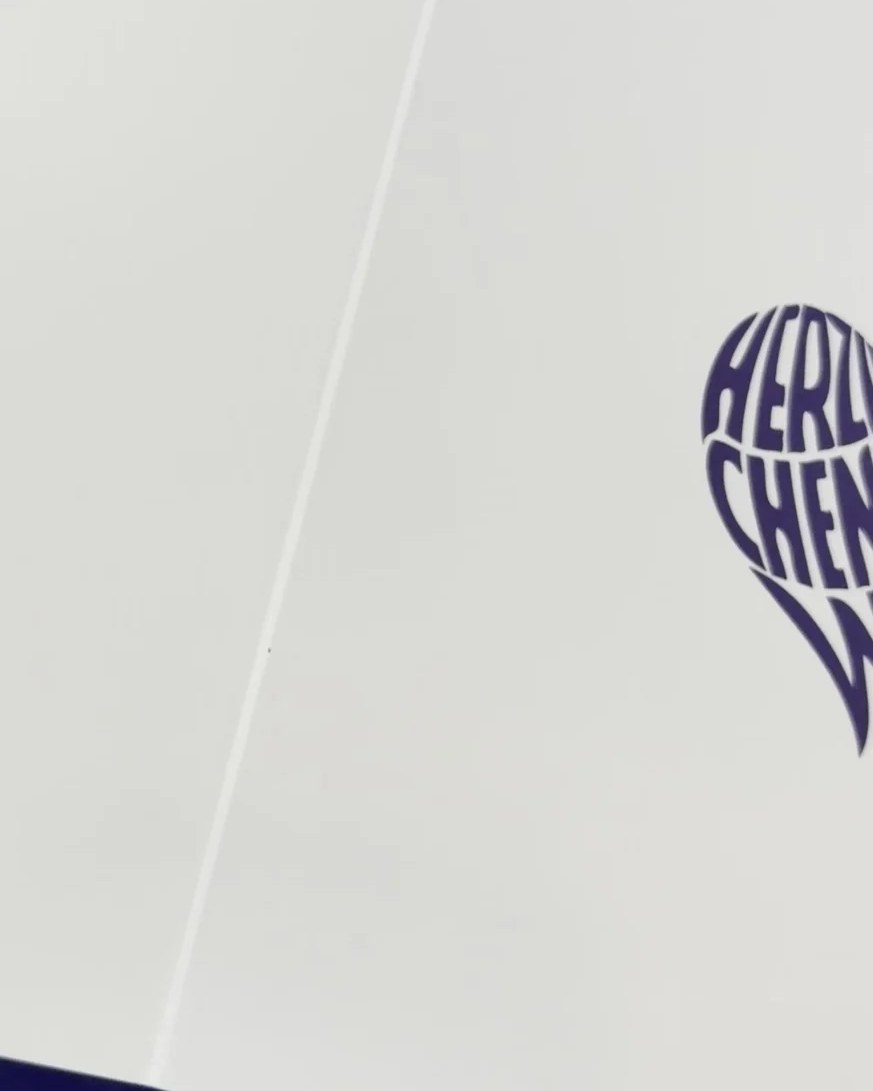
So that board folds without cracking, it is scored first. Folded cards and presentation folders all go through this.
3 FOLDING
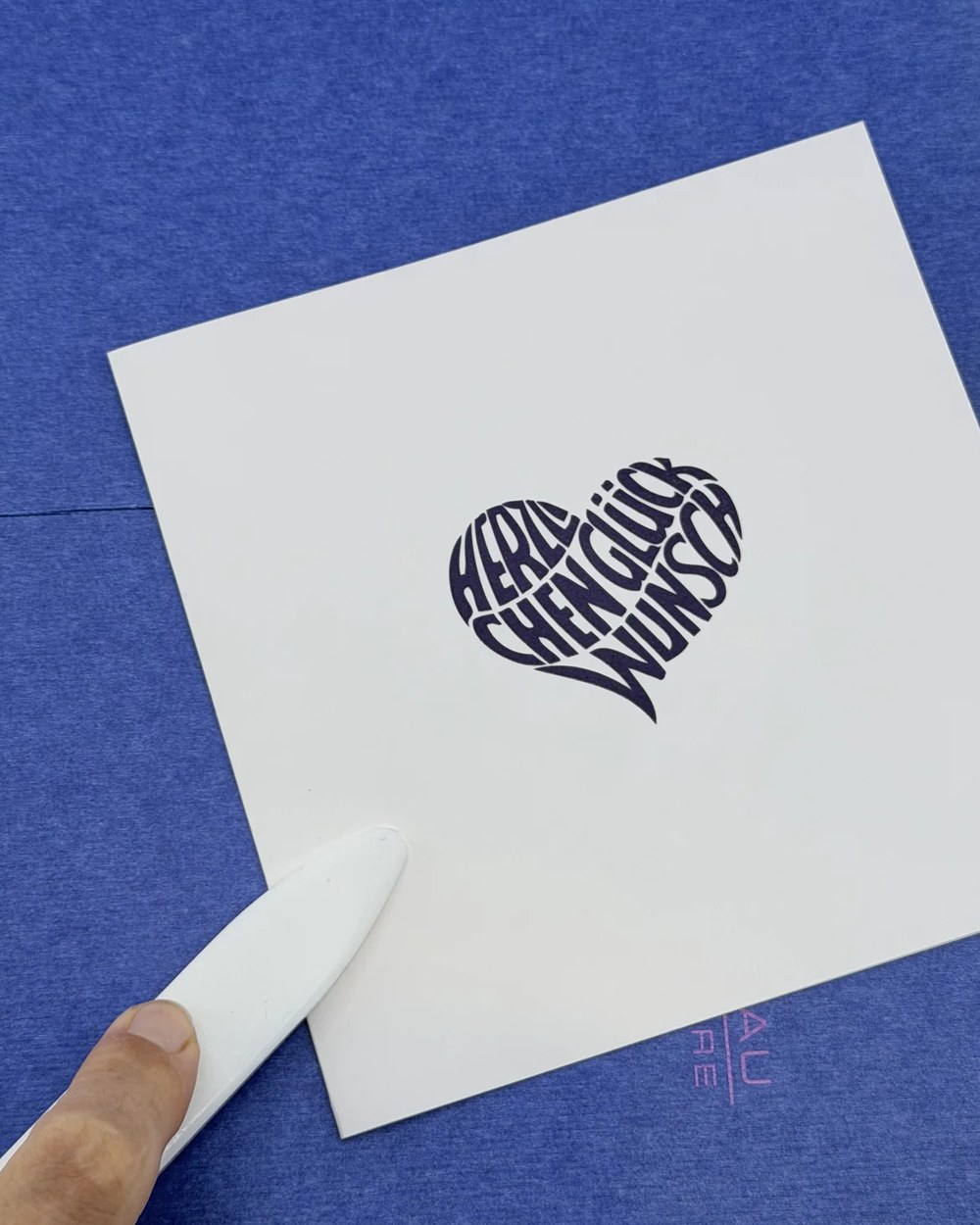
The fold is worked down with a bone folder. It used to be made of bone and is now of PTFE, but it is still used by hand as it always was.
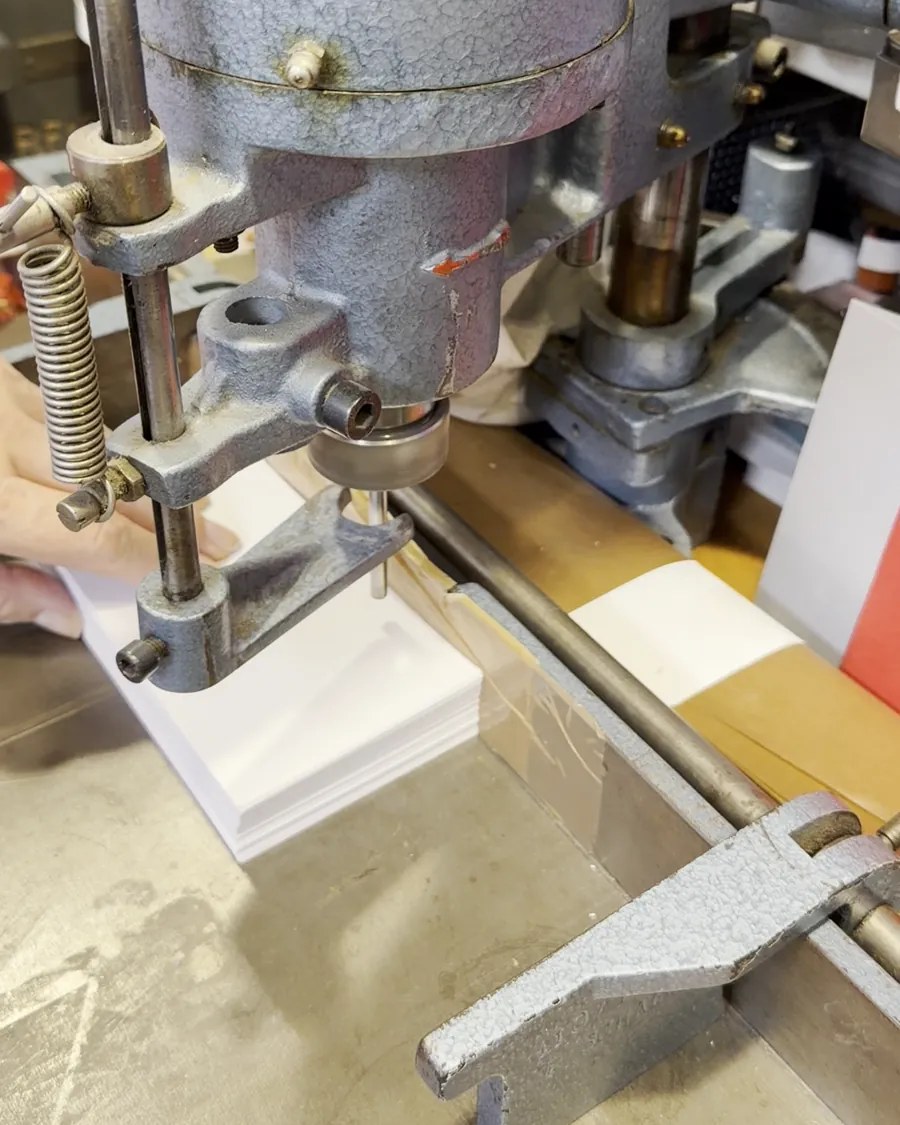
4 DRILLING
Holes for ring binders, folders, ribbons and tags are drilled rather than punched. Even deep in the stack the edge stays clean.
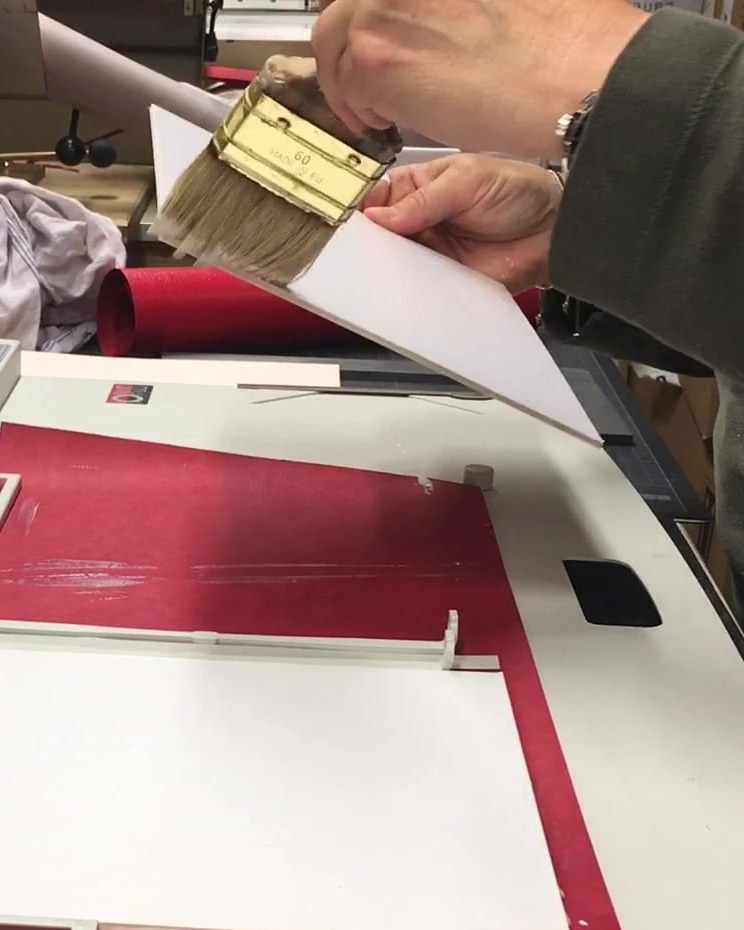
5 MAKING COVERS
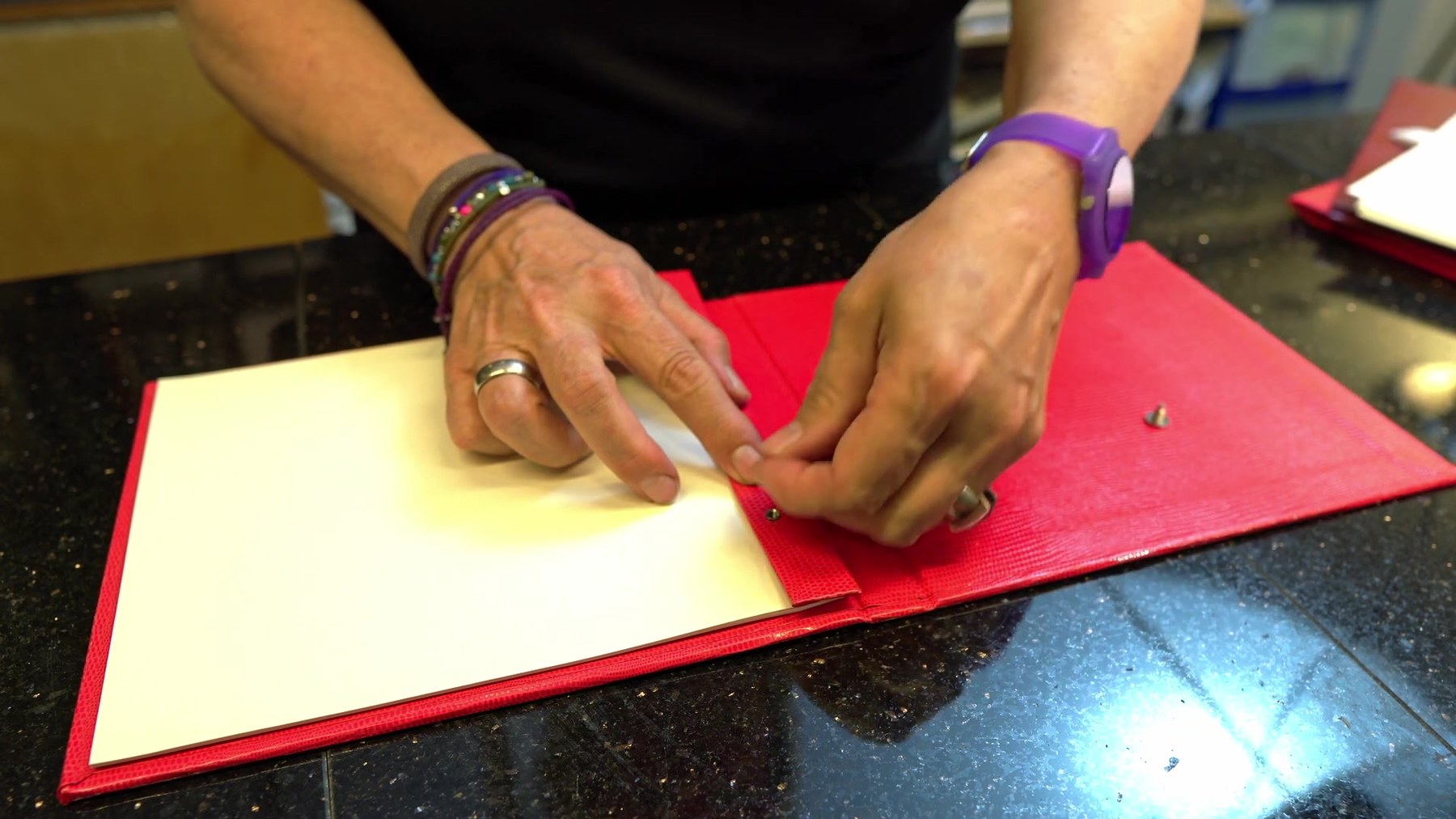
The boards are cut, the covering material pasted and laid on. Out of board, glue and covering material comes the cover.
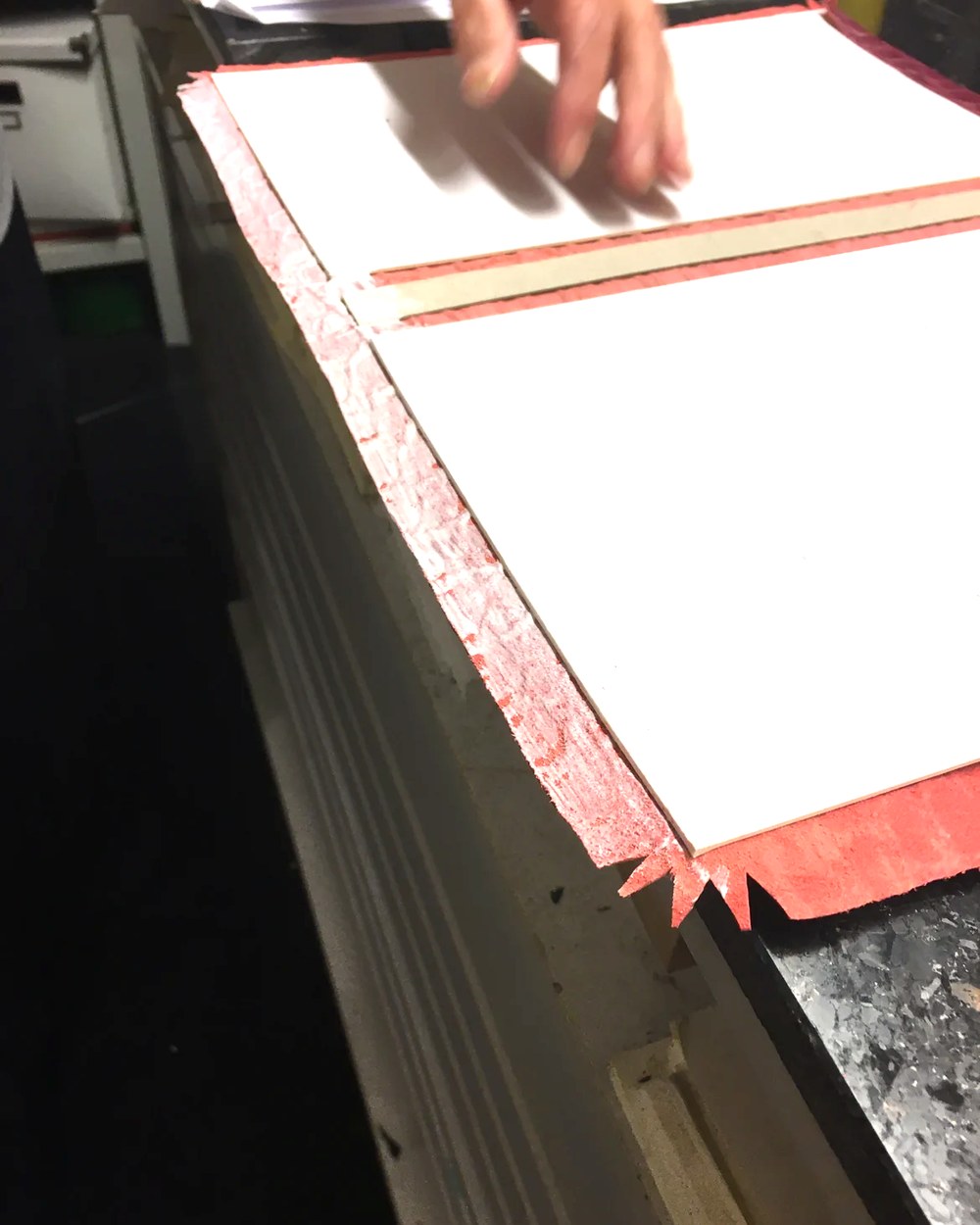
6 TURNING IN
The covering material is turned in over the edges, with the corners cut away first. The corners are where you can see whether a cover is well made.
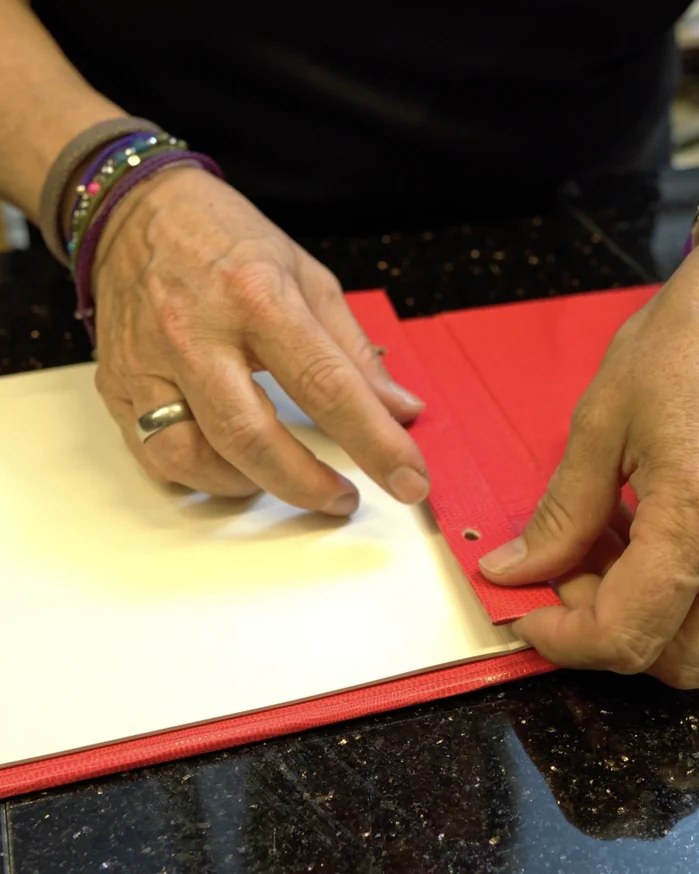
7 BINDING AND ASSEMBLY
Book block and cover are hung together and pressed. On albums and folders, eyelets, screws or ribbons are added.
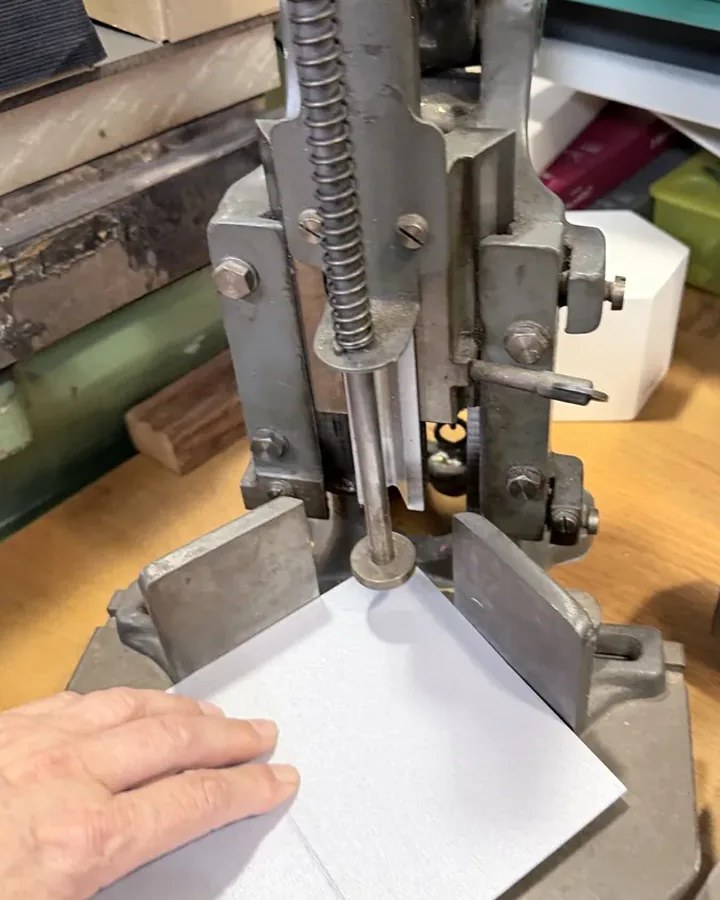
8 ROUNDING CORNERS
Round corners are not only a matter of looks. They scuff less easily. Cards, tags and book covers can have them on request.
One step gets a section of its own here, because it is the one that opens up the most: die cutting.
Die cutting
When the shape is not meant to be rectangular.
Anything that needs a contour of its own is die cut: tags, cut-outs, cases, round parts, shapes that cannot be cut cleanly with a knife. We work in paper and board, in greyboard, in covering material and in leather.
For a shape that recurs, we have a cutting die made to our own drawing. After that the same contour can be produced as often as needed, with the same cut edge every time.
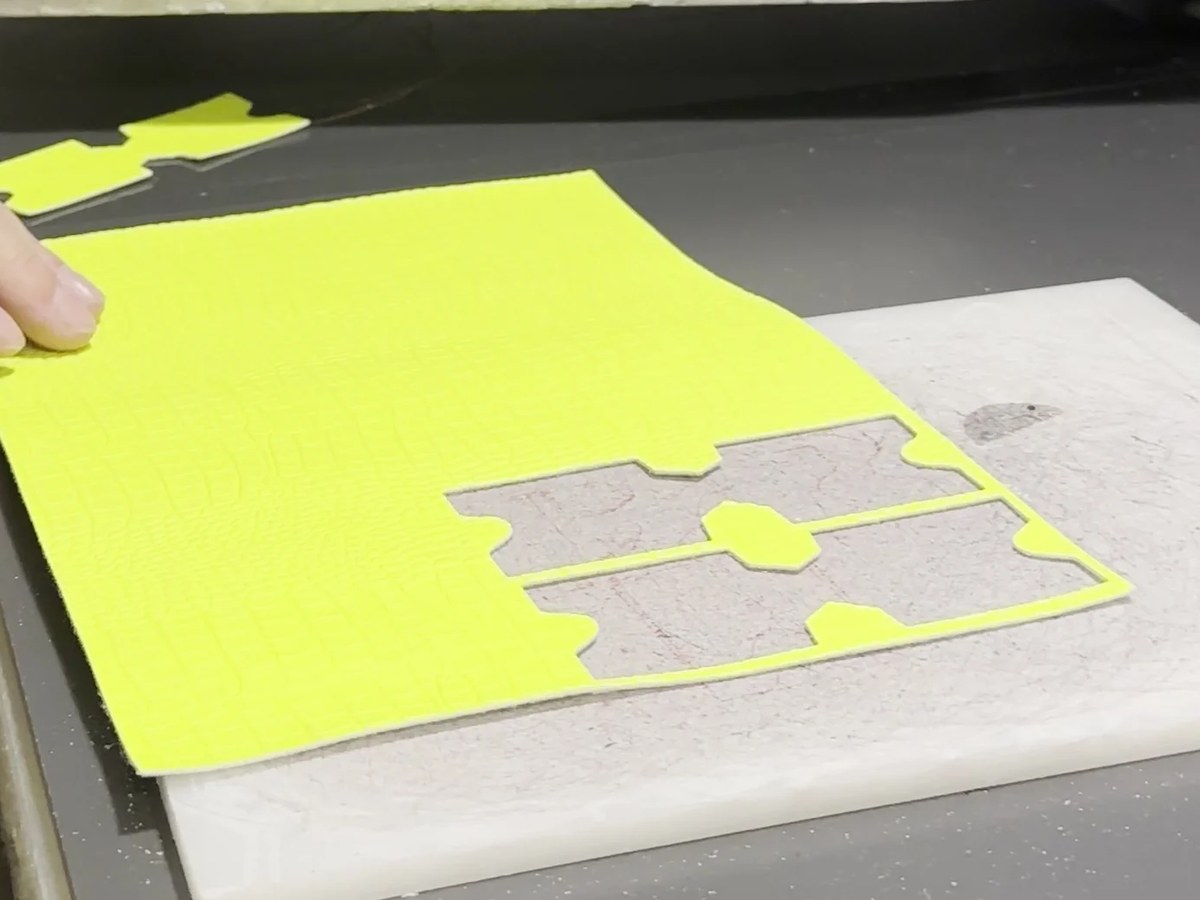
Neon yellow leather after die cutting. What is left is the counterpart of the shape.
The edge is what counts
A die-cut edge is smooth and closed, in leather too. That is exactly where you see the difference from a shape that has been cut or torn. It is why we die cut small quantities as well, whenever the edge stays visible.
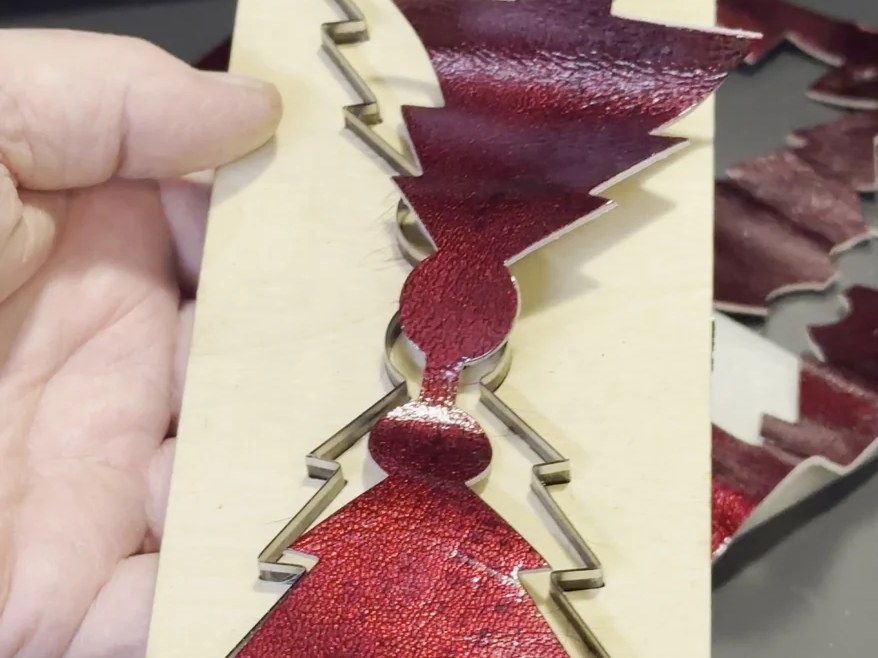
Our own cutting die made to our drawing, here for fir trees in red leather.
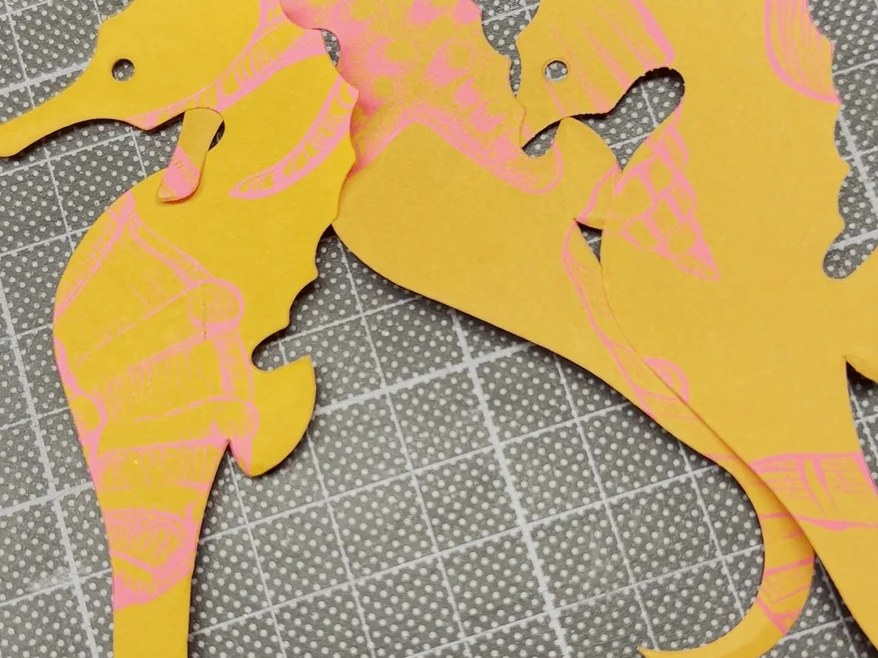
Seahorses in leather: a contour that cannot be cut by knife.
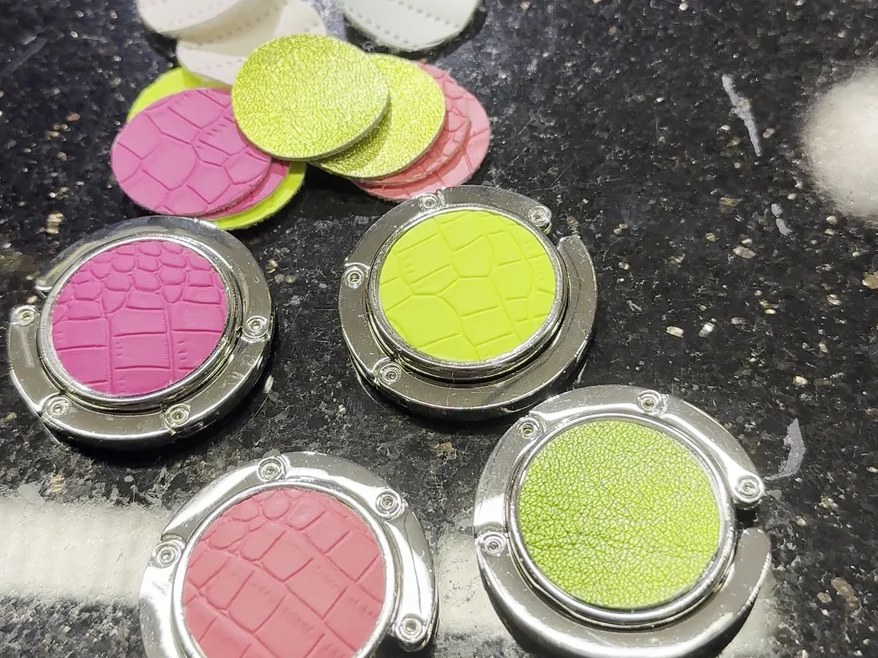
Round pieces of leather, set into the mount of a bag hook.
Materials
Anything that is picked up has to feel good in the hand.
We work with paper and board, with greyboard, with covering materials in many colours and surfaces, and with leather. The stock is here in the studio, and it is chosen from the sample rather than on a screen.
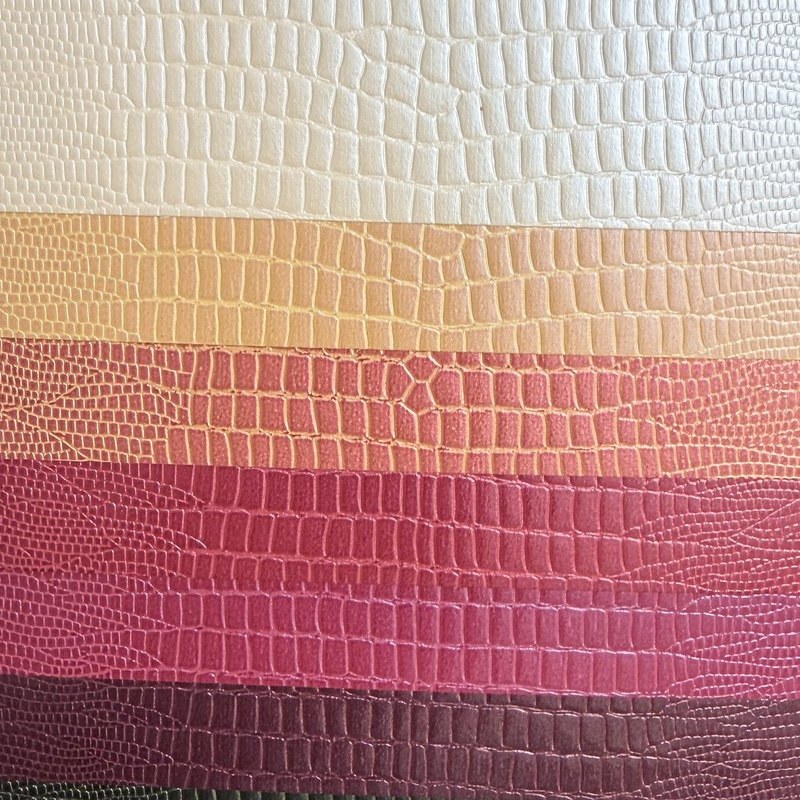
Covering material with an embossed finish, part of the colour range here.
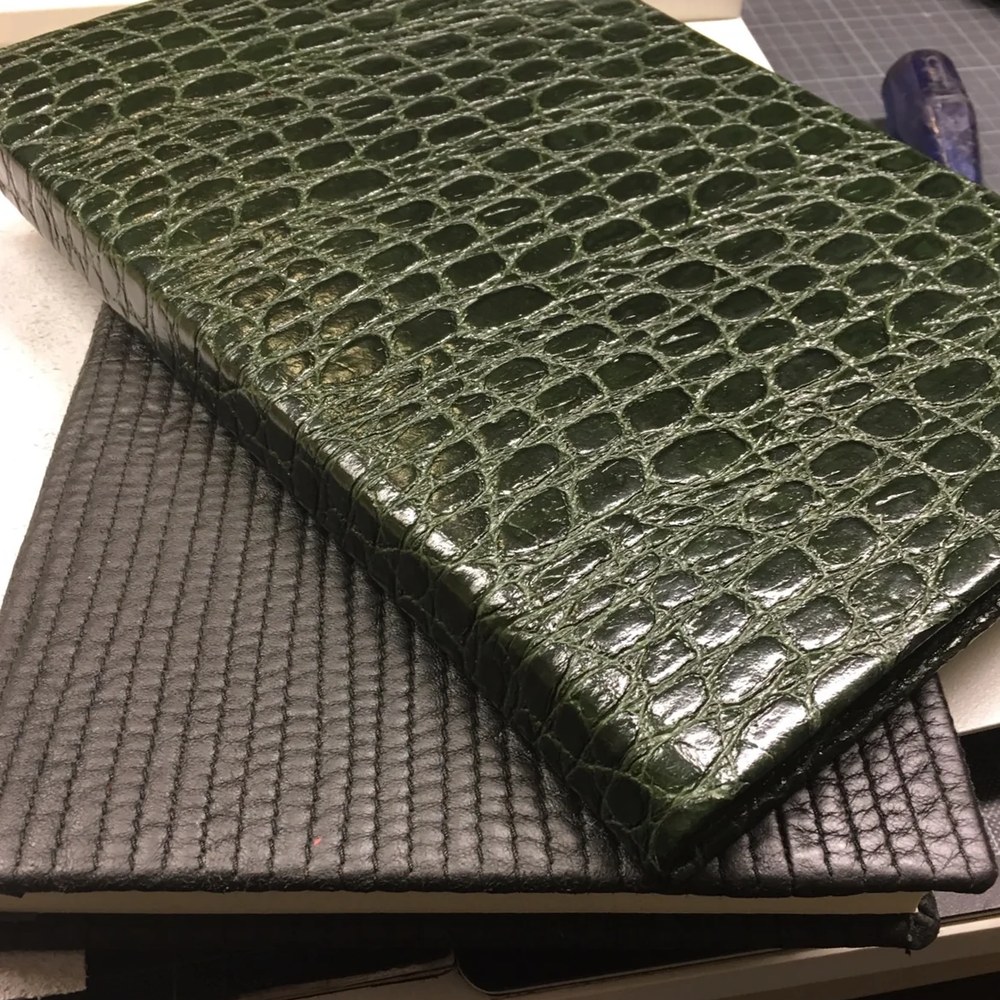
The same finish, laid onto a finished cover.
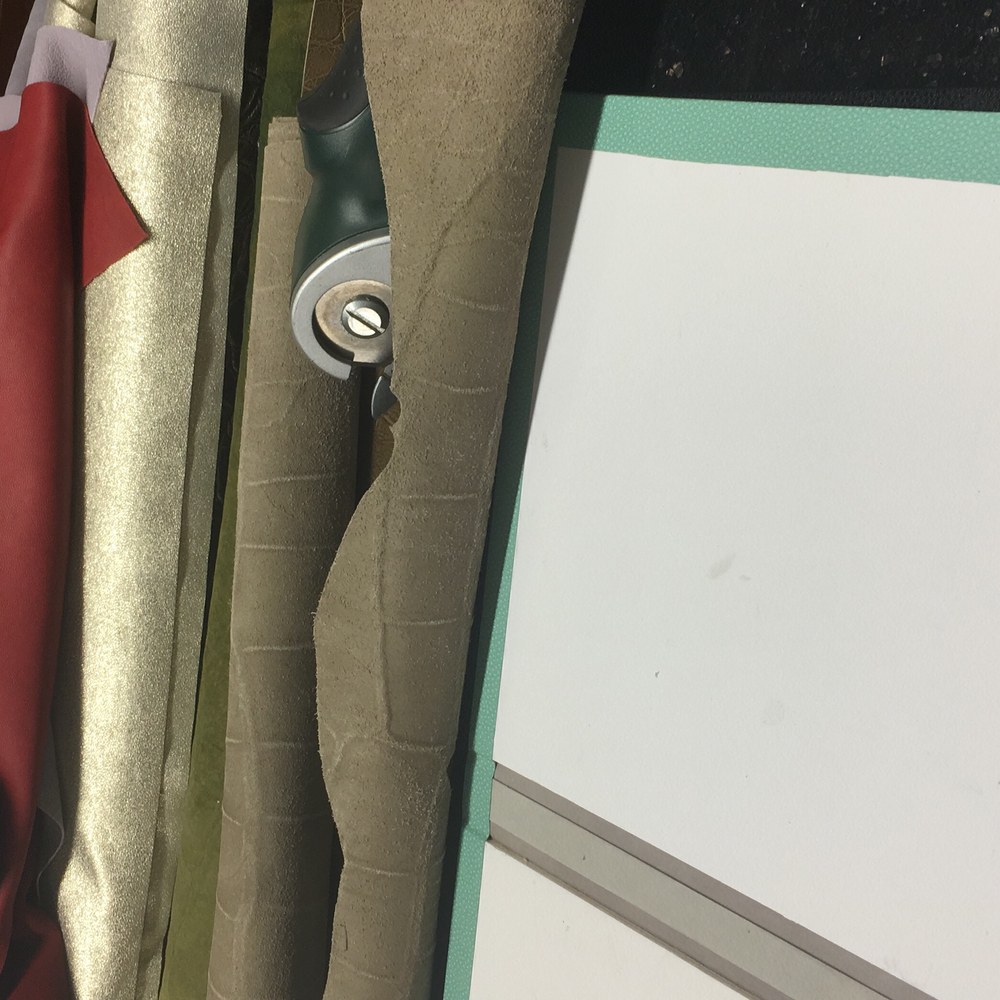
Rolls of material at the bench, with the work in progress beside them.
What we make here
Mostly one-off pieces and small runs.
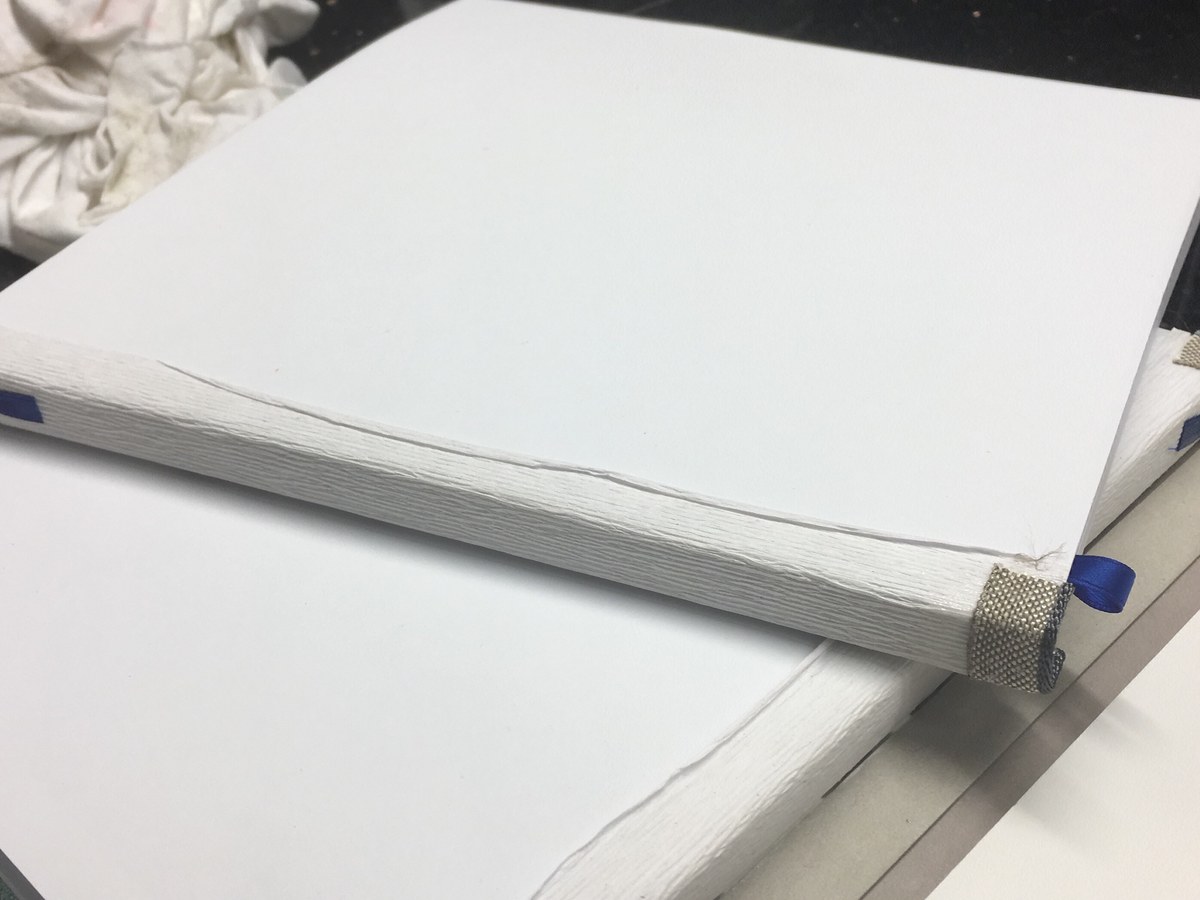
Books and notebooksFrom the book block to the finished cover, in bespoke formats too.
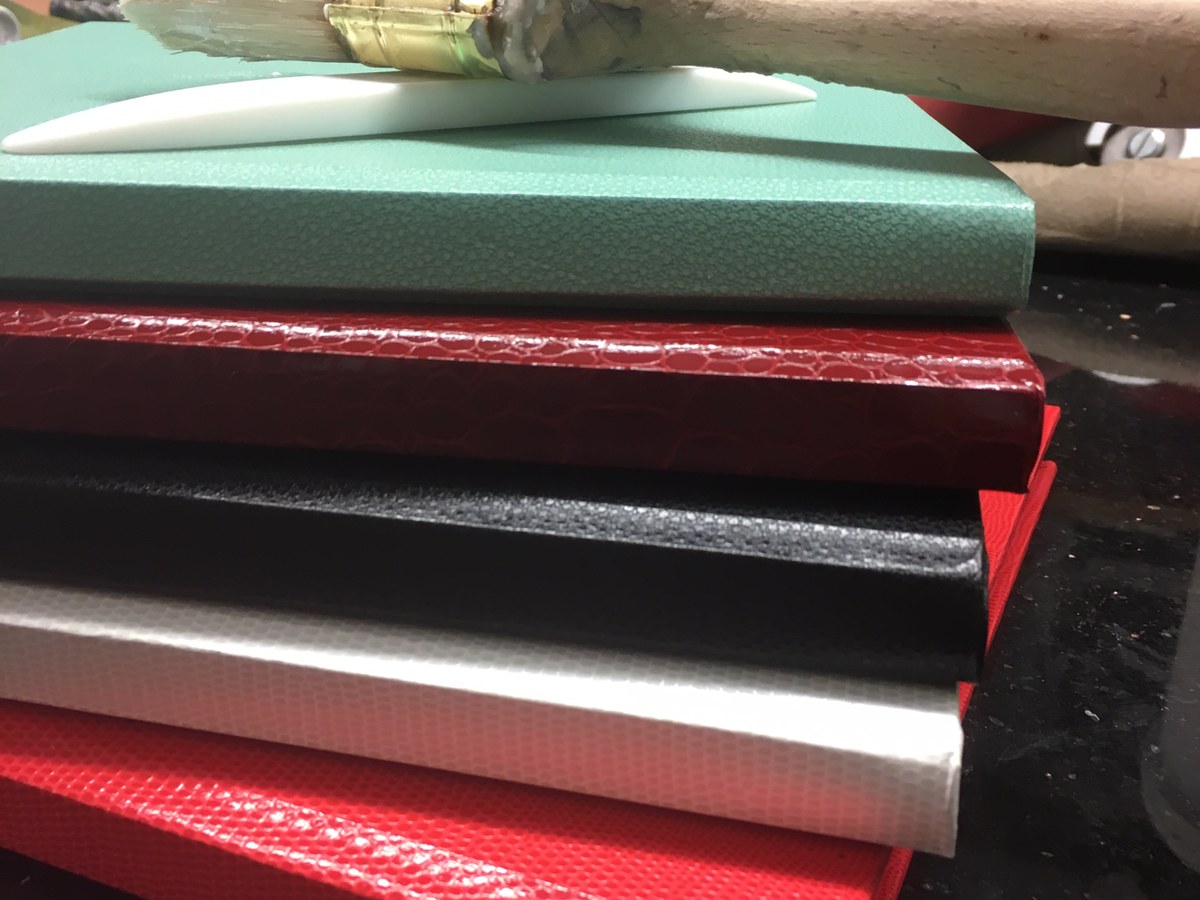
Albums and coversPhoto albums, guest books and covers, each in its own covering material.
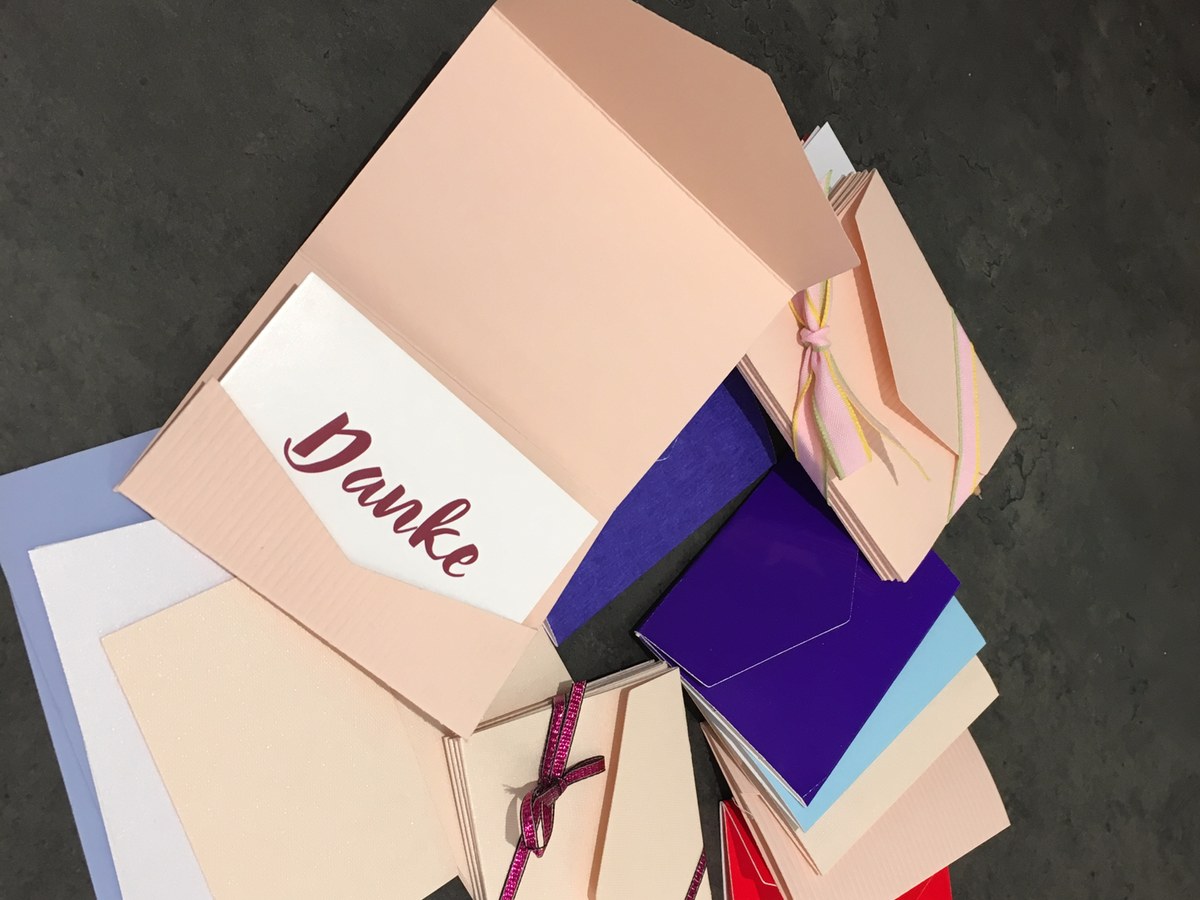
Folders and paper workPresentation folders, folded cards, envelopes and special shapes.
Then there is work that exists only once. We bound one customer’s memoirs in a leather cover made to match. Pieces like that are planned from the finished object backwards: first it is settled what it is to become, then it is printed.
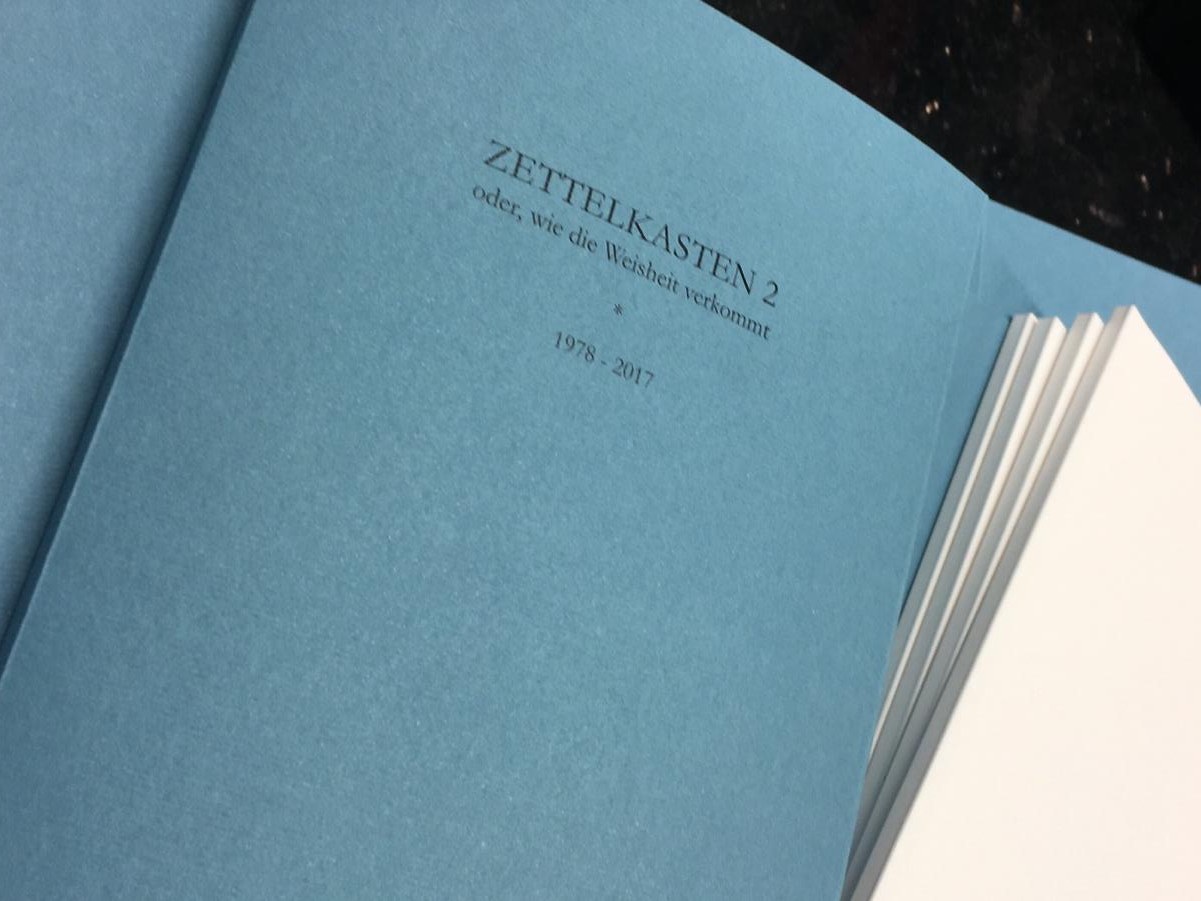
“ZETTELKASTEN 2”: the second volume for the same customer, bound in pale blue covering material.
A second volume for the same customer
For one customer we made a collection of quotations from his life, printed and bound by hand. After the first volume came the second: “ZETTELKASTEN 2 – oder, wie die Weisheit verkommt”. Work like this grows with whatever the customer brings, and is carried on from one time to the next.
Printing and bookbinding thought about together
Both are here in the same house. That changes the order of things.
Anyone who only prints plans the sheet. Anyone who binds as well plans the finished piece. We set format, paper and grain direction from the outset so that they suit the finishing. That saves the usual surprises at the end.
Format
The final size is settled before the printed sheet, not after it.
Paper
A paper has to carry the printing and fold without cracking.
Stamping
Blind embossing and hot foil stamping happen before binding, not after.
Finishing
Scoring, drilling, corners and cutting dies are planned in from the start.
Also of interest: Letterpress printing · Hot foil stamping
At TRIXI GRONAU
A workshop of our own, not a large factory.
We bind by hand, in small quantities and often as a single piece. We do not take on long industrial runs. In return we can choose formats, materials and fastenings freely and build a piece exactly as it needs to be.
If something cannot sensibly be made here, we say so beforehand. And if there is a better way than the one originally imagined, we suggest it.
Frequently asked questions
Can you bind a single book as well?
Yes. One-off pieces are the normal case here, not the exception. A single album, a single book or a single folder are all possible.
Can existing printed matter be finished here?
Yes. Sheets printed elsewhere can be cut, scored, folded, drilled and bound by us. Please show us a sample first so that we can check the paper and the grain direction.
Which materials can you cover with?
Paper and board, greyboard, covering materials in many colours and surfaces, and leather. The stock is here in the studio and can be chosen from the sample.
Can special shapes be die cut?
Yes. For a shape that recurs, we have a cutting die made to our own drawing. After that the same contour is produced with the same clean edge.
Can printing, stamping and bookbinding be combined in one project?
Yes, and that is exactly what the studio is set up for. Design, printing, stamping and finishing are then planned from the finished object backwards from the outset.
YOUR PROJECT
Do you have a book, an album, a folder or a special shape in mind?
Tell us what it is to become. We will tell you how it can be built, which material suits it and what needs to be considered along the way.