
- You do not have any products in your shopping cart yet.
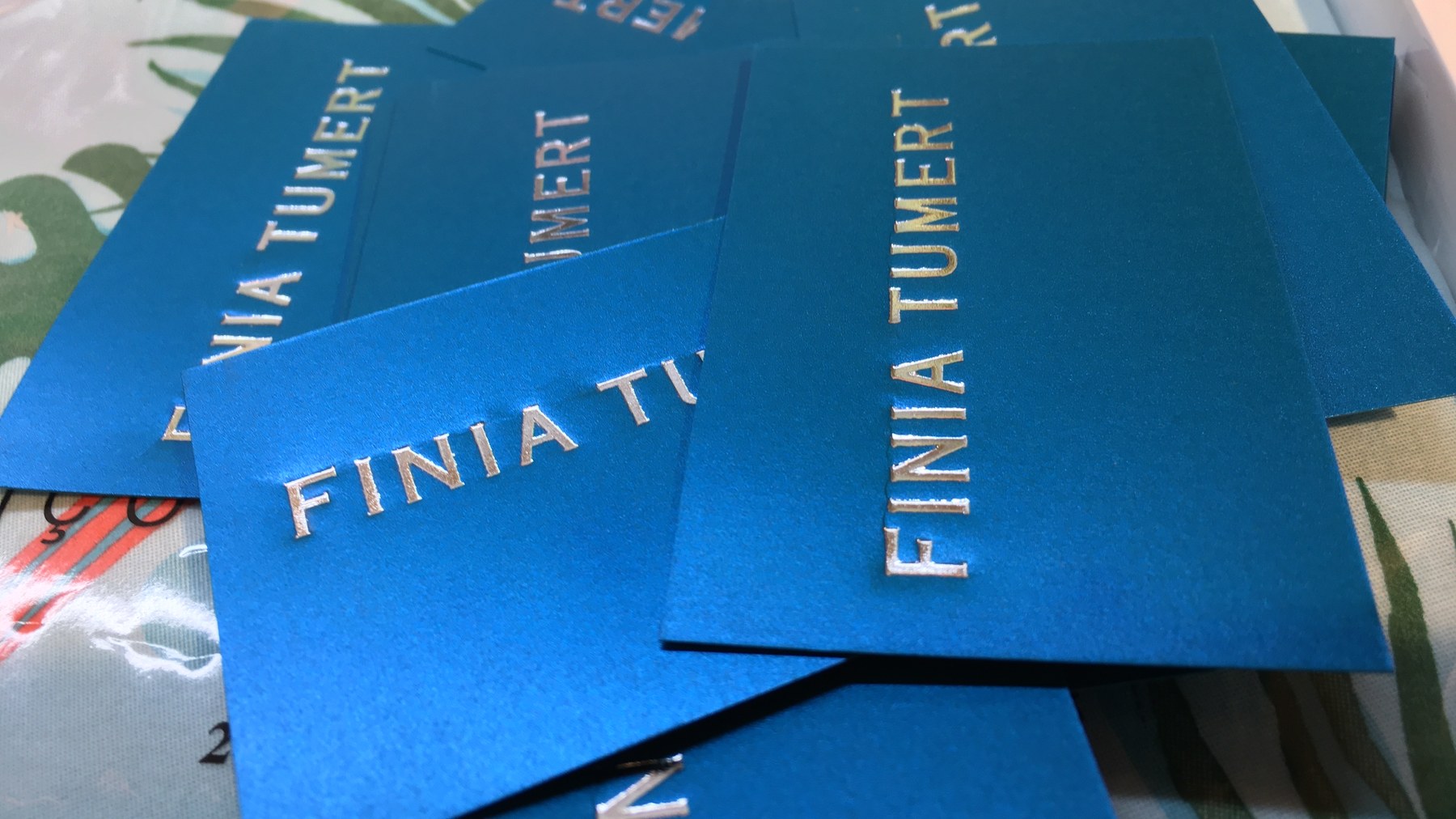
PRINTING STUDIO › HOT FOIL STAMPING
HOT FOIL STAMPING
Gold, silver, colour – applied with heat and pressure
Not printing with liquid ink, but a wafer-thin layer that bonds with the material.
What is hot foil stamping?
The colour does not come from printing ink but from a thin layer that transfers from a foil onto the material.
Depending on the foil, the stamping can have a metallic shine, a matt finish, colour, white, black or a particularly luminous effect.
The motif is transferred onto the material with a heated die or from individual pieces of brass type. This brings out lettering, initials, logos and graphic motifs on paper, board, book covers, leather and other suitable surfaces.
How the foil transfers
The stamping foil sits between the die and the workpiece. Wherever the heated die meets the material, the layer of colour transfers from the foil. Once the foil is peeled away, the motif remains on the surface.
01
DesignMotif, lettering, size and position are settled – matched to the material and the format.
02
The dieA fixed motif calls for a brass die. Names and initials we set from individual letters.
03
Test stampingFoil, temperature, pressure and dwell time are tried out on the actual material.
04
ProductionWith the settings agreed, the single piece or the series is then stamped.
The brass die
Before the first stamping comes the tool.
A die is the raised printing form that carries the motif. Lettering, logos and graphic elements are prepared so that the heated die transfers the foil onto the material only where it is meant to. With a bespoke motif, the work therefore begins well before the stamping itself – with the design and the making of the right tool.
The first stamping with a newly made motif is always a particular moment for us. Only when the foil is peeled away does it become clear whether material, foil, die and setting together produce exactly the effect the design intended.
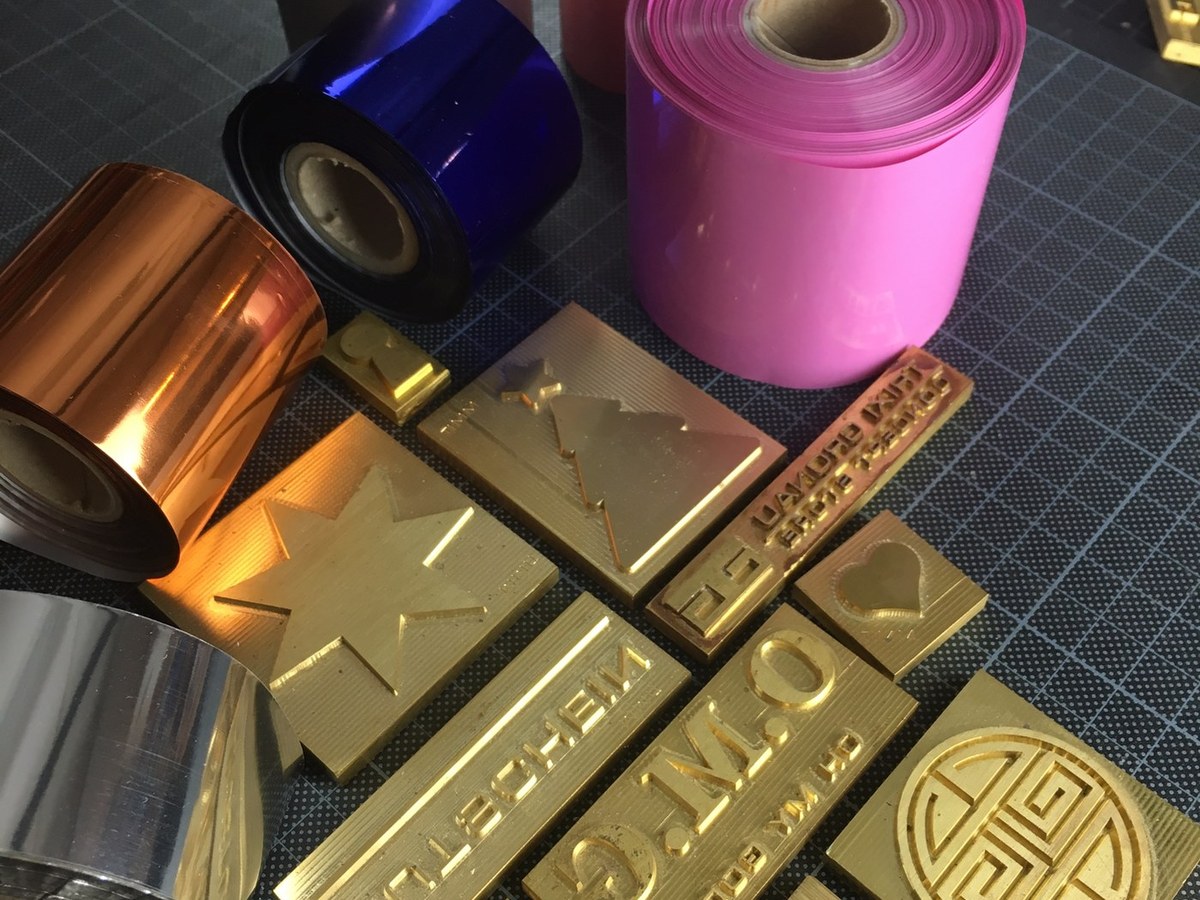
Brass dies and stamping foils in the studio.
Tools & craft
Depending on the job we work with different stamping presses – from a single fine impression to repeat stampings in a series.
As stamping tools we mainly use bespoke brass dies and individual pieces of brass type. For logos or recurring designs, a matching die is made. Names and initials, by contrast, we set letter by letter.
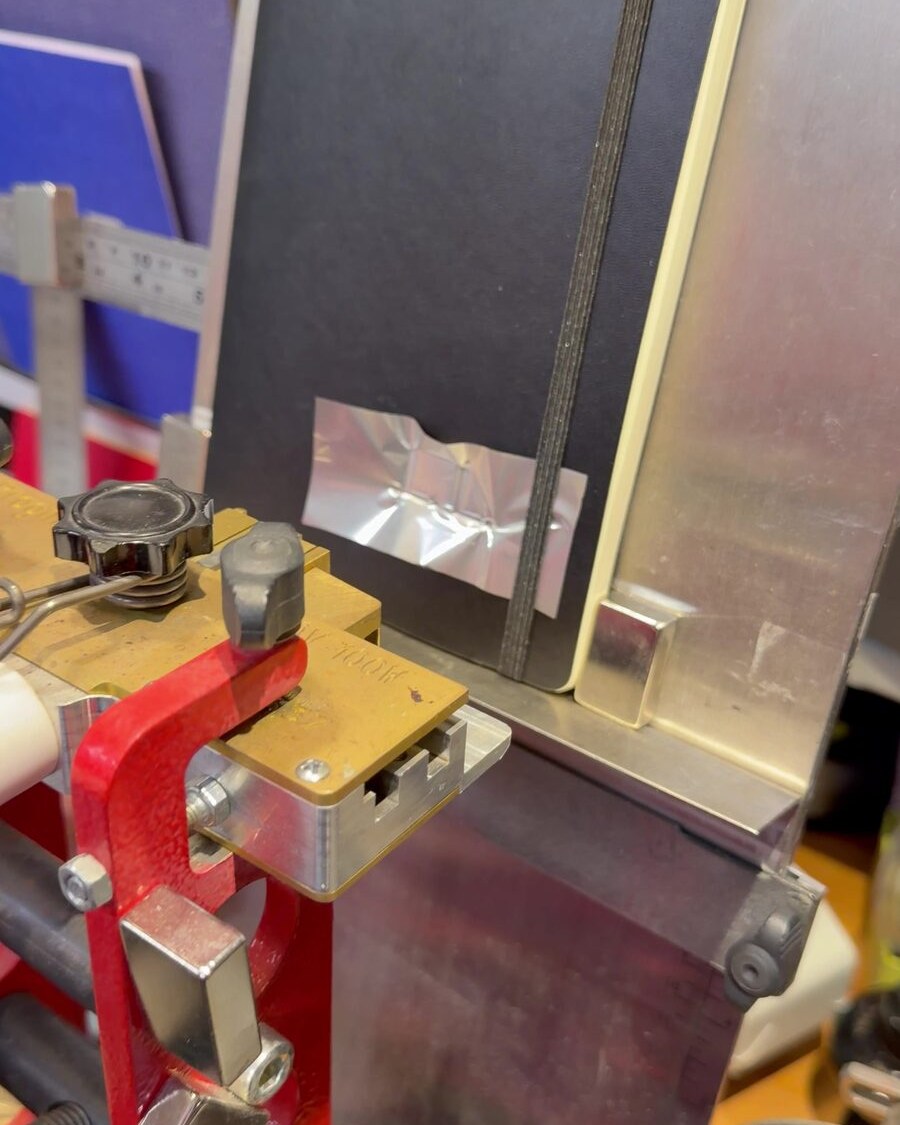
1Set up
The workpiece is positioned precisely. The stop makes sure the position stays the same across several stampings.
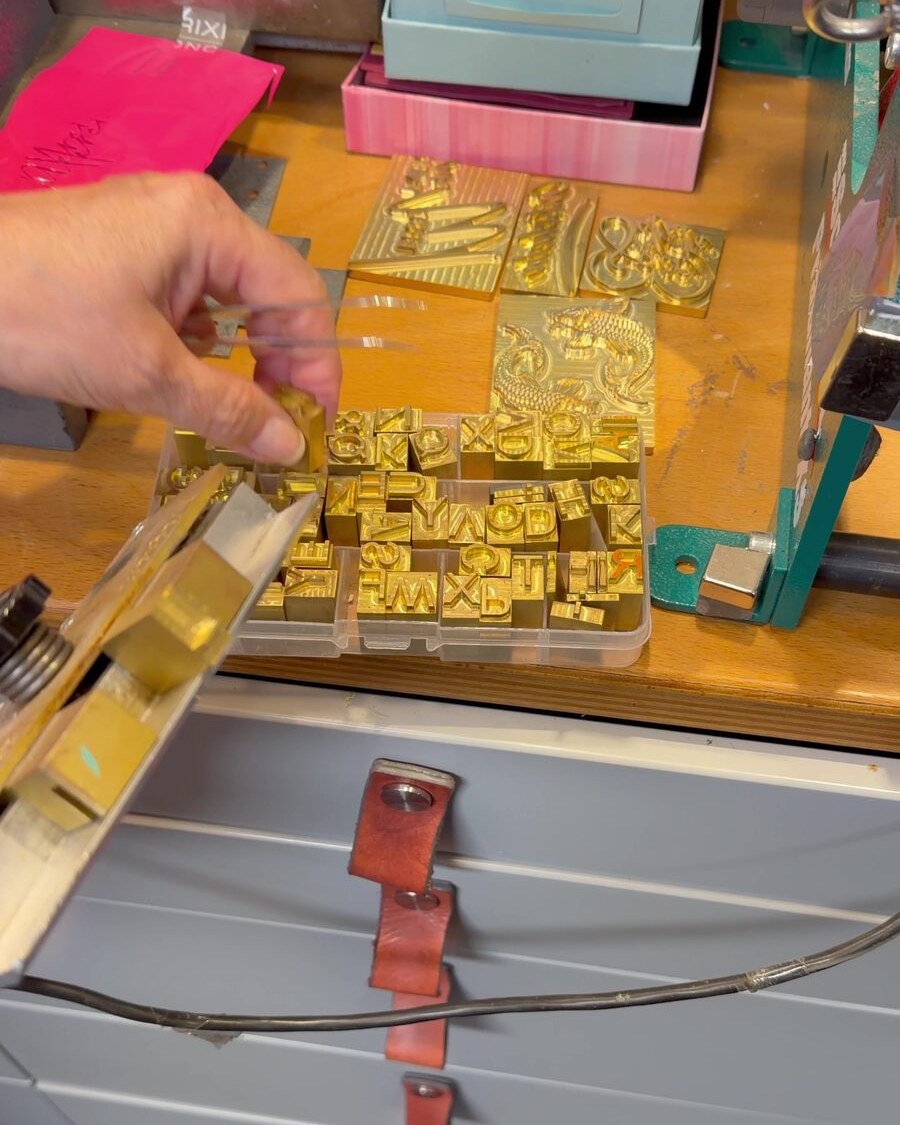
2Set by hand
Each letter is taken out of the case on its own and assembled into the line required.
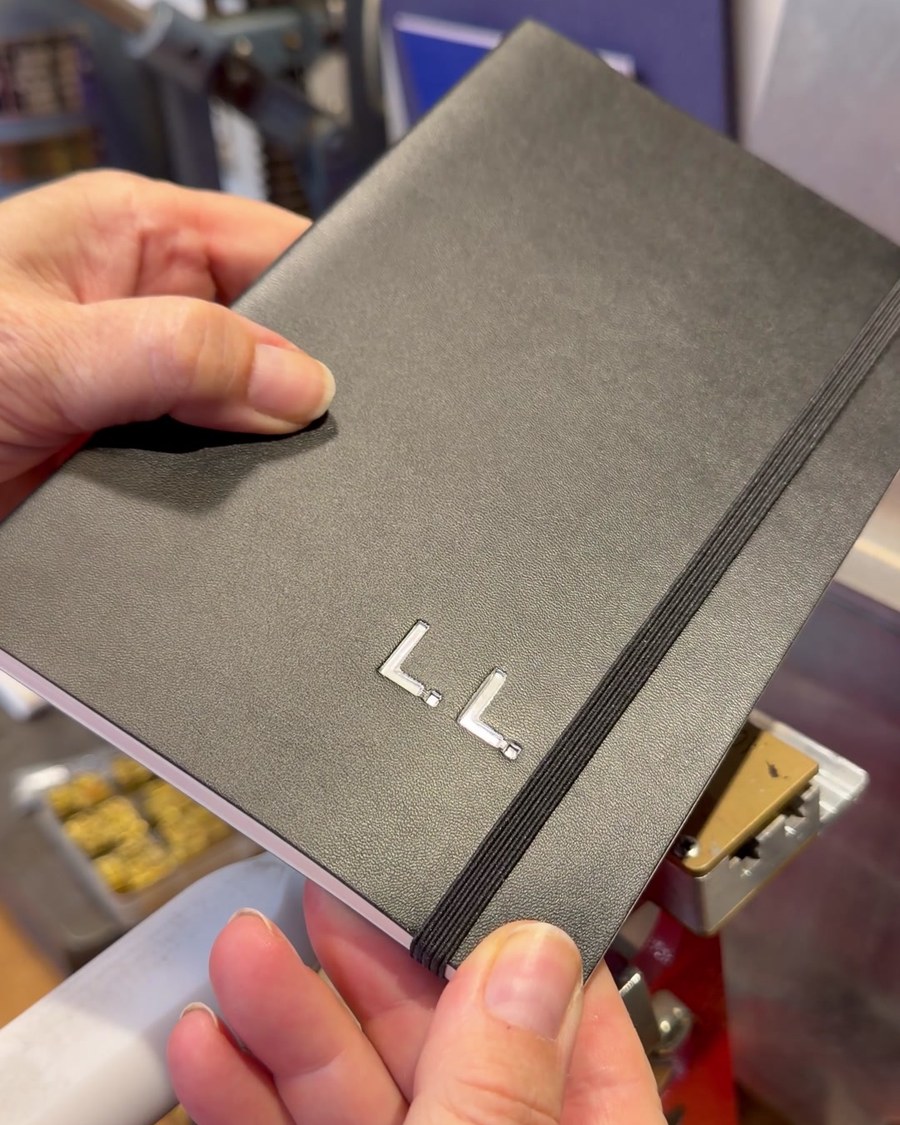
3Stamped
Once stamped and the foil peeled away, the lettering sits cleanly and permanently on the cover.
Materials
We stamp paper, board, book covers and leather among others. From these come notebooks, guest books, photo albums, key rings, cases, folders, gift boxes, cards and small corporate editions.
Every surface behaves differently. Smooth board behaves differently from mould-made paper, a coated book cover or soft leather. That is why we match foil and setting to the material actually being used.
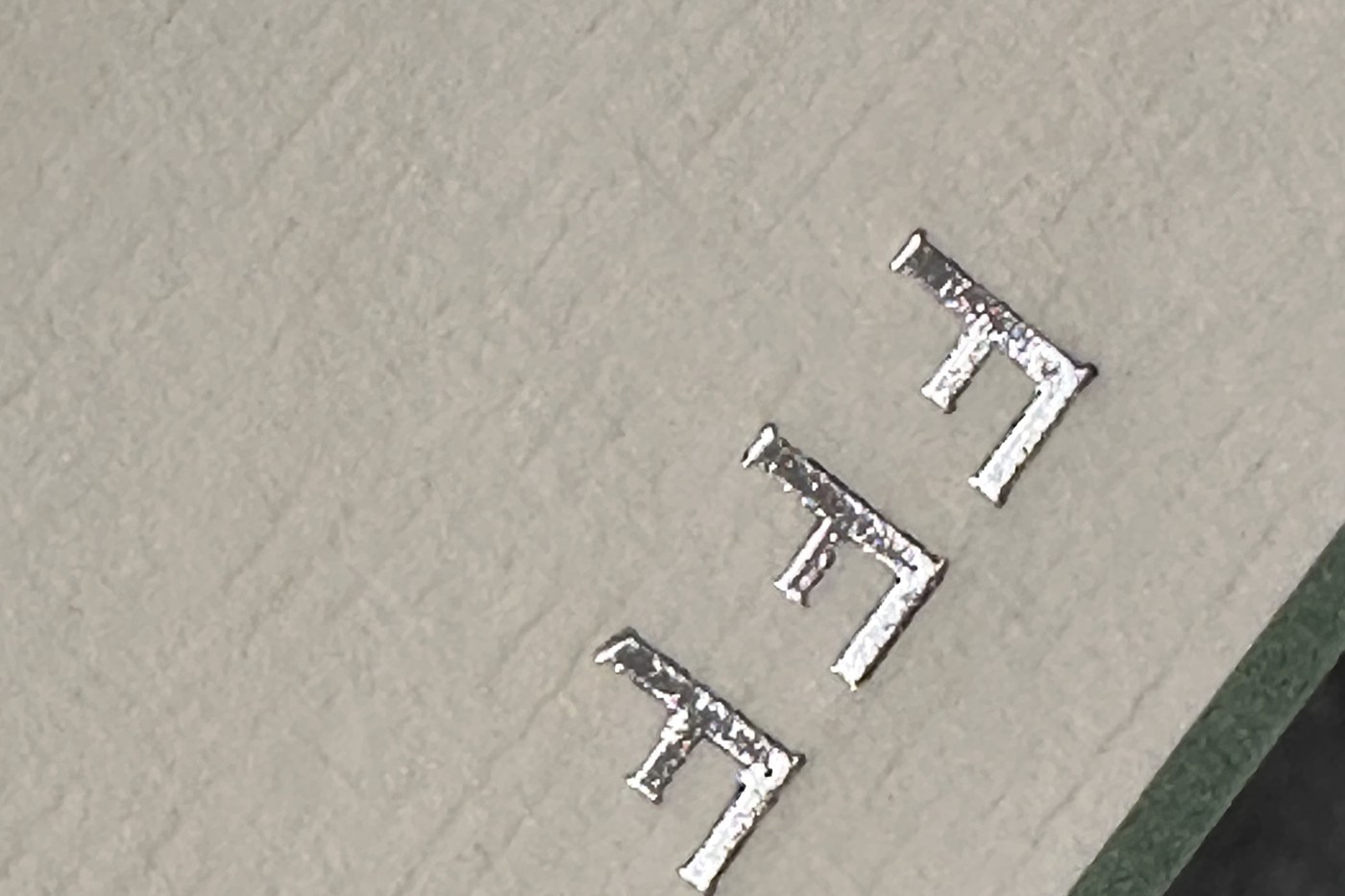
Silver on textured mould-made board. On a rough surface the stamping looks different from the way it looks on smooth paper – a good example of why material and foil have to be thought about together.
Foil colours
Hot foil stamping is not limited to gold and silver.
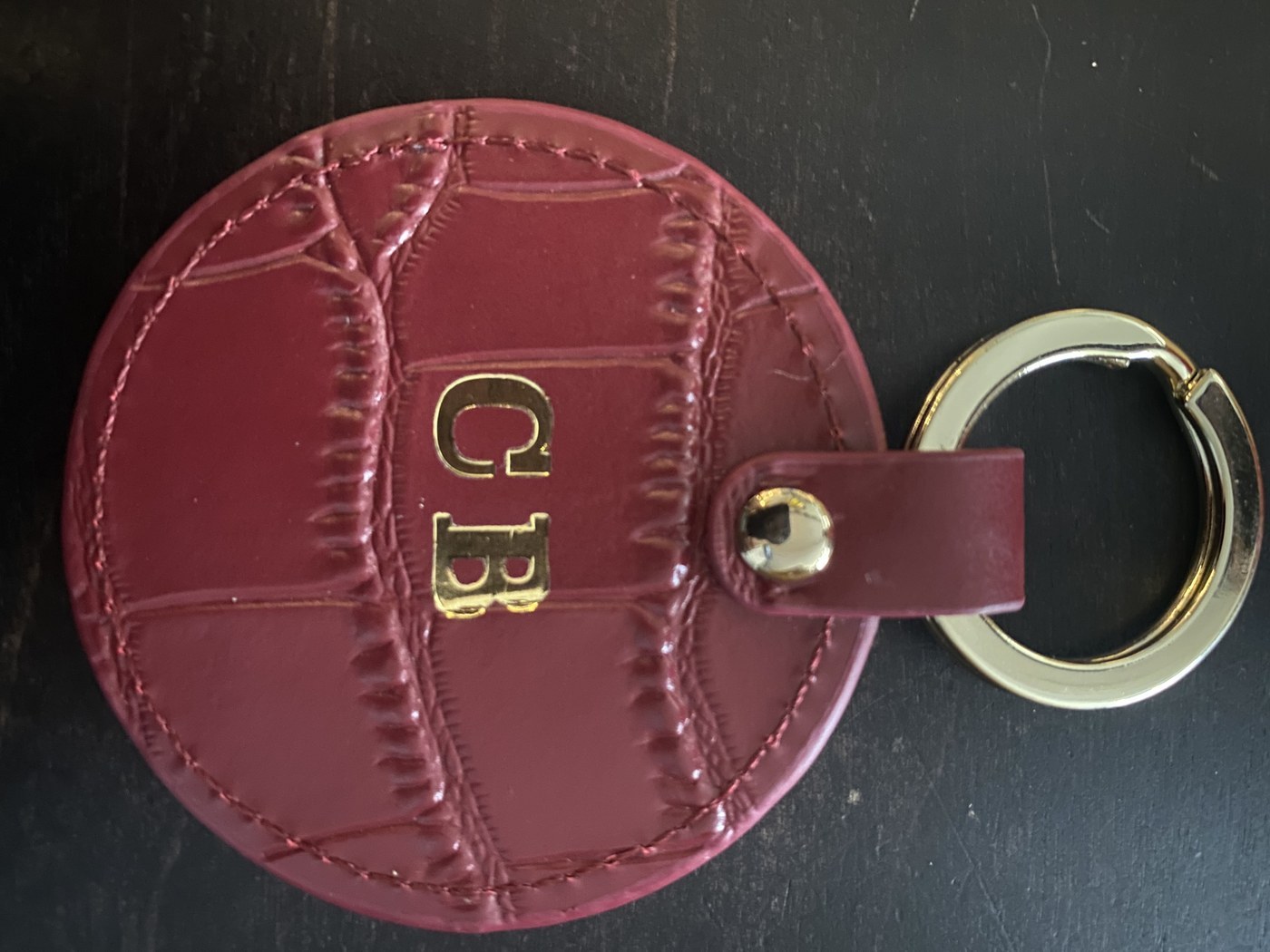
In the studio we use gold, silver, copper, rose gold, blue, burgundy, white, black and neon shades among others. Alongside those there are foils with special surfaces and effects.
For open designs we choose the foil to suit the material, the product and the effect wanted. For corporate work it can pick up an existing brand colour.
Personalisation
Names, initials and short pieces of lettering we set from individual pieces of brass type. That turns notebooks, photo albums, leather goods and other selected products into personal one-off pieces.
For logos and recurring designs we work with a bespoke die – for corporate editions, for instance.
How it differs from other techniques
Blind embossing
In hot foil stamping, a visible foil is transferred onto the material. In blind embossing there is no foil and no ink at all. The effect comes from the deformation of the surface alone. Both techniques work with pressure and a die, but the result looks markedly different.
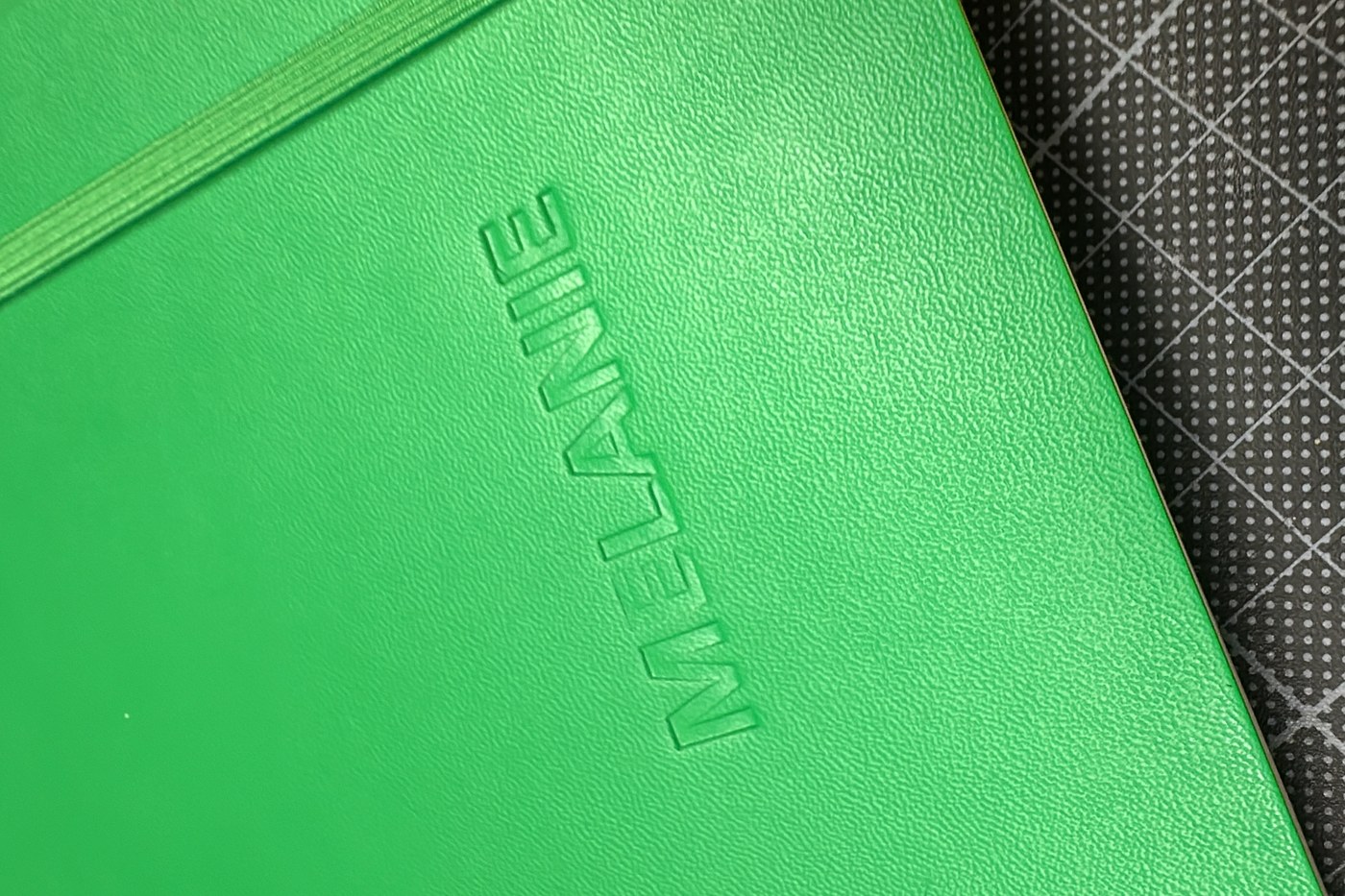
The name stands raised in the cover, without foil and without colour.
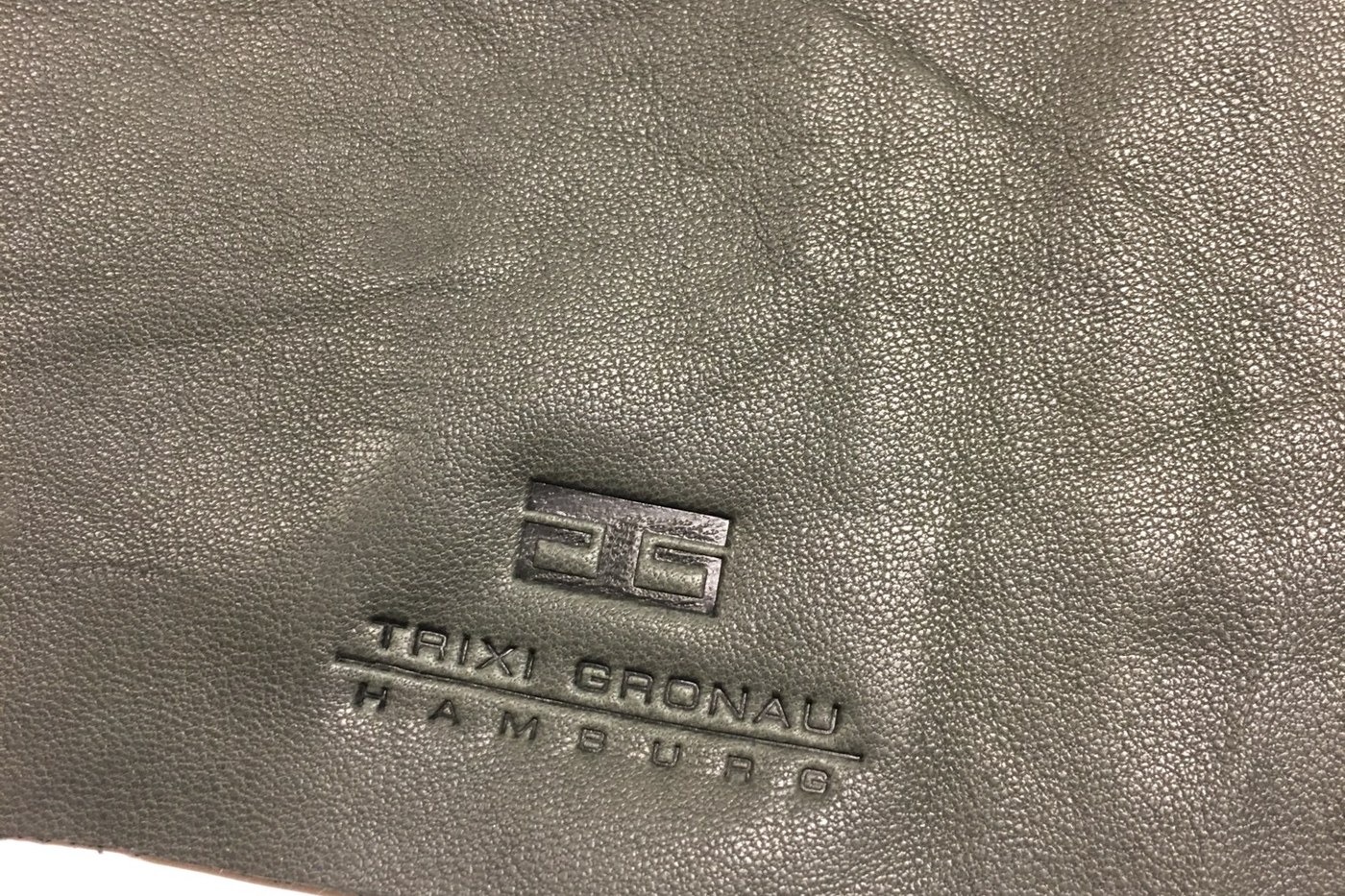
On leather the embossing shows only through light and shadow.
Raised printing
In raised printing – also called thermography – ink is printed first. A powder is applied to the still-wet ink, which melts under heat and forms a raised layer of colour. In hot foil stamping, a foil is instead transferred directly onto the material with a heated tool. Both techniques bring lettering and motifs forward, but technically they have nothing in common.
At Trixi Gronau
Experience does not come from rules alone, but from a great many real stampings and a close look at the result.
Stamping is part of our family history. Corinna’s mother was a trained bookbinder and passed the craft on to her early.
Our work ranges from personalised one-off pieces to corporate editions. For Dentsu we made a holographic notebook with the line “Right here, Right now, Right tomorrow”. For Louis Vuitton we stamped books given as gifts to staff.
We particularly enjoy working with different book covers and leather surfaces. This is exactly where it shows why a test stamping matters so much: a foil that works beautifully on paper will not necessarily give the same result on leather or on coated surfaces.
Frequently asked questions
Can any foil be used on any material?
No. Foil and material have to suit each other. That is why we test the combination you want before the final stamping.
Does every motif need its own die?
Not always. Names and initials can often be assembled from individual pieces of brass type. For logos, fixed lettering and more complex motifs, a dedicated die is usually made.
Can colours other than gold be stamped?
Yes. Alongside gold and silver there are many colours and surfaces – copper, rose gold, blue, burgundy, white, black or neon shades, for example.
Why does a test stamping matter?
Material, foil, temperature, pressure and dwell time all influence the result together. A test shows whether the foil transfers cleanly and which setting suits the piece in hand.
Is hot foil stamping the same as blind embossing?
No. In hot foil stamping a visible foil is transferred onto the material. In blind embossing the effect comes without any foil, from the deformation of the surface alone.
Which products can be personalised?
Depending on material and shape: notebooks, guest books, photo albums, leather goods, key rings, cases, folders, cards and gift boxes, for example.
YOUR PROJECT
Would you like a stamping for a project of your own, a corporate edition or a personal gift?
Tell us which material, which motif and which effect you have in mind. We will advise you personally and find the right solution for your project together.
ENQUIRE ABOUT A PROJECT