
- You do not have any products in your shopping cart yet.
PRINTING STUDIO › RAISED PRINTING & STEEL ENGRAVING
RAISED PRINTING & STEEL ENGRAVING
Lettering in relief and very fine lines
Two classic printing techniques in which feel, fine lines and precision are what matter.
Raised printing
The ink stands raised on the paper and you can feel it.
Raised printing is the term the trade uses for thermography. A fine powder is scattered onto the still-wet printing ink and whatever lands beside it is taken off again. Under heat the powder melts, bonds with the ink and builds up into a raised layer.
The paper itself is not deformed. Nothing is embossed; the raised layer sits on the printed area. You can trace the outline of the lettering with a fingertip.
We have worked with raised printing, or thermography, for many years. The colour comes from the printed layer underneath the powder, which means defined solid colours are possible, from the HKS system for instance. How the result looks in the end also depends on the colour and the surface of the paper.
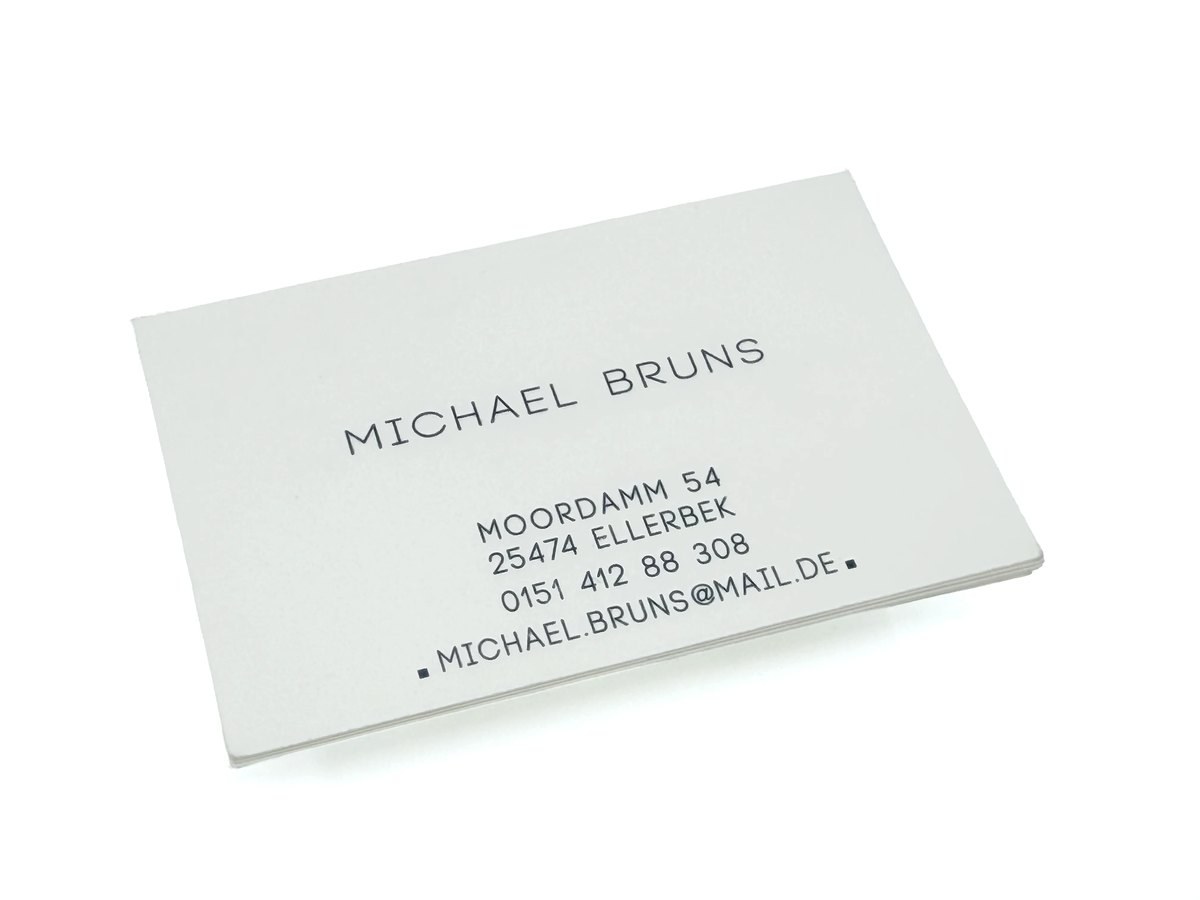
Business card for Michael Bruns: name and lines in raised printing.
A piece from the studio
A quiet business card on white board. The name and the lines beneath it stand raised on the paper. Clear lettering like this is where raised printing shows at its best: the form stays closed and the edge stays clean.
Two kinds of printing on one card
On our own business card for My Home Couture both possibilities sit side by side. The turquoise lettering is done in raised printing and is clearly tangible. The grey and black elements are printed offset and stay flat. On a single piece of board you see and feel the difference straight away.
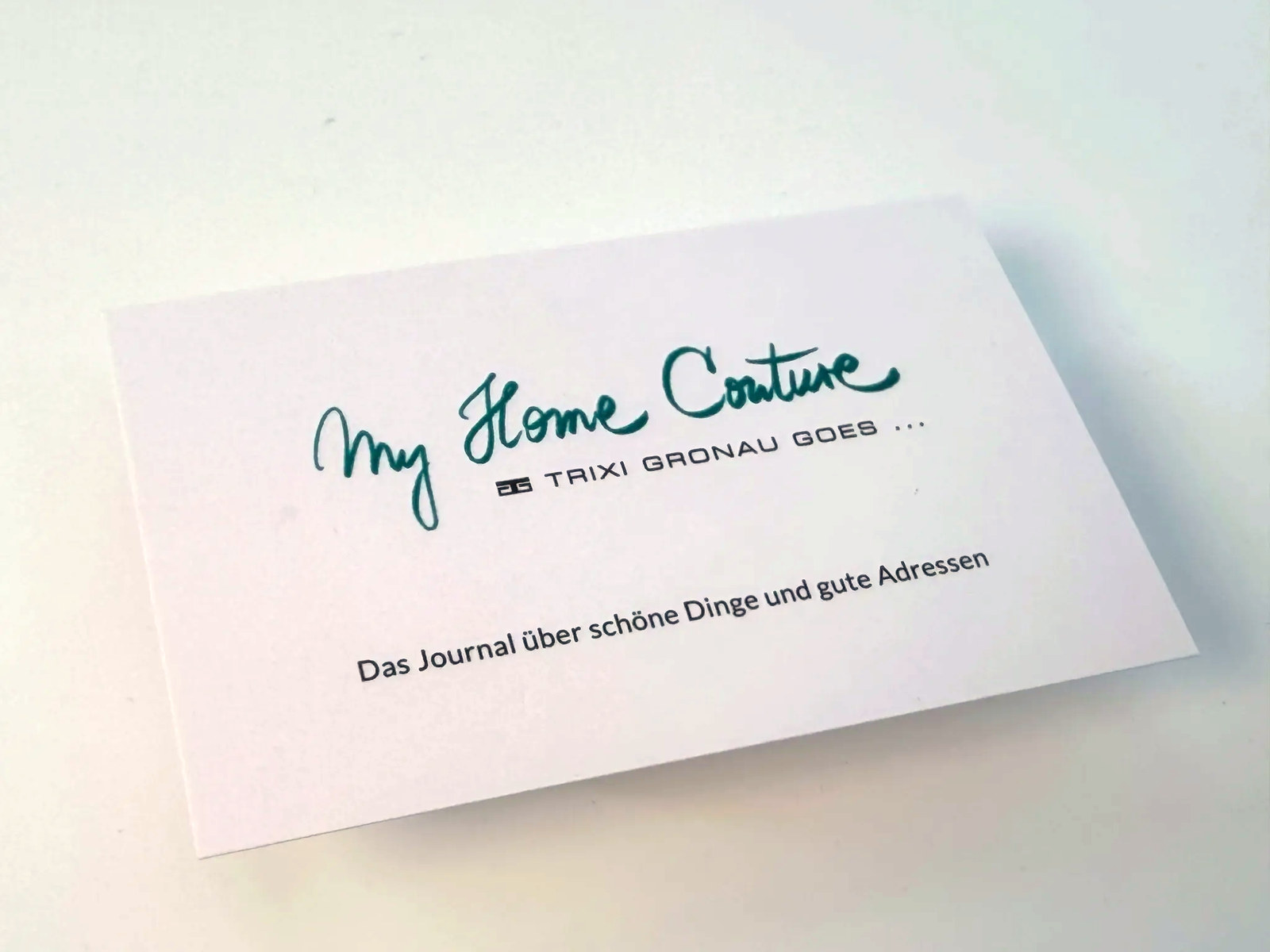
The whole card: the turquoise lettering raised, the grey lines flat.

In close-up: the built-up layer of ink in the lettering.
Steel engraving
Very fine lines, reproduced very precisely.
Steel engraving is an intaglio process. The motif is recessed into an engraved steel plate. Ink is worked into those fine recesses, the surface is wiped clean, and the paper is pressed against the plate under high pressure. In doing so it lifts the ink out of the recessed lines.
What is characteristic is the precise reproduction of fine lines and small typographic marks. On the front the ink can often be felt standing slightly proud. With fine typefaces, monograms and delicate marks in particular, this creates a combination of precision and feel all its own.
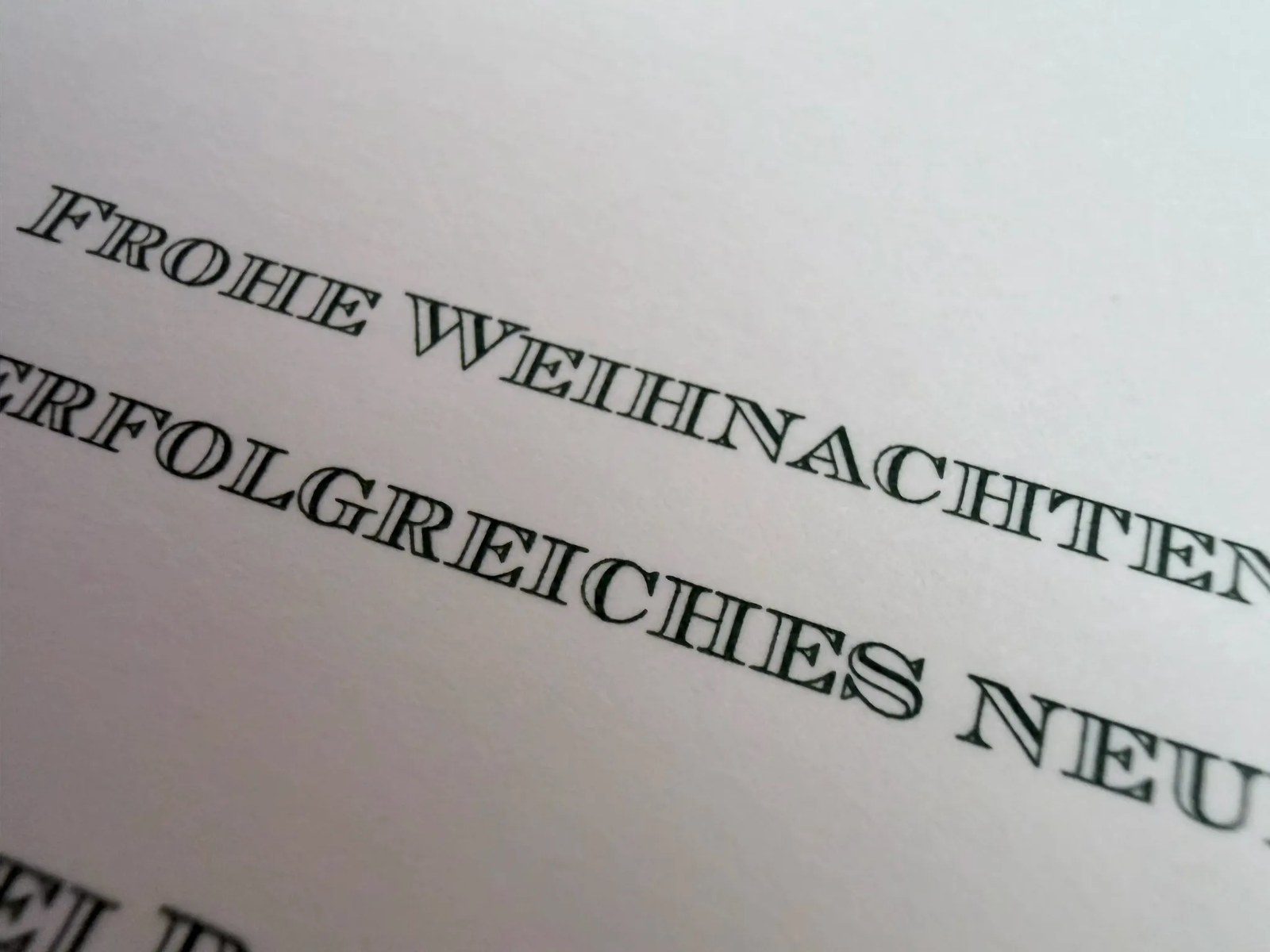
A Christmas card from our collection: the fine steel-engraved lettering in close-up.
We do not print steel engraving ourselves. The design, the choice of paper, agreeing the printed image and seeing the job through are ours here in the studio; the printing is done by a specialist printworks we work with. If the engraved steel plate needed does not yet exist, it is made there for the job.
The difference
Both techniques can look raised. But they come about in completely different ways.
Raised printing
The ink sits on the paper. A powder is applied to the printed ink, which melts under heat and builds up the layer.
Steel engraving
The ink comes out of the plate. It sits in the recessed lines of an engraved steel plate and is transferred onto the paper under high pressure.
With many motifs, modern raised printing is so good that it is hard to tell from steel engraving. Bold typefaces and larger graphic forms are particularly convincing in it. With very fine typefaces, thin lines and small marks, steel engraving stays more precise. That is why we do not commit to one technique on principle: the motif, the effect wanted and the quantity decide.
When we use which technique
Typical pieces are business cards, letterheads, correspondence cards and invitations, along with monograms, logos and other fine stationery.
Business cards
Name and lines tangible on the board, in raised printing, or in steel engraving where the type is very fine.
Letterheads and correspondence cards
A sender’s address, monogram or logo as a quiet line in relief.
Invitations
Larger lettering comes out closed and sculptural in raised printing.
Logos and monograms
Clear forms in raised printing, very small marks rather in steel engraving.
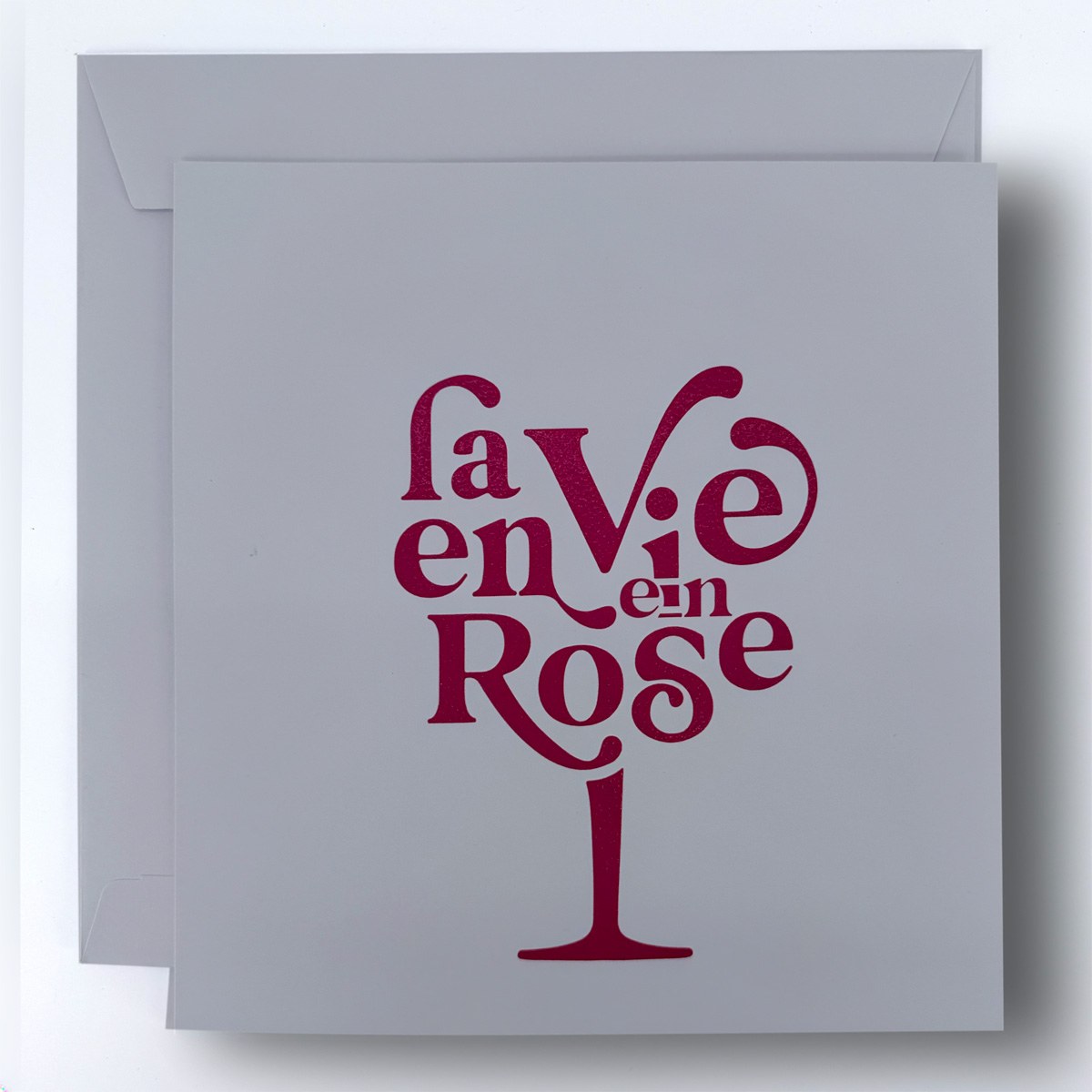
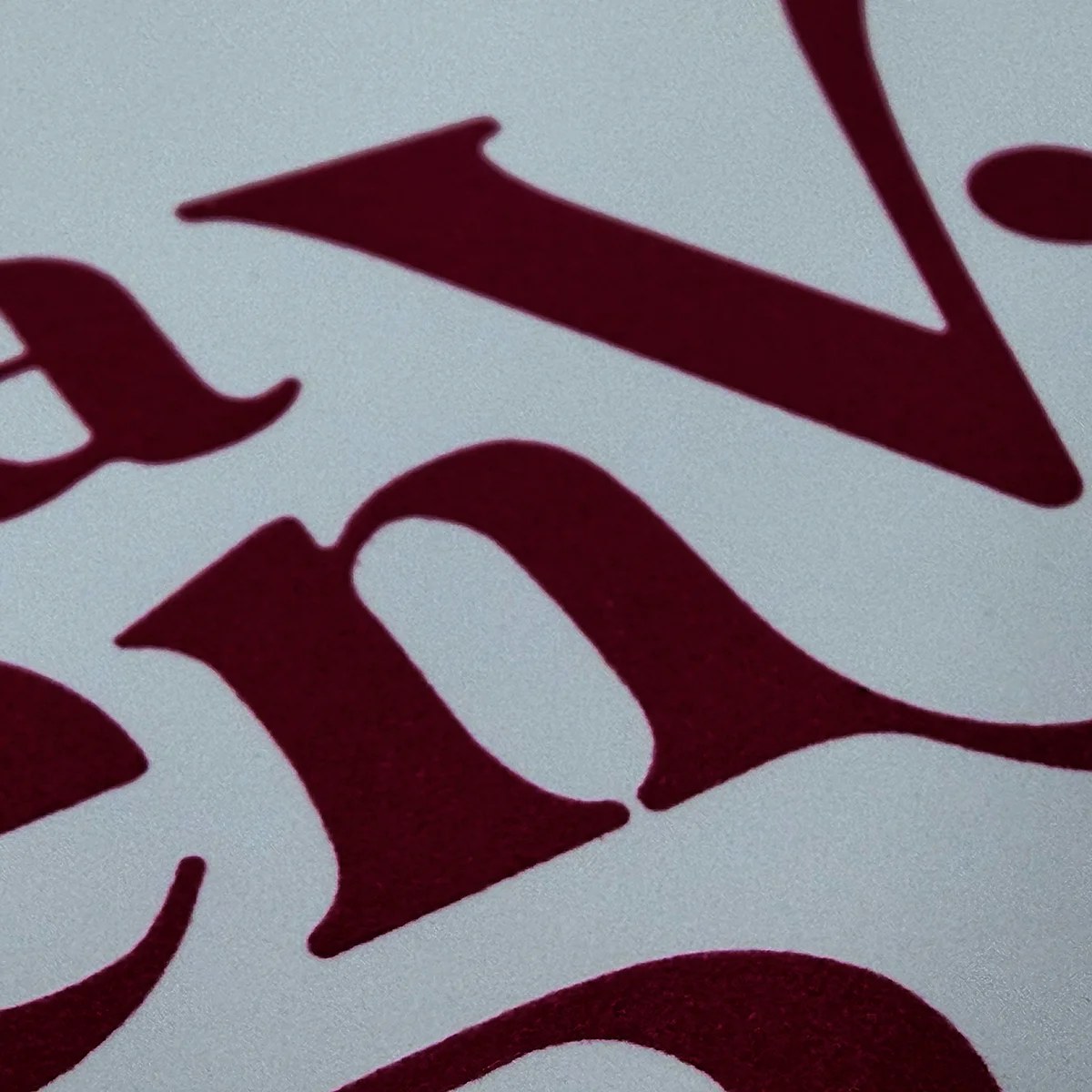
Invitation “La vie en rose”: the large lettering motif in raised printing.
When the lettering carries the card
Where a motif is set large and solid, raised printing shows its strength. The layer of ink stands closed on the paper and the form stays clear right out to the edge. Pick it up and the difference from a flat-printed motif is there immediately.
At TRIXI GRONAU
We decide from the motif, not from the technique.
We have worked with raised printing for many years, and we look after steel engraving from the design through to the finished piece. Neither technique stands on its own in the Printing Studio: where a project suits it, we think design, printing, stamping and bookbinding together.
Anyone who wants lettering in relief is first asked about the motif, the paper and the effect they have in mind. From that it follows which technique suits and which paper will carry it.
Also of interest: Letterpress printing · Hot foil stamping
Frequently asked questions
Is raised printing the same as embossing?
No. In raised printing the raised layer is built up on the printed area. In embossing the material itself is deformed mechanically.
What is the difference between raised printing and steel engraving?
In raised printing the ink sits on the paper, built up from printing ink and melted powder. In steel engraving the ink comes out of the recessed lines of an engraved steel plate.
Do you print steel engraving in your own studio?
No. The design, the choice of paper, agreeing the image and seeing the job through are ours. The printing is done by a specialist partner printworks.
Can raised printing be combined with flat printing on one card?
Yes. Raised and flat elements can sit side by side on one printed piece. Our own business card for My Home Couture shows exactly that.
Which colours are possible?
The colour comes from the printed layer underneath the powder. That means defined solid colours can be used, from the HKS system for instance. The colour and the surface of the paper play their part too.
YOUR PROJECT
Would you like business cards, letterheads or cards with lettering you can feel?
Tell us which motif and which effect you have in mind. We will tell you which technique suits it and which paper will carry it.