Vorschau · noindex
TRIXI GRONAU Manufactory · Glossary
Thermography and raised printing from Hamburg
What is thermography or raised printing?
In printing practice, the German term Reliefdruck is often used for thermography. A previously printed motif is made visibly and tangibly raised. The relief is not created by mechanically embossing the paper. Instead, thermographic powder adheres to still wet printing ink and is melted by heat.
The surface becomes three dimensional and can be clearly felt. Depending on ink, powder and paper, the finish may appear glossier or more matte. Lettering, logos, monograms and clear graphic forms are particularly well suited to this effect.
TRIXI GRONAU has worked with thermography and raised printing since 1990. Typical applications include business cards, letterheads, correspondence cards and invitations.
How is raised printing produced?
In our classic application, the process starts with a printed motif. A slowly drying printing ink is used so that the thermographic powder can adhere to the still wet ink layer.
Fine thermographic powder is scattered over the fresh ink. Excess powder is removed. The sheet is then heated. The powder melts, bonds with the printing ink and builds up into a raised surface.
The finished print is therefore not only visible but also clearly perceptible to the touch.
Why does the lettering become raised?
The height is created by the melted thermographic powder. It adheres only where wet printing ink has previously been applied. When heated, the powder changes volume and bonds with the ink layer, causing the motif to rise above the paper surface.
Unlike blind embossing, the paper itself is not deformed by an embossing die. The relief sits on top of the surface.
Which motifs are especially suitable?
Thermography works particularly well for bold type, logos, monograms and graphic symbols. Clear areas and strong forms can produce a very precise raised layer.
Extremely delicate type, very fine lines and small characters are more demanding. For the finest details, traditional steel engraving can still be superior.
Which colours are possible?
The visible colour comes from the printed ink beneath the thermographic powder. Defined spot colours can therefore be used. Depending on the design, we work with specified colour values, for example from the HKS system.
The final appearance is influenced not only by the ink colour. Paper colour, paper surface and the properties of the thermographic powder also affect the result.
Which papers are suitable?
Raised printing is often used on high quality papers and card stocks. Paper, ink, temperature and the desired relief height must be coordinated carefully.
On smooth or finely textured papers, the raised contour can appear especially crisp. With strongly textured papers, it has to be tested how precisely fine forms can be reproduced.
What does thermography feel like?
The printed layer can be felt above the paper surface. With a fingertip, the outline of the lettering or motif is clearly perceptible. This effect is especially noticeable with bold graphic forms.
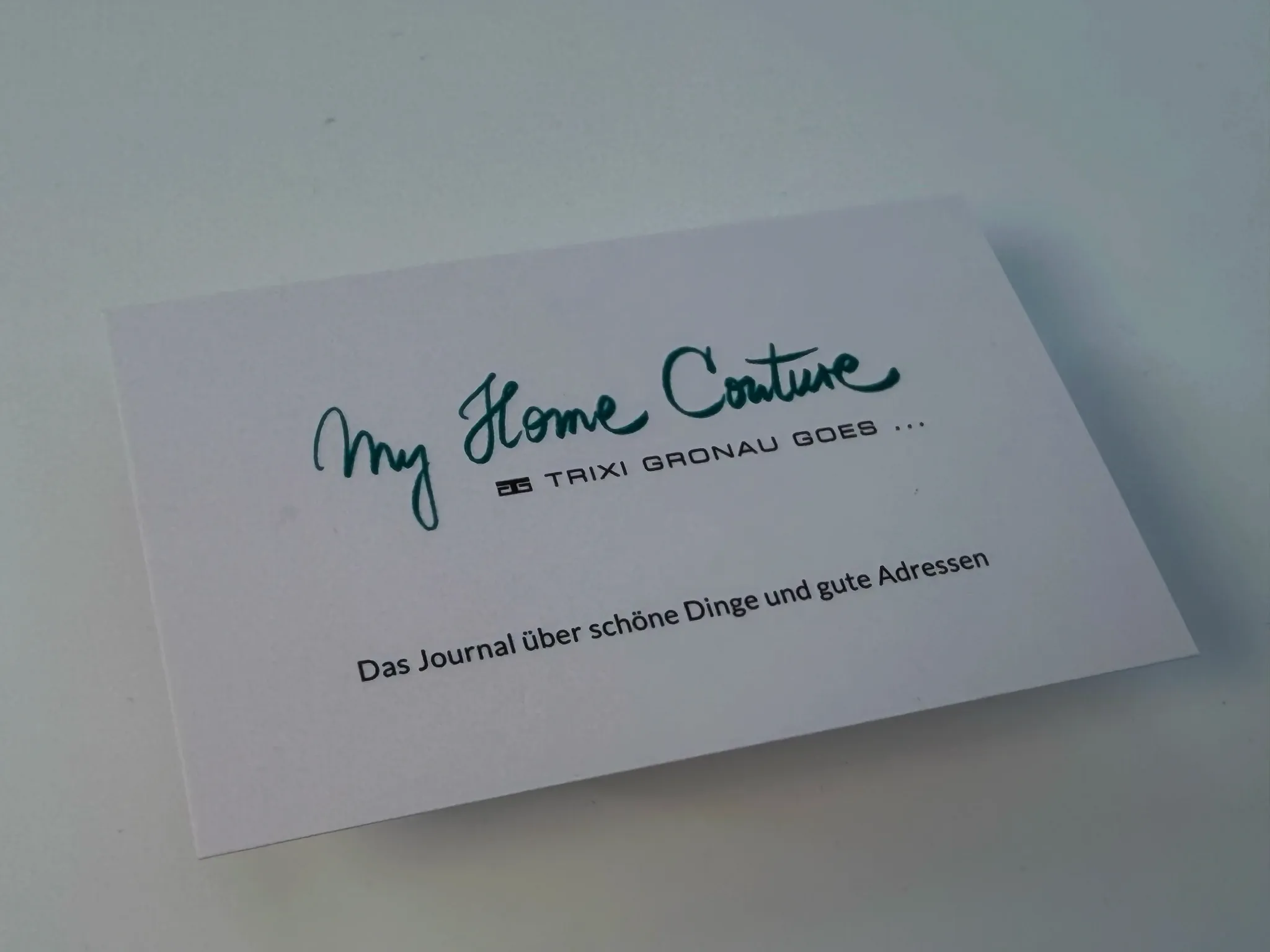
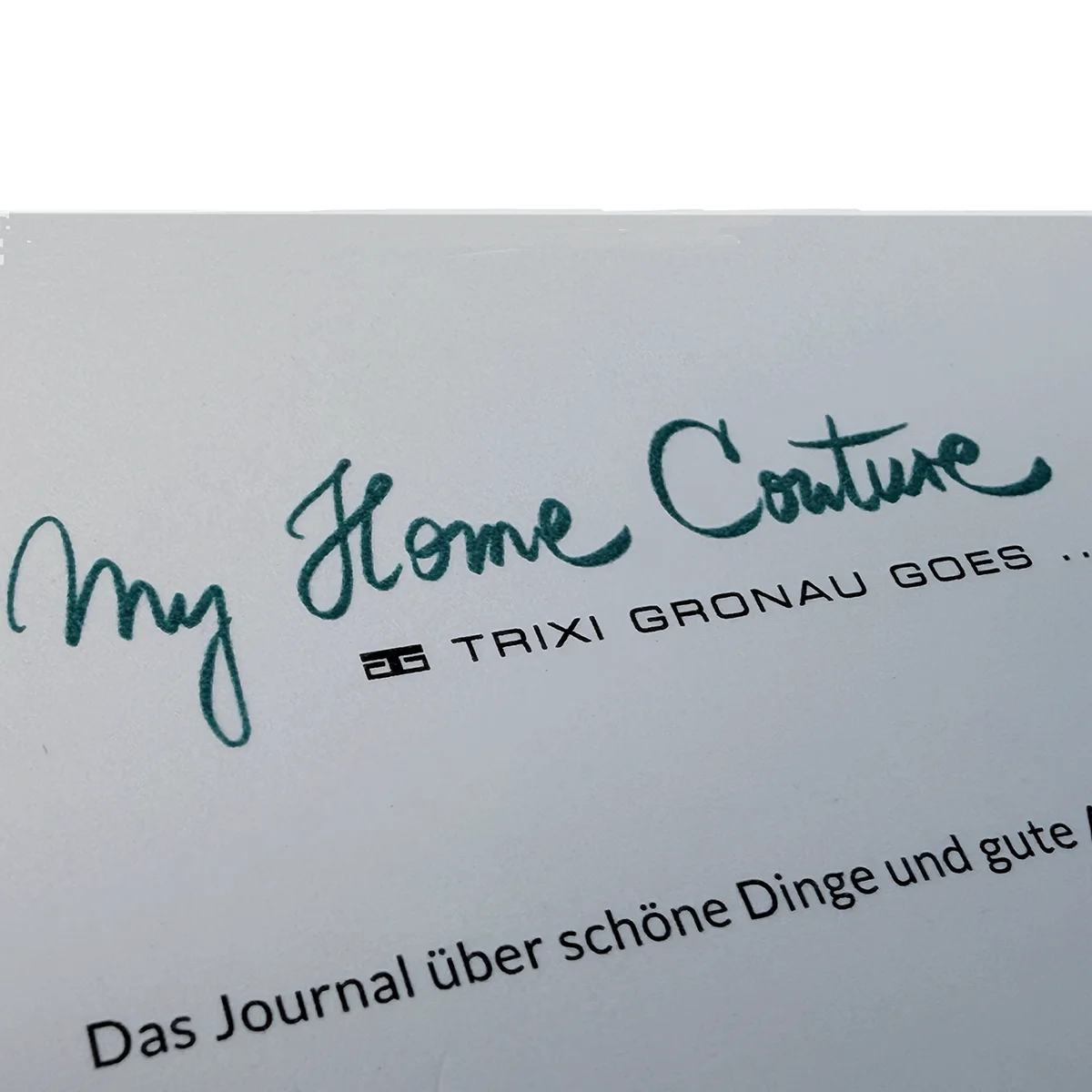
A good example is our My Home Couture business card. The turquoise “My Home Couture” lettering is produced in raised printing. The grey and black elements are printed flat in offset. On one single card, the difference can therefore be seen and felt directly.
What is the difference from offset printing?
Offset printing normally remains largely flat. In thermography, a printed motif forms the basis but is subsequently raised with thermographic powder and heat.
The My Home Couture business card shows both techniques on the same card. The turquoise lettering is raised, while the grey and black offset elements remain flat.
What is the difference from letterpress?
In letterpress, a raised printing form with type or plates presses against the paper. Depending on the way it is produced, an impression can be left in the paper.
With thermography, the relief is created on top of the printed surface by powder and heat.
What is the difference from blind embossing?
Blind embossing mechanically deforms the material with an embossing tool and does not require printing ink. Thermography uses printed ink and a thermographic layer built on top of it.
For this reason, raised printing and relief embossing should not be treated as the same process. Blind embossing has its own glossary page.
What is the difference from hot foil stamping?
Hot foil stamping transfers a stamping foil to the material with heat and pressure. The metallic or pigmented appearance comes from the foil.
With thermography, the visible and tactile layer is made from printing ink and thermographic powder. Gloss alone is therefore not a reliable way to distinguish the two processes. See the Hot foil stamping glossary page.
What is the difference from steel engraving?
Raised printing is often used as a more economical alternative to traditional steel engraving. Both techniques can create raised lettering.
From our long practical experience, modern thermography can be so precise on many motifs that it may be difficult to distinguish visually from steel engraving. Bold lettering and graphic elements can be especially convincing in thermography.
For highly delicate type, the finest lines and very small characters, steel engraving still has advantages and shows the particular precision of this traditional process.
Which work do we produce with thermography?
TRIXI GRONAU has worked with raised printing and thermography since 1990. The technique has been and continues to be used for business cards, letterheads, correspondence cards and invitations.
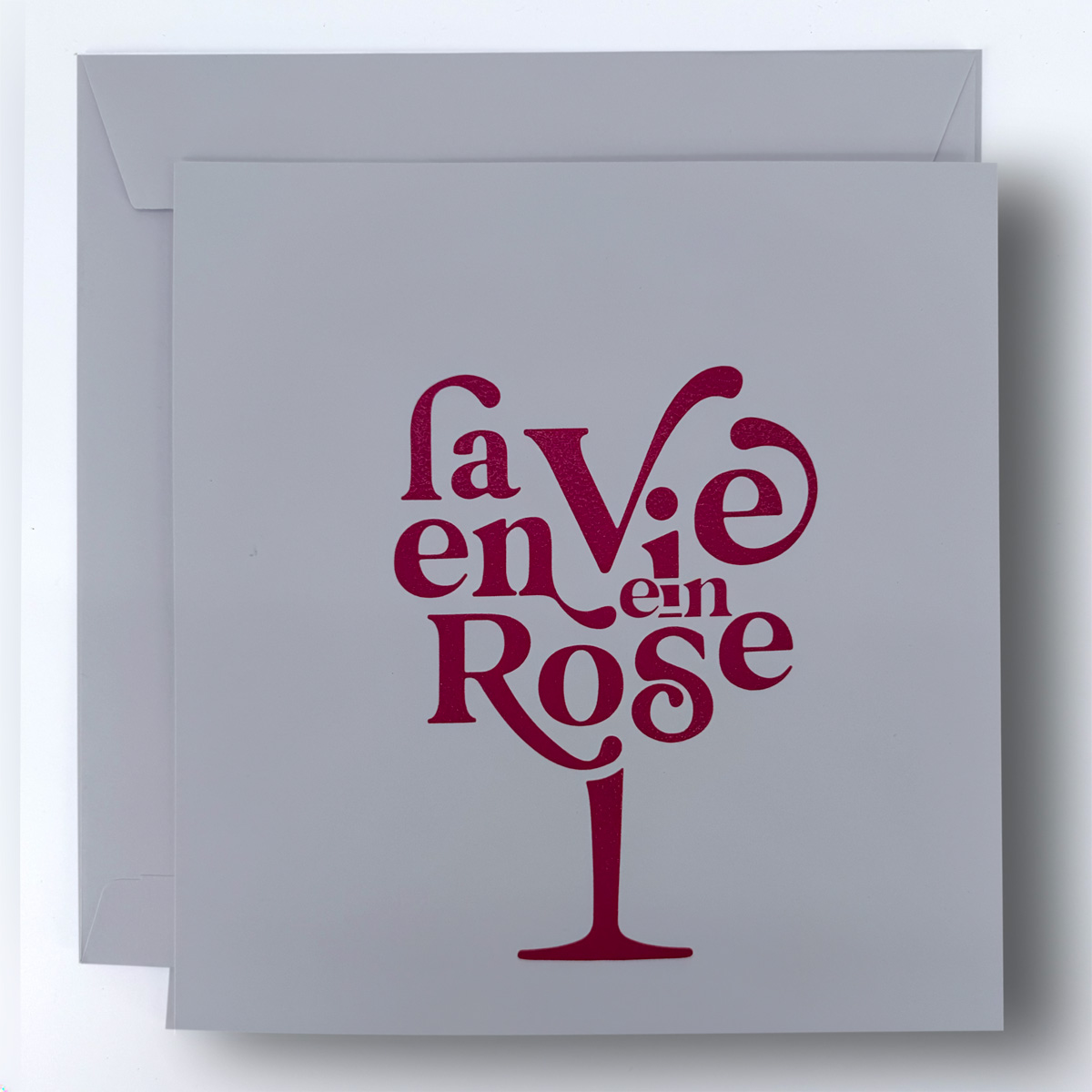
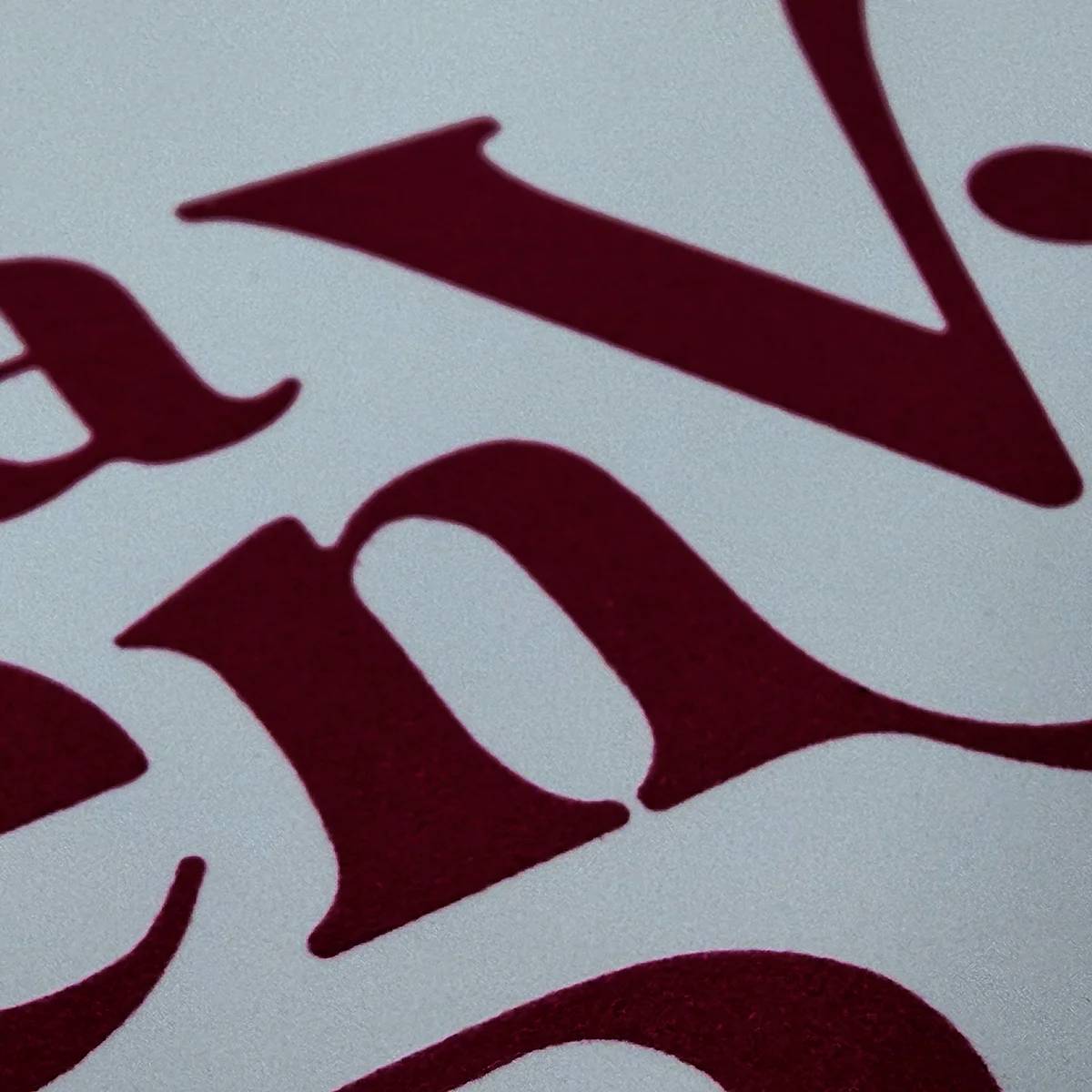
One verified own example is the My Home Couture business card. Another neutral example is the invitation card “La vie en rose”. Its bold motif demonstrates particularly well how solid and dimensional larger letterforms can appear in raised printing.
Why is thermography interesting for stationery?
Thermography combines colour and tactility without requiring a classic mechanical embossing process for the raised effect. Lettering, logos and graphic elements can therefore be both coloured and tactile.
The process is especially suitable when a clear, elegant and distinctly perceptible print effect is desired.
Common questions
Is raised printing the same as thermography?
In the graphic trade, the German term Reliefdruck is often used for thermography. It refers to the raised printed effect created by thermographic powder and heat. It should not be confused with relief embossing.
Is thermography an embossing process?
No. In thermography, the raised layer is built on top of the printed surface. In embossing, the material itself is mechanically deformed.
Can thermography be combined with offset printing?
Yes. A motif can be printed first and then raised thermographically. Flat offset elements and raised thermographic elements can also appear next to each other on the same printed piece.
Is thermography as fine as steel engraving?
For many motifs, modern thermography can come very close visually to steel engraving. For extremely delicate type, the finest lines and very small characters, steel engraving still has advantages.
Which products are suitable for thermography?
Typical applications include business cards, letterheads, correspondence cards, invitations, monograms, logos and other high quality stationery.