TRIXI GRONAU Manufactory · Knowledge
Leather Types in our Hamburg Studio
Why leather is more than a material to me
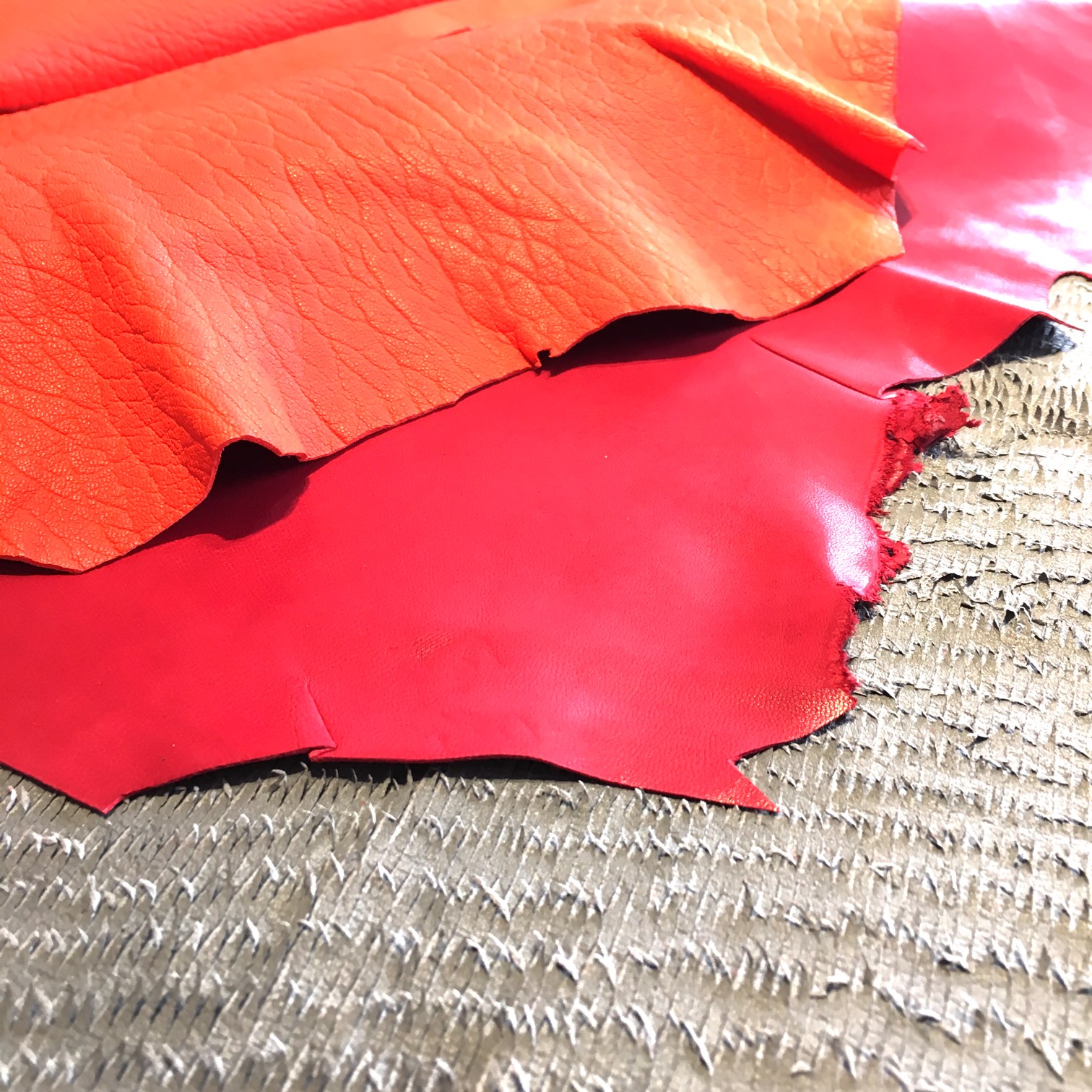
Leather has fascinated me for as long as I can remember. Every hide has its own colour, its own handle and its own structure. Even two hides of the same kind of leather can look quite different. That is exactly what makes the material interesting to me.
Long before I developed leather products of my own, leather was part of my personal style. At Pyrate Style in Hamburg I had Holger and Fritz make special pieces for me. For one celebration they made a black leather jacket with gold inlays, worn with a black mini skirt trimmed with conchas.
Even today it is not only the colour that interests me, but the whole presence of a hide. Sometimes I see a leather and know straight away that I want to work with it, although the later product has not been decided yet.
In our manufactory it becomes books, photo albums, organizers, purses, leather envelopes, key rings and further one off pieces and small runs.
How do I choose leather?
Where a hide is out of the ordinary I want to see and handle it myself. When I am looking for something special I travel to leather merchants in Hamburg or Offenbach and decide there, standing in front of the hide. I can see the actual colour, judge surface and handle, and tell how large the areas are that I can really use for my product.
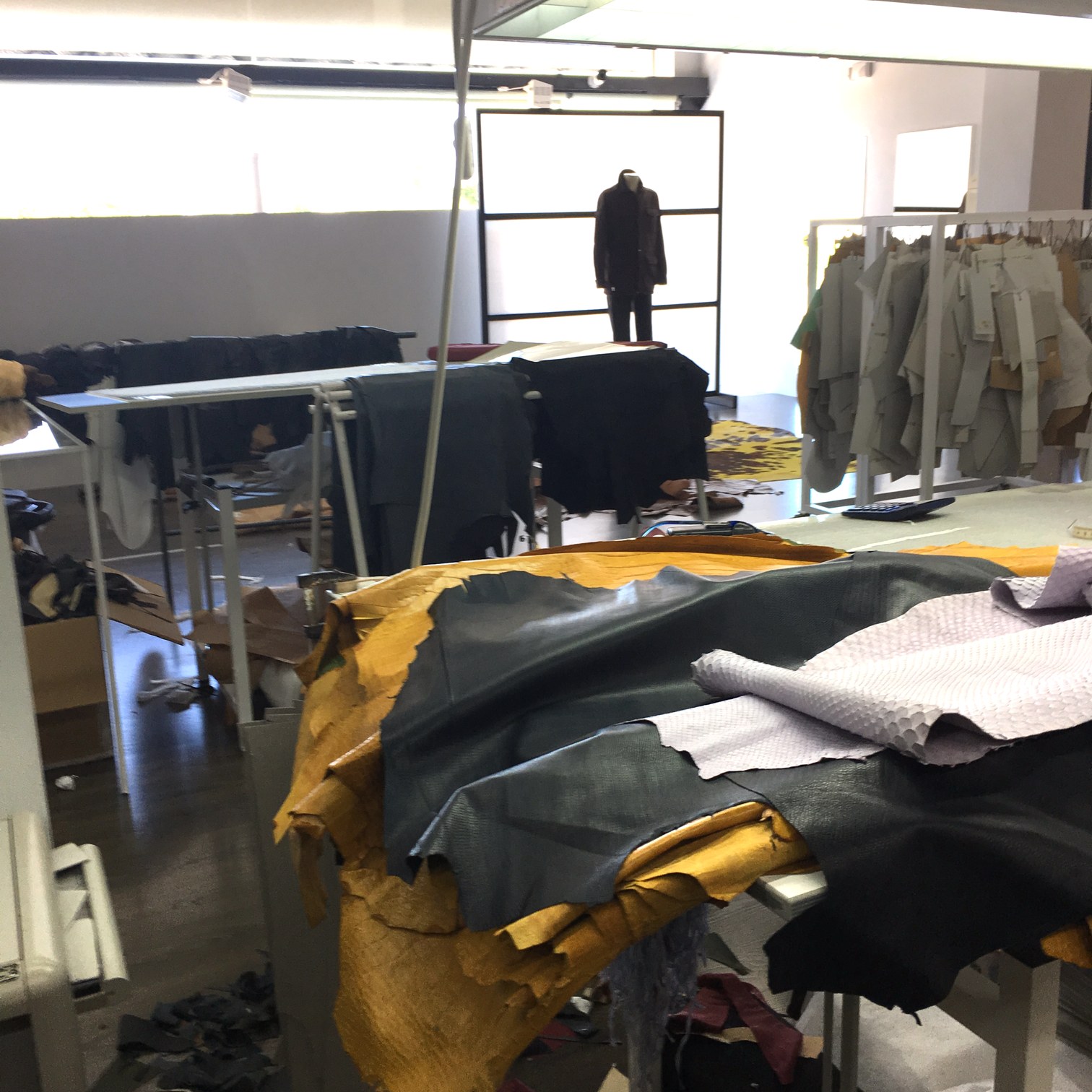
For classic leathers I also work from colour and material samples. I keep those samples with me, choose from them and then order the quality I want.
Now and then I travel to leather fairs in Milan as well, especially when I am after unusual or exotic hides. Along the way I have learned that special colours do not always arrive exactly as ordered. With Italian suppliers the answer to a colour deviation can amount to "Scusi, but it is beautiful all the same." And sometimes it truly is beautiful. It is simply different.
For me that belongs to leather too. A natural material cannot be standardised down to every last detail.
How do I decide whether a leather suits a product?
Not every beautiful leather suits every product. My first question is what the finished piece will have to withstand later on. A guest book that lies out in public and passes through many hands, for instance, cannot have a surface that is too delicate. A key ring makes similar demands. It is handled constantly, it lives in bags and it goes everywhere with its owner.
The thickness of the leather matters as well. If a hide is too thick we can pare it down. Then I have to check whether the leather keeps its character and the qualities I want after paring.
If a name, a monogram or a motif is to be embossed, one more question follows. Can this leather take a clean impression?
The choice of material therefore always comes out of design, feel, making and later use working together.
Which real leathers do we work with?
In our workshop I work with a range of genuine leathers. They include calf and cowhide, goatskin, nappa, lining leather and special leathers such as real snake and python, crocodile, alligator and salmon leather. I have also worked with stingray leather and tested it myself.
One thing matters here. A name that sounds like an exotic leather does not automatically mean the hide of that animal. There is genuine reptile leather, there is calf or cowhide with a reptile emboss, and there are leather like covering materials with surfaces of the same kind.
We mark those differences deliberately.
Calf and cowhide
Calfskin can be used in a great many ways. Depending on how it is finished it can be soft and fine, or firmer and more strongly textured. We use it for books, organizers and smaller leather goods among other things.
Cowhide too is produced in very different qualities. Dollaro is one example.
What is Dollaro?
Dollaro does not describe the animal. It describes a characteristic grained embossed surface, and the base material is usually cowhide.
That is why I deliberately speak of a Dollaro emboss rather than simply of natural grain.
The structure gives the material character, and it can make signs of use less obvious than a completely smooth surface would.
What is Tejus?
In our work Tejus means real leather with a lizard emboss, not real lizard skin. The base material is often a fine calf or young cowhide, and the typical scale structure is pressed into the surface.
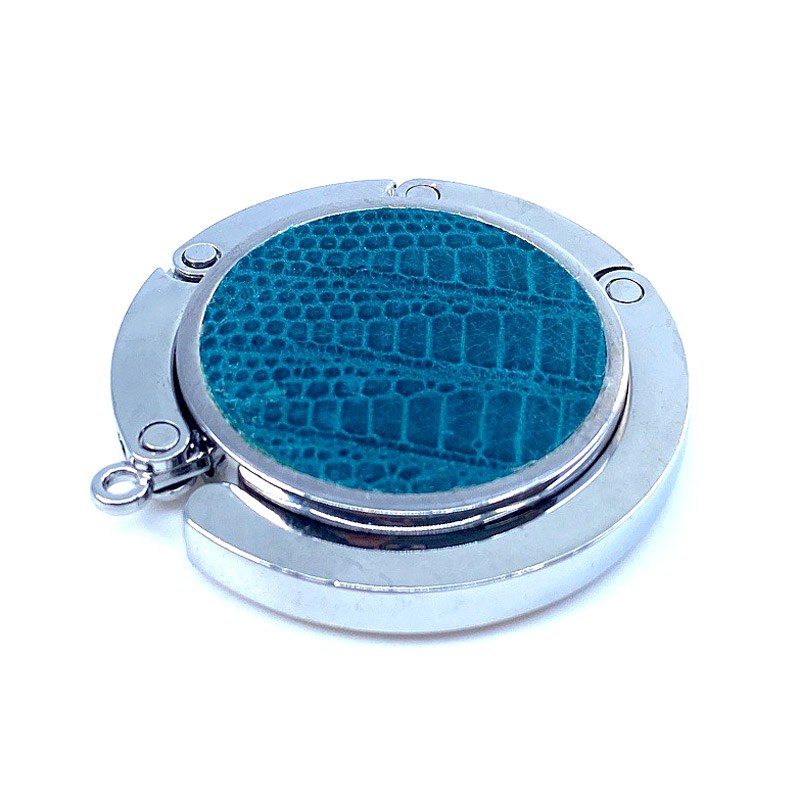
That gives the effect of a reptile surface without the piece being genuine reptile leather. For me this separation between base material and surface is important.
What is Dakar?
We use Dakar for calfskin with a croco emboss. The surface recalls crocodile, the base material remains calfskin.
Here too the same holds true. The look on its own says nothing reliable about the animal.
What is Mamba?
For us Mamba is recycled leather, or leather fibre material, with a snake emboss.
Recycled leather is made from leather offcuts that are broken down and bonded back together with binders into a flat material. The surface can then be coated, dyed and embossed. We give no fixed percentages for the composition, because they can differ from one manufacturer and quality to the next.
On our Mamba the snake look comes from the emboss. It is therefore not genuine snakeskin.
Real snake and python
Alongside embossed snake surfaces I also work with genuine snake and python leather. I use snakeskin in a great many ways. Depending on hide, colour and thickness it can suit books, organizers, smaller leather goods and other one off pieces.
Python shows particularly well why leather products are so often unique. Markings, scales, colour and feel differ from hide to hide, so a particular hide cannot simply be reordered later in identical form.
Crocodile and alligator leather
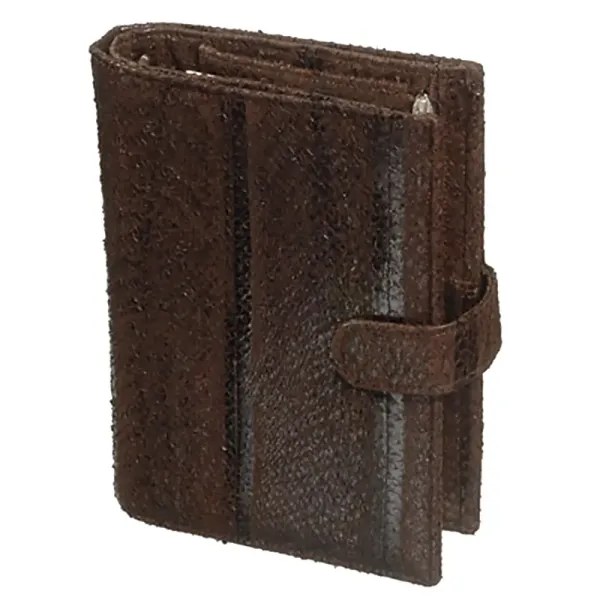
Crocodile and alligator are two different leathers, and we name them as such. One concrete example of genuine crocodile leather is our KIM Mini ring organizer in brown. With hides as special as these, what matters to me is that the structure and the size of the hide suit the product they are destined for.
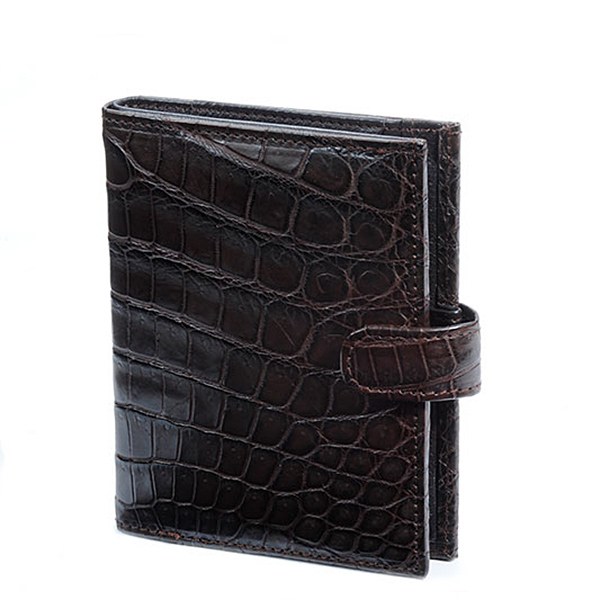
With alligator I tend to prefer smaller hides. On a large hide the scale structure can look too big for a small object. That is why I like to use alligator for smaller leather parts and details, where the characteristic structure comes into its own.
Goatskin, nappa and lining leather
Goatskin and nappa can be used both outside and inside. Our Calla photo book is one example, where leather can take on different roles depending on the version.
Lining leather I use exclusively inside a product.
One of the things I value about nappa is its soft handle. It also works well as a base for special surfaces and prints.
Nappa with newspaper print
One of my more unusual material variants was nappa with a newspaper print. I made books, leather envelopes and purses from it among other things.
What draws me to materials like this is the contrast. On one side the soft, classic leather, on the other a striking graphic surface. The result is a product whose effect is not determined by its form alone, but by the material from the outset.
Metallic leathers and mother of pearl effects
Alongside natural and embossed surfaces I like working with unusual finishes. I have used metallic leathers for very different products. I do not assign surfaces like these to any one product group. What decides is whether colour, sheen, design and later use sit well together.
The same applies to leather with a mother of pearl effect, or a surface finished to resemble mother of pearl. I use materials like these where they suit the design.
Salmon leather, an unusual real leather
One especially interesting leather, and one we worked with many years ago, is salmon leather.
I came to the material through a sales representative who visited me in my shop at the time. He had heard that I was open to unusual materials and new ideas, and he introduced me to salmon leather. It suited us, and we began to experiment with it.
I have worked salmon leather into timers, purses, books and business card cases. I still have a timer in a lilac shade today.
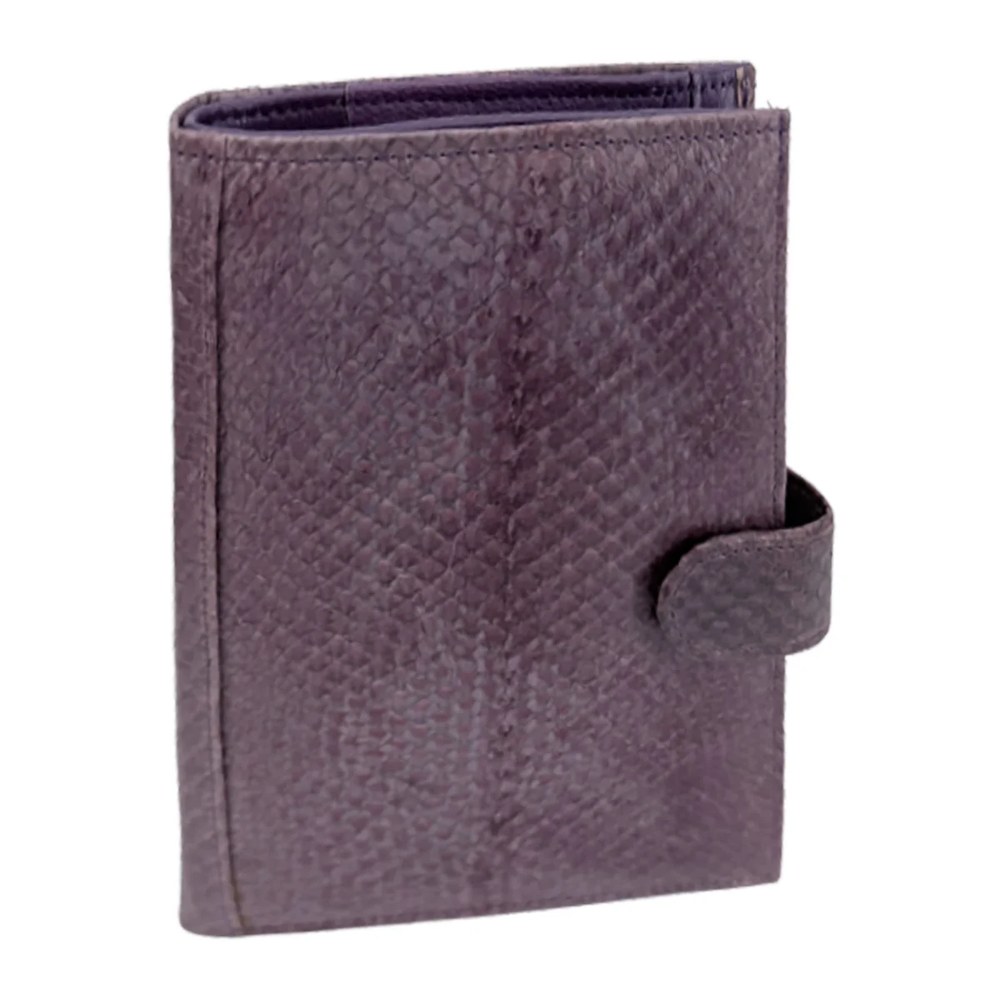
One concrete example from our range is the MIRA business card envelope in genuine salmon leather.
In the Nanai salmon leather we use, salmon skin is put to further use after arising as a by product of salmon processing. The manufacturer describes Nanai leather as tanned entirely free of chrome, and the Mimosa and Kastanie versions are vegetable tanned. The natural pigmentation and the characteristic structure of the fish skin stay visible. The material is thin and light, and the manufacturer also describes it for accessories as well as for interiors and furniture.
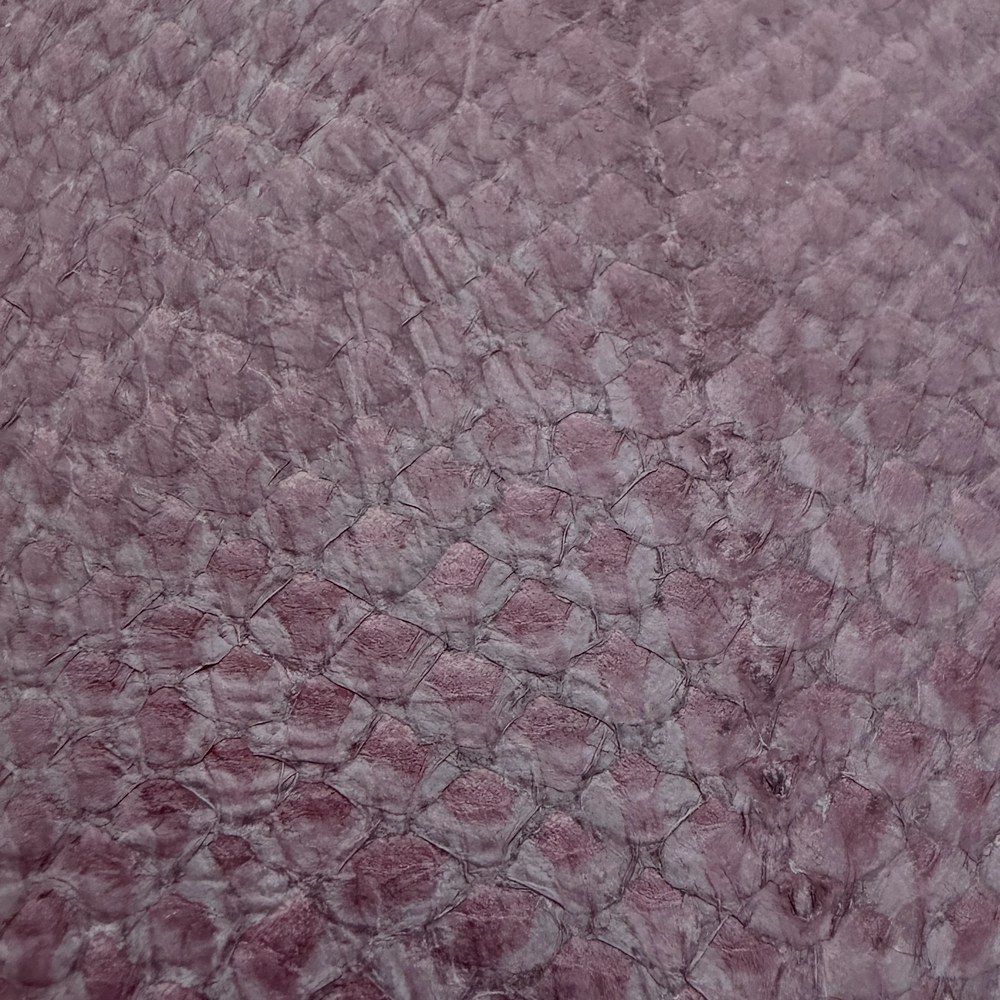
For me it was exactly that unusual combination that appealed. A genuine leather with an almost exotic structure, clearly different from classic calf, nappa or cowhide.
Stingray leather, fascinating and difficult to work
Stingray leather fascinates me because of its extraordinary, almost pearl like surface structure. I have experimented with it myself and made a mini timer from it among other things.
In doing so one limit of the material became very clear. Stingray leather is exceptionally hard and is difficult to turn cleanly around edges and corners. On a timer in particular, where the covering material has to be led precisely around the case, the result did not match what I had in mind.
For applications of that kind we no longer produce in stingray leather. Where I do see the material, it is on small elements used flat, or on inlays, where it does not have to be turned sharply around an edge.
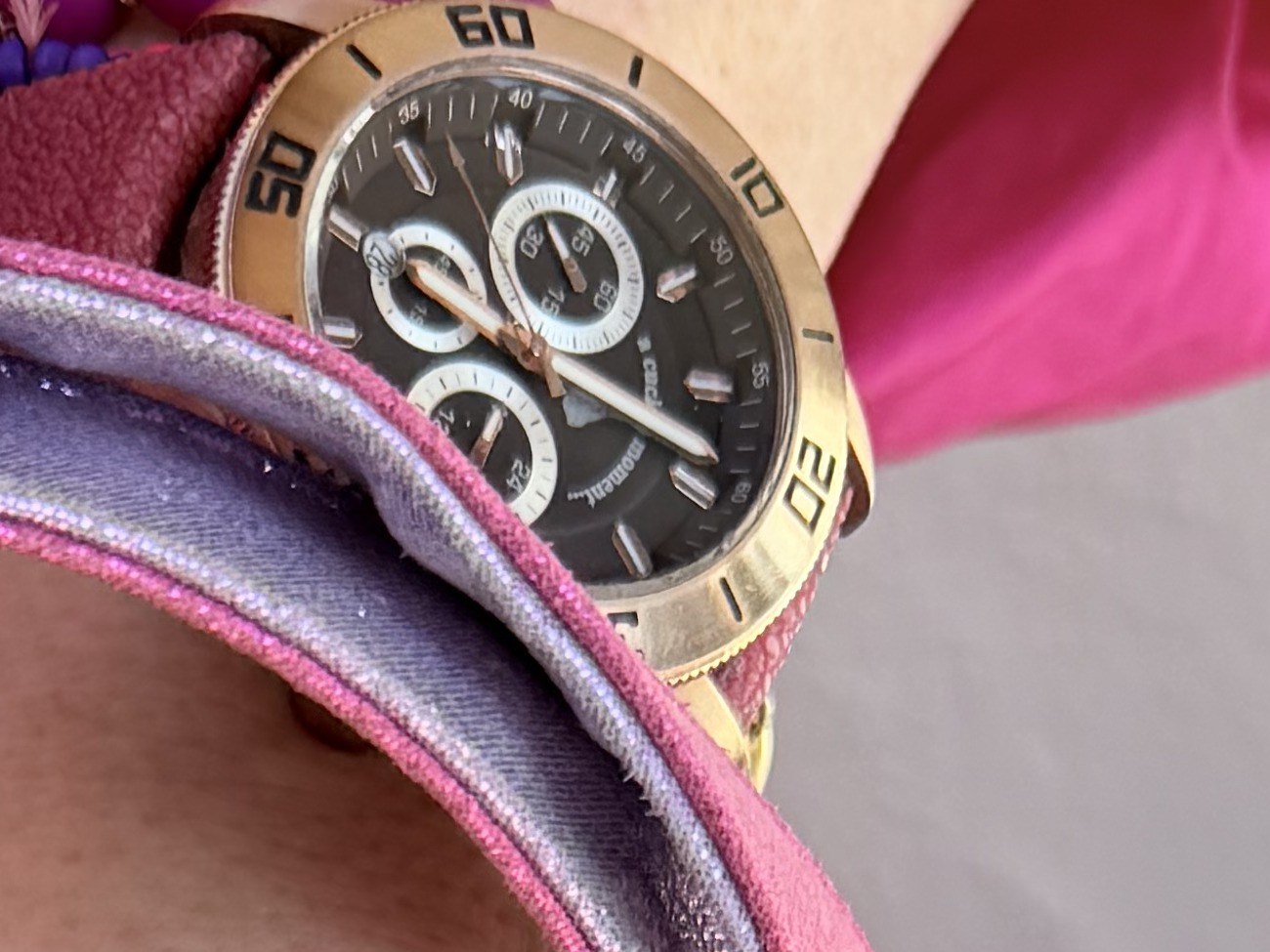
In the showroom I have a vase in brown stingray leather and a box in cream stingray leather, among other pieces. My own rose gold watch on a pink stingray strap also shows very well why this surface still fascinates me aesthetically.
Leather and upcycling
An important part of my work with materials is putting fine materials that already exist to further use.
I work on from Persian lamb coats and leather jackets that are already in my private collection. The jackets include vintage and designer pieces by Armani, Versace, Chanel and Hermès, along with other special items from the vintage fashion collection I have built up over many years.
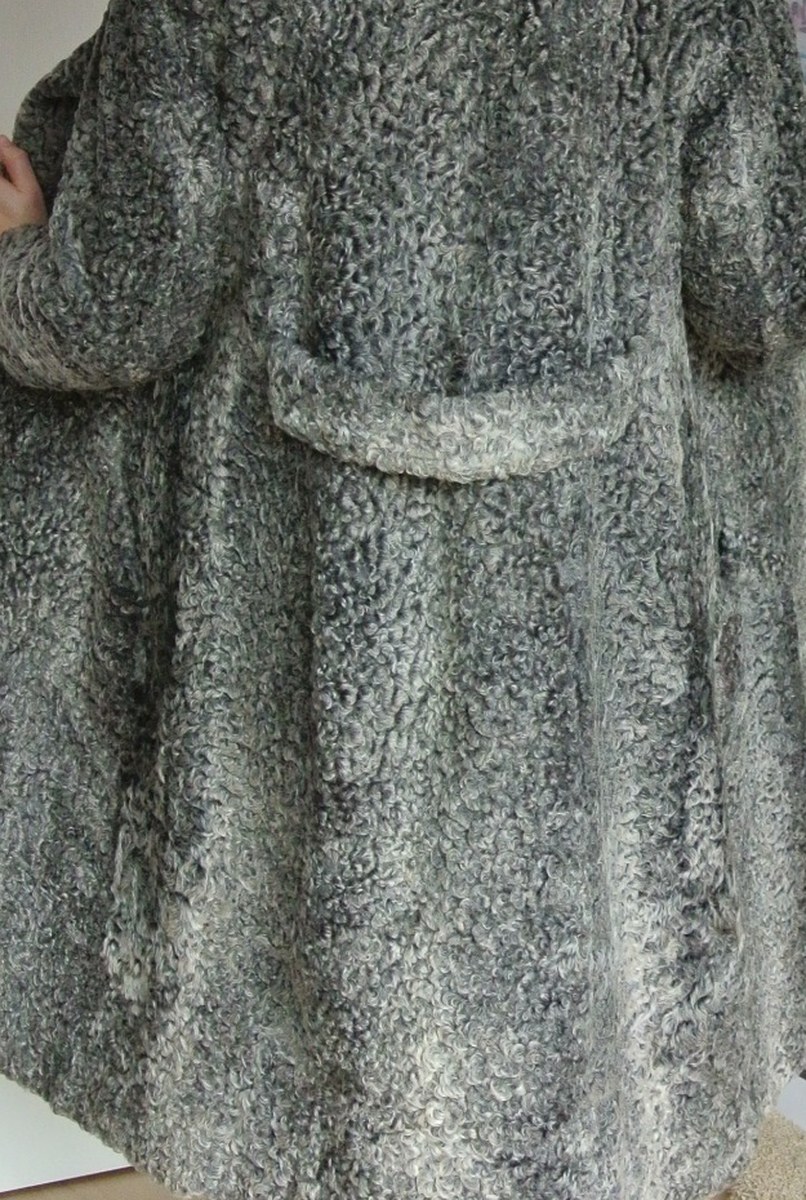
Rather than leave fine materials like these unused, I put them into new one off pieces and special details. For me that is upcycling in the true sense. A material that already exists is given a new task and a second life.
Our THEA notebook is one concrete example. Its grey Persian lamb covering comes from exactly the coat we also show on this page. In our bindery the existing material was worked on and, as a notebook, took on a new task. The story of the original material stays visible, even though something entirely new has come of it.
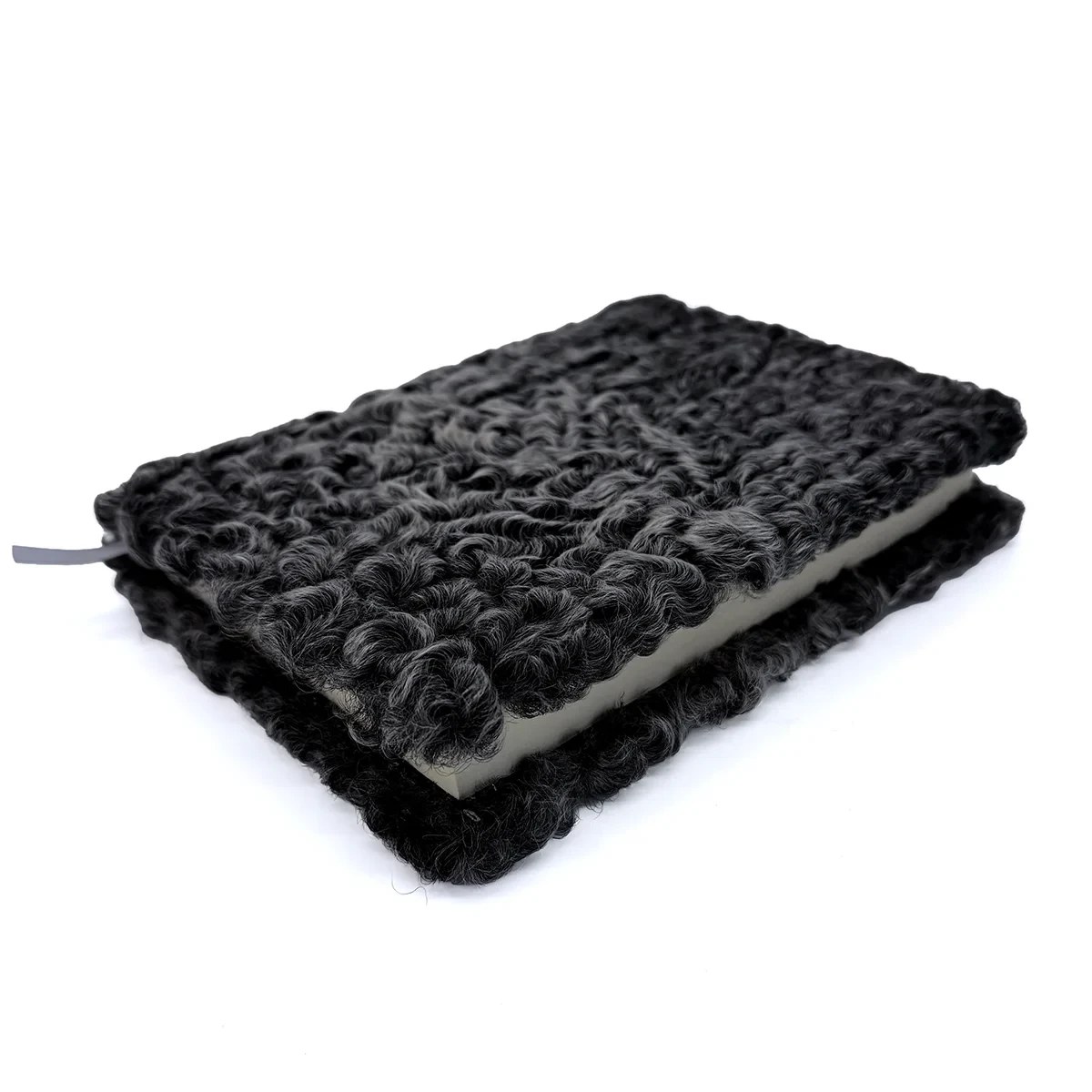
One point matters here. We are talking about pieces that already exist, from my own holdings. This is not about buying new Persian lamb or designer clothing in order to take it apart. The brand names mentioned describe only where individual existing garments came from, and no collaboration with those brands.
Skivertex, more than a lower priced alternative
Alongside genuine leather we also use other covering materials, and Skivertex plays an important part among them. It is a paper based covering material with various coatings and embossed surfaces.
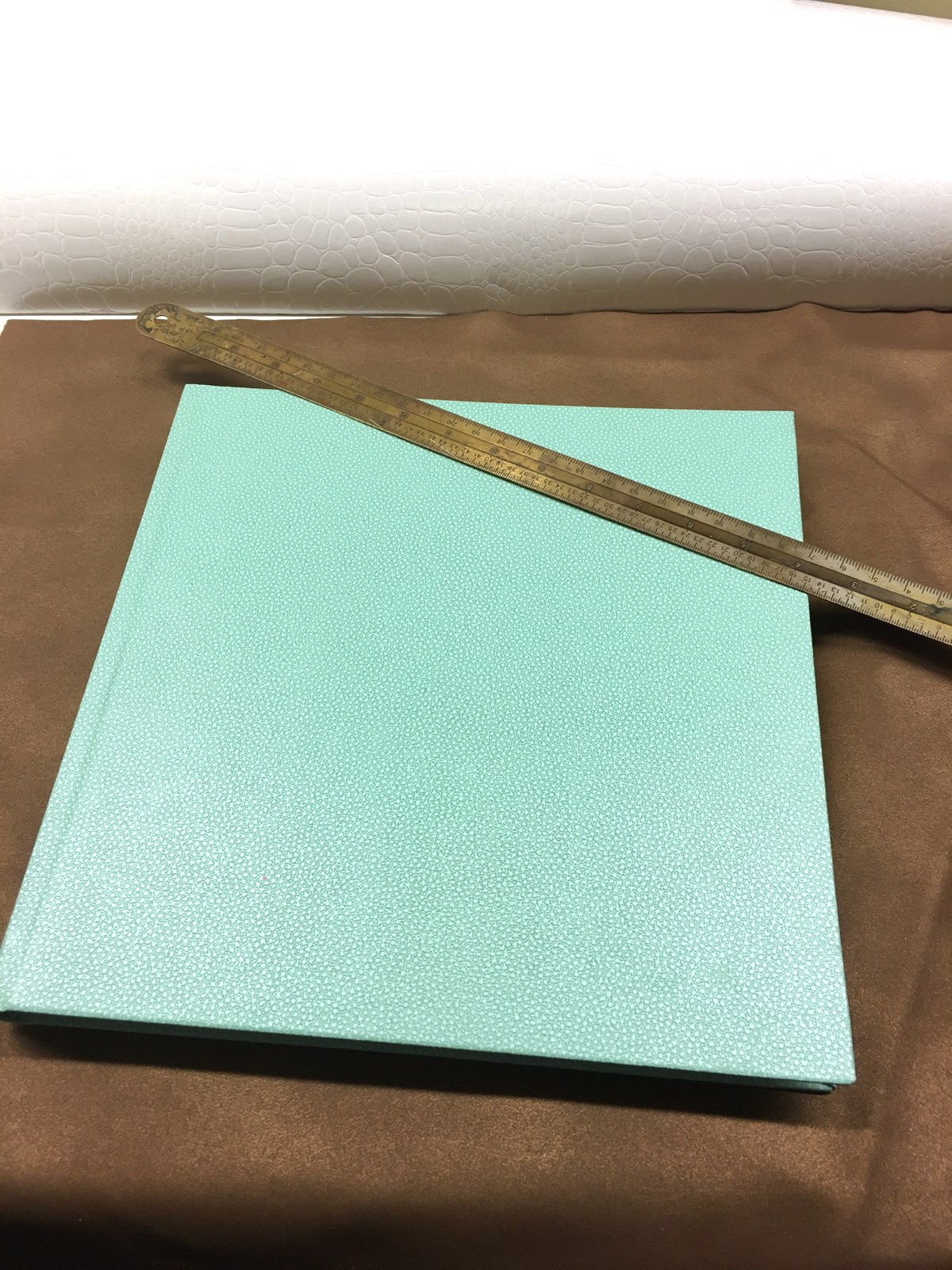
To me it does not feel like real leather, and for that reason I do not want to call it leather either. That does not make Skivertex merely a cheaper substitute. It has technical advantages of its own.
When do I use Skivertex instead of leather?
A customer can choose it for a number of reasons. Sometimes price plays a part, sometimes a vegan alternative is expressly wanted. In other cases it simply comes down to colour. When a customer needs one particular shade and I cannot get it right in leather, another covering material can be the better answer.
In theory a great many of our products can also be made in Skivertex or in comparable covering materials. The material is especially interesting for boxes, packaging and rounded parts. Some qualities are thinner than leather, which makes them easier to work around curves and edges.
In the workshop the making can be more straightforward as well. If glue reaches a suitable Skivertex surface, for instance, it can often be removed more easily than from a delicate leather.
For our leather key rings, on the other hand, I do not simply use Skivertex as a direct substitute where the material is too thin for the construction and the wear it will take. The choice of material always follows the product.
A leather look does not automatically mean leather
With textured materials in particular, a clear description matters. A croco, lizard, galuchat or otherwise exotic looking surface says something about the appearance to begin with, and not automatically about the base material.
At TRIXI GRONAU we therefore distinguish between genuine animal hide, genuine leather with an embossed surface, recycled leather or leather fibre material, and leather like covering material such as Skivertex.
Among our book and covering materials, names such as Lizard, Iguana, Beluga and Galluchat are Skivertex surfaces within certain lines, and there they do not denote genuine animal leather. Croco as well can be either an emboss on real leather or a Skivertex surface, depending on the product. The info tab of the individual product must therefore always be kept and checked.
Further covering materials
Alongside Skivertex our range holds further leather like covering materials. We use Kanuba as a leather like velour covering material and Quinel as a nappa like PU covering material. The same principle applies here. We do not simply call these materials leather, we describe them as they are actually built.
Why does not every leather take an impression equally well?
Smooth leather can usually be embossed more easily and more clearly than a leather whose surface is already strongly textured. The deeper an existing emboss or structure, the harder it becomes to bring an additional piece of lettering or a motif out cleanly.
That matters especially for personalisation. When a customer asks for initials, a name or a motif, I look at more than colour and type of leather. I judge the surface as well and decide whether the impression they want can be carried through convincingly on this material, technically and visually.
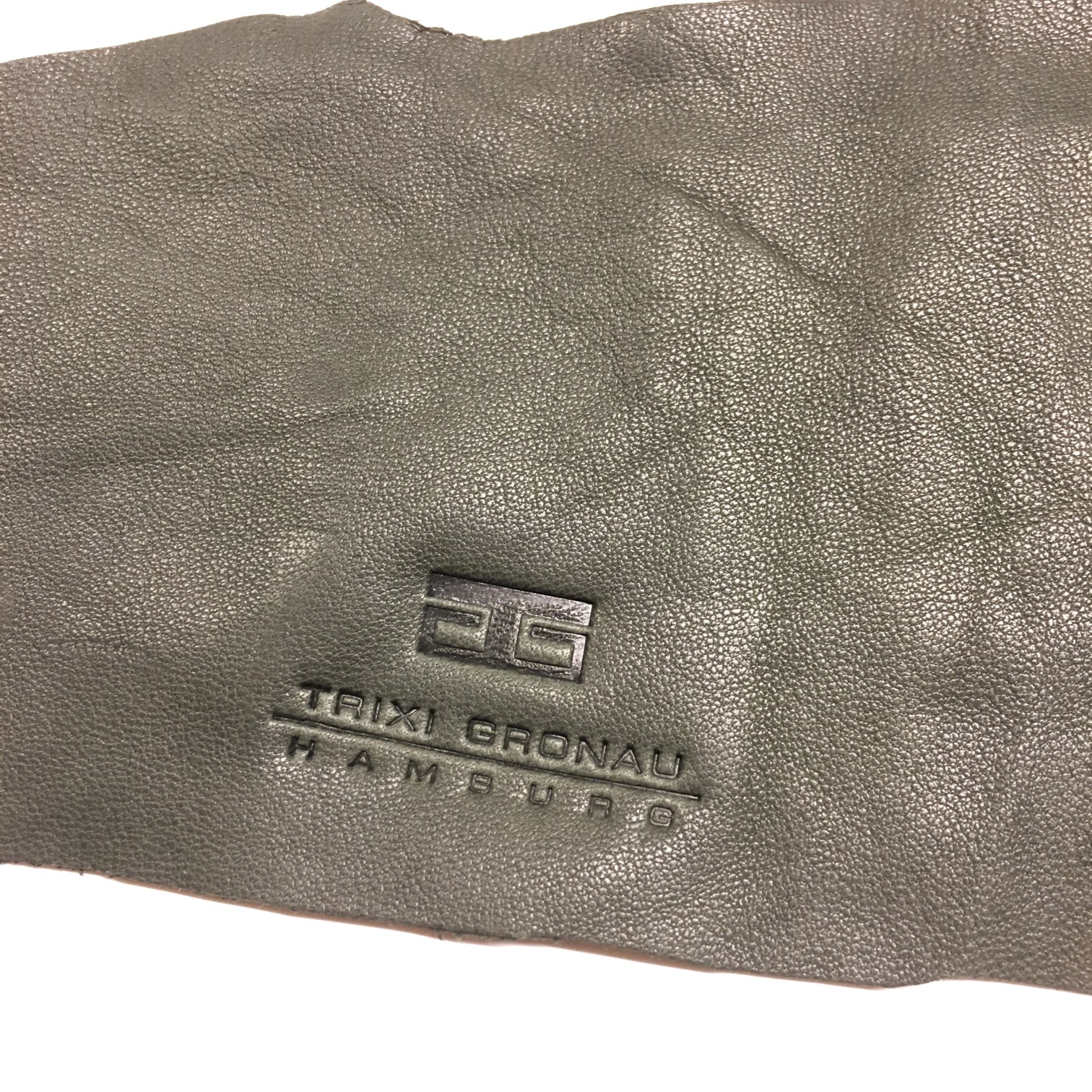
With a new or unusual combination, a proof impression is part of the job for me.
Why do special leathers so often become one off pieces?
Leather is a natural product. A particular python hide, an unusual shade or a special surface structure cannot necessarily be sourced again in identical form.
Even when I reorder the same type of leather, the handle, the markings and the colour can turn out differently. For me that is precisely part of the appeal of the material.
Many of our leather pieces are therefore genuinely one of a kind, or are made in very small numbers. Once a special hide has been worked, that exact combination of colour, structure and handle may never come about again.
That is not a fault in the material. It is its character.
Leather at the TRIXI GRONAU manufactory
My choice does not begin with the question of which leather is currently in fashion. I want to know whether a material suits the product, whether it works well in the making, whether it will stand up to later use and whether it has a presence of its own.
Sometimes the right answer is a fine nappa. Sometimes python, crocodile or alligator. Sometimes an embossed calfskin, salmon leather or an unusual metallic leather. And sometimes Skivertex suits the job better than a hide does.
The material does not only have to look beautiful. It has to be right for the piece.
Questions about leather types
Is Tejus genuine lizard leather?
No. Our Tejus leathers are genuine leather with a lizard emboss, not real lizard skin.
Is Dakar genuine crocodile leather?
No. We use Dakar as the name for calfskin with a croco emboss.
Is Mamba genuine snakeskin?
No. Our Mamba is recycled leather, or leather fibre material, with a snake emboss. Alongside it we also work with genuine snake and python leather.
Does TRIXI GRONAU work with genuine crocodile and alligator leather?
Yes. One concrete example of genuine crocodile leather is our KIM Mini ring organizer in brown. Genuine alligator leather I use for particular purposes, especially for smaller leather parts and details. We do not treat crocodile and alligator as the same thing.
Can every leather be personalised?
Not every leather takes an impression equally well. Smooth surfaces are usually simpler. On strongly textured or already embossed leathers it has to be checked beforehand whether lettering or a motif will come out cleanly.
Is Skivertex leather?
No. Skivertex is a leather like covering material on a paper base. It has different properties from leather and can bring practical advantages in the making of certain products, boxes and curves for example.
Does TRIXI GRONAU work with upcycled material as well?
Yes. Among other things I put existing Persian lamb coats and fine leather jackets from my own vintage fashion collection to further use, and develop new one off pieces or details from them.